Product teams have spent years blaming the HiPPO, the highest paid person’s opinion, for decisions that override evidence and send engineering teams in the wrong direction. When a senior executive overrules a carefully assembled set of findings with a gut call, the instinct is to blame culture, authority, or the wrong people in the room.
The real problem is further upstream.
“The sales and customer success teams would have their own customers, they’d often be in a different place, and I didn’t feel like I had all the information to make the best design decisions,” said Benjamin Humphrey, recalling his time at Atlassian before co-founding Dovetail Software.
Sold Floor by Floor
Sales calls live in one tool. Support tickets in another. Customer success interactions somewhere else entirely. Each platform runs its own seat-based pricing model, and each departmental lead controls who gets access.

A revenue intelligence platform might cost several hundred dollars per user annually. Multiply that across a 5,000-person company and the economics stop working fast.
So access gets rationed. The sales leader holds the keys to the sales data. The CX director owns the support queue. No one hands a product manager a cross-functional login, because no one has budgeted for one.
By the time customer feedback reaches the product team, it has passed through at least one layer of human curation. A sales manager summarising call themes in a slide deck. A CX analyst selecting which support trends to escalate. The executive who commissioned the deck then presents it in a planning meeting as the voice of the customer.
Gatekeepers Aren’t Villains, They’re a Symptom
The departmental gatekeeping that traps customer data isn’t cynical. Department leads often see themselves as the right people to interpret what their teams are hearing. A sales leader presenting market feedback to the product team believes, reasonably, that context is their job.
Humphrey says, “The sales team doesn’t really want to share their calls.”
That control is usually protective. Protection and obstruction, though, produce the same outcome at the product level: a PM who cannot query the data directly, cannot cross-reference what sales prospects are saying against what support tickets are surfacing, cannot track a theme across departments without calling in a favour from three different managers.
The HiPPO fills that vacuum.
When the data isn’t accessible, the most confident voice in the room wins. Evidence-based decision-making requires that the evidence be accessible. Not curated, not scheduled, not dependent on a department head deciding when it’s convenient to share.
Pricing Models That Lock the Door
Seat-based pricing made sense when software was expensive to build and distribute. In practice, it has become the mechanism through which customer data stays fragmented even in organizations that genuinely want it to flow freely.
Dovetail Software is moving from seat-based to usage-based pricing precisely because of this. The shift removes the economic barrier that keeps product managers waiting for a sales leader to release data on their own timeline.
Humphrey said the following about the maths: “If you have a 5,000-person company, you can’t. It’s just not economical to give everybody access to Gong.”
A tool that helps one team do its job becomes, through pricing structure alone, a reason insight never reaches another team. Usage-based pricing means a company can give its entire product function access to commercial call data, support ticket themes, and customer success feedback without needing to budget hundreds of dollars per head for every department that touches the customer.
The model removes the gatekeeper. The data moves because the economics permit it.
Stop Asking Executives to Care More
A customer-centric organization isn’t one where people care more about customers. Most teams already do. It’s one where systems enable action on what customers are saying before the decision has already been made without them.
Product managers need to query sales calls without asking a sales manager. Design teams need visibility into support themes without having to commission a monthly report. The executive in the planning meeting should be working from the same live data as the PM, not a curated summary that’s already two weeks old.
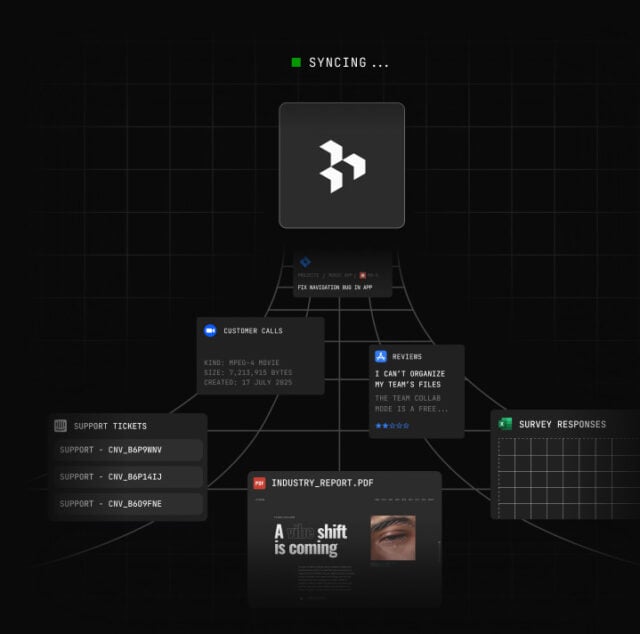
Dovetail Software connects those streams: experience research, voice of customer, revenue intelligence, and customer insights, into a layer that updates continuously. AI agents run in the background, tracking themes as they emerge and pushing findings into Slack or email before anyone has to ask.
Humphrey described what this looks like internally: “It’s not really like you’re coming up with ideas out of nowhere. Everything has some sort of connection back to some kind of evidence.”
That’s an infrastructure argument, dressed up as a culture conversation. The HiPPO problem doesn’t dissolve by asking executives to defer more. It dissolves when the PM and the CEO are looking at the same live data at the same time, and the argument about whose opinion matters becomes a lot less interesting.
Disclaimer
Artificial Intelligence Disclosure & Legal Disclaimer
AI Content Policy.
To provide our readers with timely and comprehensive coverage, South Florida Reporter uses artificial intelligence (AI) to assist in producing certain articles and visual content.
Articles: AI may be used to assist in research, structural drafting, or data analysis. All AI-assisted text is reviewed and edited by our team to ensure accuracy and adherence to our editorial standards.
Images: Any imagery generated or significantly altered by AI is clearly marked with a disclaimer or watermark to distinguish it from traditional photography or editorial illustrations.
General Disclaimer
The information contained in South Florida Reporter is for general information purposes only.
South Florida Reporter assumes no responsibility for errors or omissions in the contents of the Service. In no event shall South Florida Reporter be liable for any special, direct, indirect, consequential, or incidental damages or any damages whatsoever, whether in an action of contract, negligence or other tort, arising out of or in connection with the use of the Service or the contents of the Service.
The Company reserves the right to make additions, deletions, or modifications to the contents of the Service at any time without prior notice. The Company does not warrant that the Service is free of viruses or other harmful components.