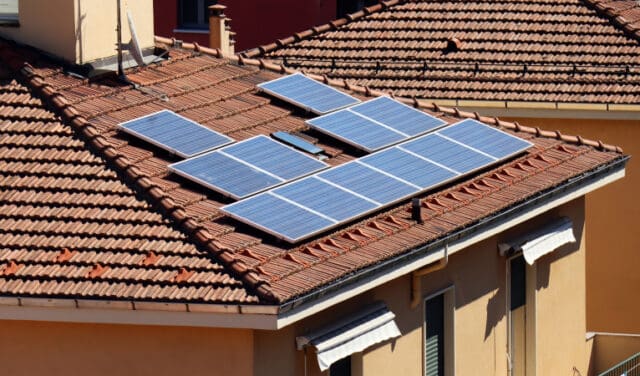
South Florida has long been known for its sunshine, but residents are increasingly putting that natural resource to practical use. Across Miami-Dade, Broward, and Palm Beach counties, homeowners are installing rooftop solar systems at a record pace, driven by high electricity costs, frequent extreme weather, and growing awareness of long-term energy savings.
Florida Power and Light rates have risen steadily in recent years, and with households running air conditioning nearly year-round, monthly utility bills for a typical South Florida home can easily top $200 to $300 in summer months. For many residents, that financial burden has become the primary motivator for exploring solar.
“My bill was over $280 last August,” said one Davie homeowner who had panels installed earlier this year. “Now I’m paying maybe $40 a month. The system is going to pay for itself in about seven years, and everything after that is basically free electricity.”
The financial case for solar in Florida is bolstered by several state-level policy mechanisms that remain in place. Florida maintains a property tax exemption for the added home value created by a solar installation, and the federal Investment Tax Credit currently allows homeowners to deduct 30 percent of the system’s cost from their federal taxes. Together, these incentives can reduce the effective cost of a solar installation by 40 percent or more.

Beyond economics, extreme weather has become a powerful motivator. Hurricane season disruptions, including extended power outages, have pushed many South Florida homeowners to pair solar panels with battery storage systems. When combined with a Tesla Powerwall or similar product, a solar-plus-storage setup can keep a household running for 24 to 48 hours during an outage without drawing from the grid.
Demand for these hybrid systems surged following Hurricane Ian’s widespread damage in 2022, and solar installers across South Florida report that battery storage is now requested in roughly 40 percent of new residential installations, compared to less than 10 percent just four years ago.
The growth has caught the attention of industry leaders nationwide. Andrew Hoesly, General Manager of SolarTech, points to South Florida as emblematic of a broader national trend.
“Markets with high sunshine hours and high utility rates are always early adopters, and South Florida checks both boxes. When you combine that with storm resilience concerns, you get a population that is highly motivated to invest in their own energy independence. We’ve seen similar patterns in Arizona and Southern California, but Florida’s growth trajectory right now is exceptional,” Hoesly said.
The solar industry in South Florida is also creating local economic benefits. Installation and maintenance jobs tied to the residential solar boom have grown substantially, with trade schools and community colleges in the region expanding their electrical and solar training programs to meet employer demand.
Whether the primary motivation is financial, environmental, or preparedness-driven, South Florida’s solar adoption is accelerating, and industry forecasters expect that trend to continue well into the next decade.
Disclaimer
Artificial Intelligence Disclosure & Legal Disclaimer
AI Content Policy.
To provide our readers with timely and comprehensive coverage, South Florida Reporter uses artificial intelligence (AI) to assist in producing certain articles and visual content.
Articles: AI may be used to assist in research, structural drafting, or data analysis. All AI-assisted text is reviewed and edited by our team to ensure accuracy and adherence to our editorial standards.
Images: Any imagery generated or significantly altered by AI is clearly marked with a disclaimer or watermark to distinguish it from traditional photography or editorial illustrations.
General Disclaimer
The information contained in South Florida Reporter is for general information purposes only.
South Florida Reporter assumes no responsibility for errors or omissions in the contents of the Service. In no event shall South Florida Reporter be liable for any special, direct, indirect, consequential, or incidental damages or any damages whatsoever, whether in an action of contract, negligence or other tort, arising out of or in connection with the use of the Service or the contents of the Service.
The Company reserves the right to make additions, deletions, or modifications to the contents of the Service at any time without prior notice. The Company does not warrant that the Service is free of viruses or other harmful components.