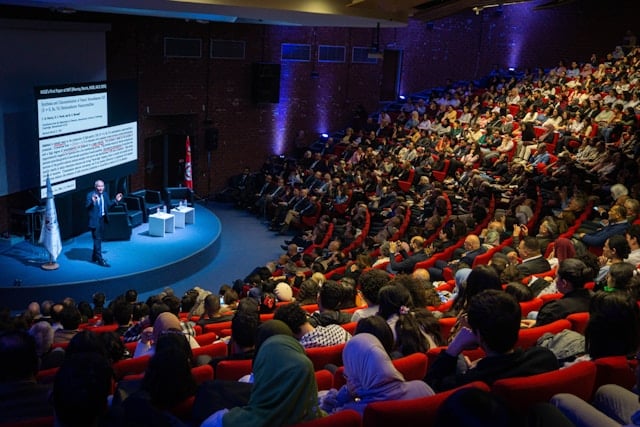
Healthcare conferences are drawing large crowds, with organizers having to pay attention not just to medical content but also to the presentation style. Events focused on longevity, wellness, digital health, and preventive care sometimes resemble the biggest media productions: polished staging, celebrity speakers, interviews, and professional moderators.
That reflects the growing competition in the health conference industry. Organizers want to keep audiences engaged during long days packed with panels, product launches, and keynote sessions.
Health conferences are becoming audience-driven
Healthcare conferences have traditionally focused on research presentations and networking. Now, more events are adding interactive programming, wellness experiences, live demonstrations, and public-facing sessions to attract broader audiences. The Global Wellness Summit announced that its 2026 conference in Phuket will be its largest gathering to date, bringing together executives, physicians, investors, and policymakers to discuss longevity, mental wellness, and preventive care.

Other events are following a similar model: the Eudēmonia Summit in West Palm Beach (coming in November), for example, is promoting immersive wellness programming and community experiences alongside health innovation discussions.
HIMSS 2026, one of the largest healthcare technology conferences in the world (which took place in March this year), also promoted “world-class keynotes from visionary leaders” and expert-led sessions to keep attendees engaged throughout its four days.
The emphasis on audience engagement has changed how healthcare conferences are produced. Organizers use professional moderators, stage hosts, and live-event specialists to manage pacing and maintain audience attention during complex discussions about AI, aging, and preventive medicine. Choosing the right emcee or event manager is an important consideration for any healthcare organization planning a public-facing event.
Wellness events are mixing health and entertainment
Another trend is the melding of health education with entertainment and lifestyle programming. The inaugural Heartbeat Summit (which took place in February), created through a partnership involving Women’s Health, Men’s Health, and Lincoln Center, combined discussions on physical and mental health with live performances and cultural programming. The event featured scientists, healthcare professionals, live music from Rufus Wainwright, and performers sharing the stage throughout the day. Organizers describe the summit as a way to explore how arts and culture can support emotional and physical wellbeing.
Industry analysts are noticing the trend across conferences more broadly. A 2026 report from live-events agency Asembl. found that organizers are focused on audience engagement, accessibility, and neurodivergent-friendly design. Healthcare organizations must adapt to those expectations as wellness events become more public-facing and media-oriented.
Large conferences create logistical challenges
The growth of health conferences is also creating operational pressures for organizers. The HIMSS Global Health Conference welcomed thousands of attendees from around the world, including clinicians, executives, technology companies, and policymakers.
The scale of that type of event calls for experienced production teams capable of managing livestreams, audience questions, and sponsor presentations. Attendees now expect polished presentations and interactive experiences instead of traditional lecture-style sessions.
The San Francisco Chronicle’s inaugural Aging & Longevity Summit reflects that trend. The event combined workshops, interviews, networking sessions, and keynote speakers into a single-day experience focused on healthy aging (experts including those from UCSF, the Stanford Center on Longevity, and the Buck Institute for Research on Aging).
Wellness conferences centering on longevity medicine are expanding. The Vibrant Summit in Austin and the Medical Longevity Summit in London both promote live discussions, networking, and collaborative learning experiences for healthcare professionals.
Disclaimer
Artificial Intelligence Disclosure & Legal Disclaimer
AI Content Policy.
To provide our readers with timely and comprehensive coverage, South Florida Reporter uses artificial intelligence (AI) to assist in producing certain articles and visual content.
Articles: AI may be used to assist in research, structural drafting, or data analysis. All AI-assisted text is reviewed and edited by our team to ensure accuracy and adherence to our editorial standards.
Images: Any imagery generated or significantly altered by AI is clearly marked with a disclaimer or watermark to distinguish it from traditional photography or editorial illustrations.
General Disclaimer
The information contained in South Florida Reporter is for general information purposes only.
South Florida Reporter assumes no responsibility for errors or omissions in the contents of the Service. In no event shall South Florida Reporter be liable for any special, direct, indirect, consequential, or incidental damages or any damages whatsoever, whether in an action of contract, negligence or other tort, arising out of or in connection with the use of the Service or the contents of the Service.
The Company reserves the right to make additions, deletions, or modifications to the contents of the Service at any time without prior notice. The Company does not warrant that the Service is free of viruses or other harmful components.