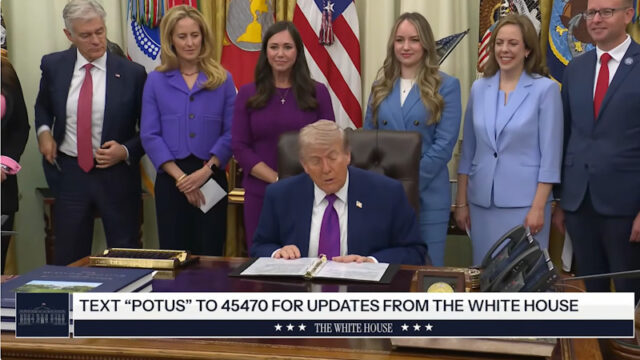
WASHINGTON, D.C. — In a whirlwind of diplomatic tension and domestic policy rollouts, President Donald J. Trump has set the stage for a defining week in his second term. Facing a deepening impasse with Tehran over a fragile ceasefire, the President is simultaneously preparing for a monumental state visit to China while doubling down on a federal initiative designed to drastically lower the costs of in-vitro fertilization (IVF) for American families.
The intersection of these three pillars—Middle Eastern security, Great Power competition, and “pro-family” domestic policy—highlights an administration attempting to leverage its “America First” doctrine on multiple fronts as the 2026 midterms approach.
The Iran Impasse: “Totally Unacceptable”
On Sunday, President Trump took to Truth Social to deliver a blunt assessment of Iran’s response to a 14-point U.S. ceasefire proposal. “I have just read the response from Iran’s so-called ‘Representatives.’ I don’t like it — TOTALLY UNACCEPTABLE!” the President posted. He added, “They will be laughing no longer!”
The diplomatic friction follows a period of intense volatility in the Persian Gulf. After a month-long, shaky ceasefire, recent days have seen renewed exchanges of fire, including U.S. strikes on Iranian tankers and clashes around the Strait of Hormuz. The war, which escalated earlier this year following U.S.-Israeli strikes on Iranian nuclear and military infrastructure, has left the global energy market in a state of shock.

According to reports from the Pentagon and international monitors:
- Casualties: Since the onset of hostilities, the Pentagon confirms 13 U.S. service members have been killed and 415 wounded. In Iran, the Human Rights Activists News Agency reports that over 3,600 people have been killed by U.S.-Israeli strikes.
- Economic Impact: The Iranian economy is reeling, with over one million jobs lost. Domestically, the global price of Brent crude has surged toward $105 per barrel, sparking concerns over a prolonged energy crisis.
- The Demands: The Trump administration’s 14-point plan requires the complete removal of enriched uranium from Iranian soil and the dismantling of enrichment sites. Tehran, through Pakistani mediators, has insisted on an end to the U.S. naval blockade, the unfreezing of assets, and the lifting of sanctions before nuclear negotiations can begin.
Israeli Prime Minister Benjamin Netanyahu echoed the President’s hardline stance in a recent interview, insisting the war is not over while Iran maintains its nuclear capabilities and continues to support regional proxies.
The Road to Beijing: High Stakes with Xi Jinping
The Iran crisis will cast a long shadow over President Trump’s upcoming visit to Beijing, scheduled for May 14–15. This summit marks the first visit to China by a U.S. President since Trump’s own trip in 2017.
However, the agenda extends far beyond the Middle East:
- Reciprocal Trade: The administration is pushing a “Board of Trade” proposal aimed at ensuring fairness and reciprocity. This includes seeking massive Chinese purchases of U.S. goods to reduce the trade deficit.
- Technological Rivalry: Discussions are expected to cover critical minerals, investment restrictions, and access to the U.S. market for Chinese electric vehicle (EV) makers like BYD.
- Nuclear Control: President Trump is reportedly seeking a new trilateral nuclear arms control framework that would formally include China, arguing that Cold War-era agreements with Russia are obsolete in the current strategic landscape.
Analysts suggest that the willingness of both leaders to meet signals a mutual desire for “managed stability” despite ongoing competition in the South China Sea and the tech sector.
Domestic Shift: The TrumpRx.gov IVF Revolution
While navigating global conflicts, the President is also promoting a major victory for his domestic agenda: the expansion of the TrumpRx.gov platform. Launched in January 2026, the portal is the centerpiece of a 2025 executive order aimed at making IVF and maternal healthcare more affordable.
The administration has successfully negotiated a “Most-Favored-Nation” (MFN) drug pricing agreement with pharmaceutical giant EMD Serono. Under this deal, common fertility medications such as Gonal-f, Ovidrel, and Cetrotide are being offered at discounts of up to 84% off list prices for eligible Americans.
Key components of the maternal health plan include:
- Direct Access: Patients can purchase discounted medications directly through the government-run portal, bypassing traditional retail markups.
- Employer Flexibility: New federal guidance allows employers to offer “standalone” fertility benefits. Similar to dental or vision insurance, these benefits can be provided separately from a company’s primary medical plan.
- HRA Contributions: The administration has cleared a path for limited Health Reimbursement Arrangements (HRAs), allowing employers to contribute up to $2,150 annually toward an employee’s out-of-pocket fertility expenses.
Critics, including some medical associations, have noted that while the drug discounts are historic, the plan does not mandate coverage for the actual IVF procedures, which remain expensive. Nonetheless, advocacy groups like RESOLVE have acknowledged the progress, noting that these steps address the significant financial barriers many families face.
As President Trump departs for China, his administration finds itself at a critical juncture. The success of the “Art of the Deal” 2.0 in Tehran may depend heavily on the rapport he can maintain with President Xi. Meanwhile, the success of his “Pro-Family” GOP platform will be measured by how many Americans utilize the new healthcare portals in the coming months.
In the words of Energy Secretary Chris Wright, “We know where this is going to end. We will have free flow of traffic through the Strait of Hormuz, and we will have an end to the Iranian nuclear program.” Whether that end comes through diplomacy in Beijing or continued pressure remains the defining question of May 2026.
Sources Used and Links:
- Democracy Now: “Trump Blasts Iran’s Response to U.S. Ceasefire Proposal as ‘Totally Unacceptable’” https://www.democracynow.org/2026/5/11/headlines/trump_blasts_irans_response_to_us_ceasefire_proposal_as_totally_unacceptable
- PBS NewsHour: “Iran war ceasefire grows increasingly shaky after Trump calls Tehran’s latest proposal ‘totally unacceptable'” https://www.pbs.org/newshour/world/iran-war-ceasefire-grows-increasingly-shaky-after-trump-calls-tehrans-latest-proposal-totally-unacceptable
- Washington Post: “Trump calls Iran’s response to peace plan ‘unacceptable’ as ceasefire is tested” https://www.washingtonpost.com/politics/2026/05/10/iran-response-us-proposal-war/
- CSIS (Center for Strategic and International Studies): “Trump-Xi Summit in Beijing: Managing the World’s Most Important Relationship” https://www.csis.org/analysis/trump-xi-summit-beijing-managing-worlds-most-important-relationship
- World Economic Forum: “US-China relations: What to expect from the Trump-Xi summit” https://www.weforum.org/stories/2026/05/what-to-expect-trump-xi-summit-china-us/
- Prelude Fertility: “Trump’s IVF Executive Order: What You Need to Know [Updated Feb. 2026]” https://www.preludefertility.com/blog/trumps-ivf-executive-order-what-you-need-to-know
- ASRM (American Society for Reproductive Medicine): “Evaluating the Trump Administration’s Initiative on IVF” https://www.asrm.org/advocacy-and-policy/fact-sheets-and-one-pagers/evaluating-the-trump-administrations-initiative-on-ivf/
- The Hindu: “Iran-Israel war LIVE: Iran says demanded end to war, release of assets in its response to U.S.” https://www.thehindu.com/news/international/iran-israel-war-us-ceasefire-talks-strait-of-hormuz-issue-live-updates-may-11-2026/article70964212.ece
- Institute for the Study of War (ISW): “Iran Update Special Report, May 9, 2026” https://understandingwar.org/research/middle-east/iran-update-special-report-may-9-2026
- Resolve: The National Infertility Association: “The White House Has a Plan for IVF – What We Know”https://resolve.org/the-white-house-has-a-plan-for-ivf-heres-what-we-know-and-what-we-dont/
Disclaimer
Artificial Intelligence Disclosure & Legal Disclaimer
AI Content Policy.
To provide our readers with timely and comprehensive coverage, South Florida Reporter uses artificial intelligence (AI) to assist in producing certain articles and visual content.
Articles: AI may be used to assist in research, structural drafting, or data analysis. All AI-assisted text is reviewed and edited by our team to ensure accuracy and adherence to our editorial standards.
Images: Any imagery generated or significantly altered by AI is clearly marked with a disclaimer or watermark to distinguish it from traditional photography or editorial illustrations.
General Disclaimer
The information contained in South Florida Reporter is for general information purposes only.
South Florida Reporter assumes no responsibility for errors or omissions in the contents of the Service. In no event shall South Florida Reporter be liable for any special, direct, indirect, consequential, or incidental damages or any damages whatsoever, whether in an action of contract, negligence or other tort, arising out of or in connection with the use of the Service or the contents of the Service.
The Company reserves the right to make additions, deletions, or modifications to the contents of the Service at any time without prior notice. The Company does not warrant that the Service is free of viruses or other harmful components.