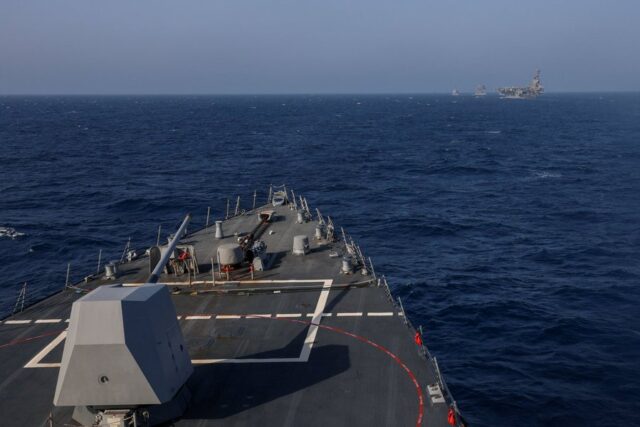
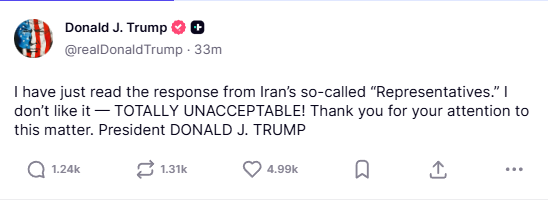
The fragile peace in the 2026 Middle East has been pushed to the brink. On Sunday, May 10, 2026, President Donald Trump effectively slammed the door on a comprehensive ceasefire and diplomatic roadmap delivered by Iran through Pakistani intermediaries. In a characteristic display of digital diplomacy, the President took to Truth Social to label Tehran’s counter-offer “totally unacceptable,” signaling that the United States is nowhere near ready to wind down its campaign of “Economic Fury.”
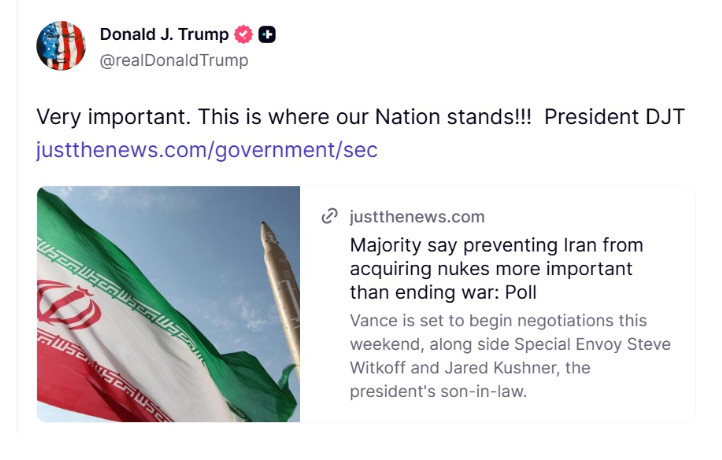
The rejection comes at a time when the region is still reeling from the scars of Operation Epic Fury, the intensive military campaign launched in mid-2025 and escalated in early 2026 to dismantle Iran’s nuclear infrastructure. For observers in Washington and Tehran, this weekend’s exchange represents more than just a failed negotiation; it is a clash of two diametrically opposed visions for the future of the Persian Gulf.

The Proposal: A Path Brokered in Islamabad
The diplomatic framework in question was the result of weeks of frantic back-channeling. Following the April 8, 2026, ceasefire brokered by Pakistan, the United States had presented a memorandum—reportedly drafted with significant input from advisors Howard Witkoff and Jared Kushner. The U.S. proposal aimed to formalize the current cessation of hostilities into a long-term regional security pact.
Under the U.S. terms, Washington offered to release billions in frozen Iranian assets and gradually lift primary sanctions in exchange for a 12-year moratorium on uranium enrichment above 3.67% and the permanent dismantling of advanced centrifuge arrays. However, Tehran’s response, delivered via Islamabad late Saturday, pivoted the conversation from nuclear technicalities to immediate economic survival.
Iran’s Counter-Demands: The 30-Day Ultimatum
According to reports from Iran’s state-linked Tasnim news agency, the “14-point plan” submitted by Tehran was less of a compromise and more of a sweeping demand for a return to the status quo ante bellum—and then some. Iran’s core conditions for peace included:
- Immediate Sanctions Rescission: The lifting of all U.S. Office of Foreign Assets Control (OFAC) sanctions on Iranian oil within a strict 30-day window.
- Termination of the Naval Blockade: An end to the U.S.-led maritime restrictions in the Strait of Hormuz, which have strangled Iranian exports for nearly a year.
- Sovereignty Guarantees: Multilateral, legally binding guarantees that the U.S. would not relaunch military strikes against Iranian soil.
- Decoupling of Issues: A insistence that “ending the war” and “lifting the blockade” be resolved immediately, with nuclear negotiations deferred to a secondary phase.
Tehran’s strategy appears to be a test of Washington’s appetite for continued conflict. By framing the lifting of sanctions as a prerequisite rather than an outcome of talks, Iran is attempting to break the “Maximum Pressure” vise that has defined the second Trump administration’s foreign policy.
The “Unacceptable” Verdict
The White House response was swift. President Trump, speaking to reporters before boarding Air Force One at Palm Beach International Airport, echoed his social media sentiment. “At this moment I’m not satisfied with what they’re offering,” he stated, later adding on Truth Social that he had read the response from “Iran’s so-called representatives” and found it “Totally Unacceptable!”
The President’s rhetoric suggests that the U.S. is doubling down on the military and economic leverage gained since June 2025. Military analysts argue that the strikes on Natanz, Fordow, and Arak—while incomplete—have set the Iranian nuclear program back years, giving the U.S. a strategic advantage it is unwilling to trade for a “flimsy” ceasefire.
The Shadow of “Epic Fury”
To understand the stakes of May 2026, one must look back to June 13, 2025, the date the first missiles hit Iranian nuclear facilities. What began as a targeted Israeli-American strike against Tehran’s atomic capacity spiraled into Operation Epic Fury, a regional conflict that saw direct clashes between the IRGC and U.S. Central Command.
The escalation peaked on February 28, 2026, with intensive strikes on Iranian command and control centers. While the April ceasefire brought a temporary halt to the kinetic war, it replaced it with an unprecedented blockade. The U.S. Treasury’s “Economic Fury” campaign has since targeted the “shadow fleet” and gold-for-oil networks, cutting off what the State Department calls “billions in illicit funding.” For Iran, the current situation is an “economic war” that is as lethal as the physical one.
Regional and Global Implications
The impasse has sent shockwaves through the global energy market. Iran’s demand for the lifting of the naval blockade in the Strait of Hormuz is particularly sensitive. As a vital artery for 20% of the world’s oil, any continued disruption threatens global inflation.
Pakistan, acting as the primary mediator, finds itself in an increasingly difficult position. Prime Minister’s Office in Islamabad has called for “restraint and a return to the negotiating table,” but the gap between Trump’s demand for total nuclear surrender and Tehran’s demand for total economic relief seems unbridgeable.
In Tehran, the Supreme National Security Council, backed by the Supreme Leader, remains defiant. Abbas Aslani, a senior research fellow in Tehran, noted that the U.S. must not misinterpret Iran’s willingness to negotiate as a sign of weakness. “The decision-making process is unified,” Aslani told regional media, suggesting that if diplomacy fails, the ceasefire may not hold through the summer.
As of May 10, the diplomatic path is stalled. The U.S. Department of the Treasury continues to issue new sanctions against entities facilitating Iranian UAV and ballistic missile programs, while the Department of State maintains that “military coercion alone cannot substitute for diplomacy,” even as it upholds the blockade.
The question now is whether the Pakistani mediators can find a “middle way” or if the “totally unacceptable” verdict from the Oval Office marks the beginning of a new, even more intensive phase of the conflict. With the President threatening to “blast them to hell” if a deal isn’t reached, the window for a peaceful 2026 is closing rapidly.
Sources Used
- Associated Press (via Las Vegas Sun): “Iran responds to US ceasefire proposal but Trump rejects it as ‘unacceptable'” – https://lasvegassun.com/news/2026/may/10/iran-responds-to-us-ceasefire-proposal-but-trump-r/
- WDRB News (AP): “Trump calls Iran’s response to latest US ceasefire proposal ‘totally unacceptable’ but gives no details” – https://www.wdrb.com/news/national/trump-calls-irans-response-to-latest-us-ceasefire-proposal-totally-unacceptable-but-gives-no-details/article_66d86ea6-482d-5d4f-8580-e328cffe5ec6.html
- The Jerusalem Post: “Donald Trump calls Iranian proposal to end war ‘totally unacceptable'” – https://www.jpost.com/middle-east/iran-news/article-895737
- Investing Live: “Iran said to table broad demands covering sanctions, war and security in U.S. talks” – https://investinglive.com/commodities/iran-said-to-table-broad-demands-covering-sanctions-war-and-security-in-us-talks-20260510/
- Eurasia Review: “US-Israel War On Iran: What Price For A Lasting Peace? – Analysis” – https://www.eurasiareview.com/10052026-us-israel-war-on-iran-what-price-for-a-lasting-peace-analysis/
- U.S. Department of State: “Iran Sanctions” – [suspicious link removed]
- U.S. Department of the Treasury: “Economic Fury Disrupts Networks Supplying Weapons and UAV Components to Iran” – https://home.treasury.gov/news/press-releases/sb0496
- NAMPA (AFP): “Trump says ‘not satisfied’ with new Iran proposal” – https://www.nampa.org/text/22920375
Disclaimer
Artificial Intelligence Disclosure & Legal Disclaimer
AI Content Policy.
To provide our readers with timely and comprehensive coverage, South Florida Reporter uses artificial intelligence (AI) to assist in producing certain articles and visual content.
Articles: AI may be used to assist in research, structural drafting, or data analysis. All AI-assisted text is reviewed and edited by our team to ensure accuracy and adherence to our editorial standards.
Images: Any imagery generated or significantly altered by AI is clearly marked with a disclaimer or watermark to distinguish it from traditional photography or editorial illustrations.
General Disclaimer
The information contained in South Florida Reporter is for general information purposes only.
South Florida Reporter assumes no responsibility for errors or omissions in the contents of the Service. In no event shall South Florida Reporter be liable for any special, direct, indirect, consequential, or incidental damages or any damages whatsoever, whether in an action of contract, negligence or other tort, arising out of or in connection with the use of the Service or the contents of the Service.
The Company reserves the right to make additions, deletions, or modifications to the contents of the Service at any time without prior notice. The Company does not warrant that the Service is free of viruses or other harmful components.