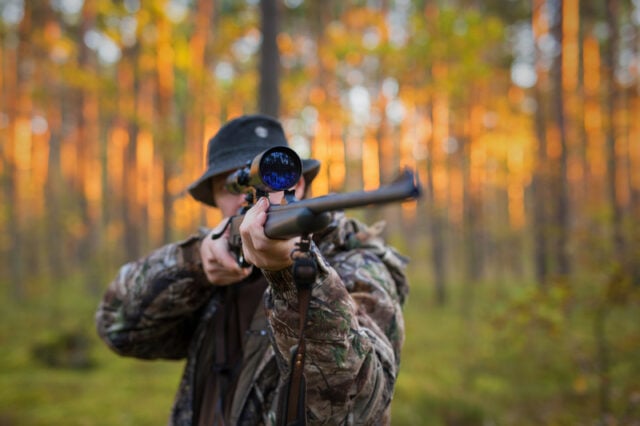
In a sweeping move that has ignited a fierce debate over the future of America’s public lands, the Trump administration has officially moved to dismantle dozens of long-standing restrictions on hunting and fishing within federal territories. Driven by a philosophy of “open unless closed,” the Department of the Interior (DOI) has issued new directives that fundamentally alter how millions of acres of National Park Service (NPS) units and National Wildlife Refuges are managed. While the administration frames the move as a victory for the “North American Model of Wildlife Conservation” and a necessary boost for rural economies, environmental advocates and park safety groups warn of potential conflicts between hunters and the millions of non-consumptive visitors who frequent these areas.
The Policy Shift: Secretarial Order 3447
The cornerstone of this initiative is Secretarial Order 3447, titled “Expanding Hunting and Fishing Access, Removing Unnecessary Barriers, and Ensuring Consistency Across the Department of the Interior Lands and Waters.” Issued in January 2026 by Interior Secretary Doug Burgum, the order mandates that all federally managed lands should be presumed open to hunting and fishing. Under this new “open unless closed” paradigm, any restriction or closure must be specifically documented, legally supported, and proven to be the “minimum necessary” for public safety or resource protection.
This represents a radical departure from the management styles of previous administrations, which often utilized a “precautionary principle.” In the past, specific activities like hunting were often restricted in high-traffic or ecologically sensitive areas unless a clear management plan authorized them. Secretary Burgum’s order flips this logic, placing the burden of proof on park superintendents and refuge managers to justify why a hunter cannot fire a weapon in a particular zone.
The April 2026 Memo: Lifting the Barriers
While the January order set the tone, an internal memo dated April 21, 2026, provided the tactical instructions for immediate implementation. This memo targeted roughly 76 National Park Service units—including national recreation areas, national seashores, and national scenic riverways—where hunting is already legally permitted but has been historically constrained by local “superintendent’s compendiums.”

The memo directed managers to immediately lift restrictions that the administration deemed “burdensome” or “outdated.” Examples of the changes include:
- Lake Meredith National Recreation Area (Texas): Removal of a ban that prevented hunters from cleaning and processing game animals in public restrooms.
- Curecanti National Recreation Area (Colorado): Lifting a prohibition on firing weapons from, toward, or across established hiking trails.
- Ozark National Scenic Riverways (Missouri): Eliminating the requirement for hunting dogs to wear specific identification tags while in the field.
- Cape Cod National Seashore (Massachusetts): Extensions of hunting seasons through the spring and summer months, which previously had been closed to avoid conflicts with peak tourist seasons.
- Jean Lafitte National Historical Park and Preserve (Louisiana): New authorizations for the hunting of alligators within the park boundaries.
These changes are designed to align federal rules more closely with the hunting regulations of the states in which these lands reside. The administration argues that “duplicative” federal rules create confusion and act as a deterrent to the declining population of American hunters.
The Economic and Conservation Argument
The Trump administration’s push is grounded in a specific interpretation of conservation history. During a 2026 testimony before a House subcommittee, Brian Nesvik, Director of the U.S. Fish and Wildlife Service, emphasized that hunters and anglers are the “financial backbone” of American conservation.
Since the passage of the Pittman-Robertson Wildlife Restoration Act of 1937, excise taxes on firearms, ammunition, and archery equipment have provided billions of dollars to state wildlife agencies. These funds are used for habitat restoration, species recovery, and the purchase of public lands. The administration points out that in 2025 alone, approximately 2.7 million hunters visited national wildlife refuges, and hunting-related activities contributed over $144 billion to the U.S. economy.
However, hunting participation has been on a steady decline for decades. Currently, only about 4.2% of the U.S. population identifies as hunters. The administration views the expansion of access as a survival strategy for this funding model. By removing “administrative friction”—such as bans on baiting or night-vision optics—they hope to encourage a new generation of sportsmen and sportswomen to take up the activity.
Safety Concerns and Environmental Backlash
The reaction from environmental organizations and recreation groups has been swift and critical. The National Parks Conservation Association (NPCA) has voiced deep concern that lifting restrictions like the “no shooting across trails” rule at Curecanti or allowing hunting dogs to run without tags in Missouri will lead to dangerous encounters between hunters and hikers, birdwatchers, or families.
Critics argue that the National Park Service’s primary mission, as established by the 1916 Organic Act, is to leave the parks “unimpaired for the enjoyment of future generations.” They contend that the “open unless closed” policy treats National Parks like multi-use Bureau of Land Management (BLM) lands, ignoring the higher standard of protection usually afforded to the NPS.
Safety is a paramount concern. In many National Recreation Areas, trails are heavily utilized by mountain bikers and trail runners. Allowing the discharge of firearms across these paths introduces a level of risk that many visitor groups find unacceptable. Furthermore, there are concerns about the sanitation and public health implications of allowing game cleaning in public facilities, as seen in the Lake Meredith case.
Federal vs. State: A Jurisdictional Tug-of-War
A common misconception is that this policy opens every “state park” to hunting. In reality, the administration’s authority is limited to federal lands. However, the confusion often arises because the administration is explicitly trying to yield federal management authority to state wildlife agencies.
States have historically held the primary authority for managing wildlife “in trust” for the people. By removing federal “over-layers” of regulation, the Trump administration is essentially telling states that their hunting rules should be the law of the land, even inside a National Seashore or a Wildlife Refuge.
This “state-alignment” strategy is part of a broader deregulatory agenda. Earlier in 2025, President Trump signed Executive Order 14192, “Unleashing Prosperity Through Deregulation,” which directed agencies to cut costs and complexities for the public. The hunting expansion is seen as the natural extension of this order into the realm of natural resources.
Impact on Wildlife Populations
While the administration argues that hunting is a management tool for controlling overpopulated species like deer or wild hogs, biologists are divided on the impact of these specific deregulatory moves. Lifting bans on baiting or the use of hounds can significantly increase “harvest rates,” potentially leading to localized depletions of certain species.
In Alaska, the administration has proposed restoring state-aligned hunting regulations on National Preserves, which could include controversial practices like hunting bears over bait or taking wolves during the denning season. Proponents argue these are traditional management tools; opponents see them as a threat to the ecological balance of the “last frontier.”
The “Make America Beautiful Again” Commission
The hunting initiative is also tied to the Make America Beautiful Again Commission, established by the President in July 2025. While the commission’s name suggests a focus on aesthetics and litter removal, its charter includes a heavy emphasis on “expanding access to public lands and waters for recreation, hunting, and fishing.”
The commission’s 2026 report argues that “urbanization has disconnected Americans from their heritage.” By making it easier to hunt and fish on federal lands, the administration hopes to reverse this trend. They see the “sportsman” as the quintessential American steward—someone who is physically and financially invested in the health of the land.
Looking Ahead: Legal Challenges and Public Sentiment
As the 2025-2026 hunting season progresses, the results of this policy shift will become clearer. It is likely that the “minimum necessary” clause in SO 3447 will be the subject of numerous lawsuits. Environmental NGOs are already preparing to challenge the April memo, arguing that the Department of the Interior bypassed the public comment periods and environmental impact studies required under the National Environmental Policy Act (NEPA).
For now, the gates are opening wider. From the alligator-filled marshes of Louisiana to the snowy trails of Colorado, the Trump administration has made its stance clear: the American hunter is no longer a guest on federal land, but a primary stakeholder. Whether this results in a conservation renaissance or a series of tragic accidents in the woods remains the central question of this new era of public land management.
Sources Used andLinks:
- Interior Department Increases Hunting Opportunities on Public Lands https://www.americanhunter.org/content/interior-department-increases-hunting-opportunities-on-public-lands/
- Trump is lifting restrictions on hunting in national parks and other areas https://www.pbs.org/newshour/politics/trump-is-lifting-restrictions-on-hunting-in-national-parks-and-other-areas
- Establishing the President’s Make America Beautiful Again Commission https://www.whitehouse.gov/presidential-actions/2025/07/establishing-the-presidents-make-america-beautiful-again-commission/
- Trump Admin Orders Rapid End to Some Hunting Rules on Federal Lands https://www.sej.org/headlines/trump-admin-orders-rapid-end-some-hunting-rules-federal-lands
- Interior Secretary Order 3447: Expanding Hunting and Fishing Access https://www.doi.gov/document-library/secretary-order/so-3447-expanding-hunting-and-fishing-access-removing-unnecessary
- Hunting and Fishing Access in the Great American Outdoors | U.S. Fish & Wildlife Service https://www.fws.gov/testimony/hunting-and-fishing-access-great-american-outdoors
- Expanded Hunting Directive in Some National Park Sites Defies Long-Term Protection https://www.npca.org/articles/11384-expanded-hunting-directive-in-some-national-park-sites-defies-long-term-protection
- Interior Pushes to Streamline Hunting Rules on Parks, Federal Sites https://gearjunkie.com/hunting/interior-pushes-streamlined-hunting-rules-parks-federal-sites
Disclaimer
Artificial Intelligence Disclosure & Legal Disclaimer
AI Content Policy.
To provide our readers with timely and comprehensive coverage, South Florida Reporter uses artificial intelligence (AI) to assist in producing certain articles and visual content.
Articles: AI may be used to assist in research, structural drafting, or data analysis. All AI-assisted text is reviewed and edited by our team to ensure accuracy and adherence to our editorial standards.
Images: Any imagery generated or significantly altered by AI is clearly marked with a disclaimer or watermark to distinguish it from traditional photography or editorial illustrations.
General Disclaimer
The information contained in South Florida Reporter is for general information purposes only.
South Florida Reporter assumes no responsibility for errors or omissions in the contents of the Service. In no event shall South Florida Reporter be liable for any special, direct, indirect, consequential, or incidental damages or any damages whatsoever, whether in an action of contract, negligence or other tort, arising out of or in connection with the use of the Service or the contents of the Service.
The Company reserves the right to make additions, deletions, or modifications to the contents of the Service at any time without prior notice. The Company does not warrant that the Service is free of viruses or other harmful components.