The Morning After: A Tense Calm in the Gulf
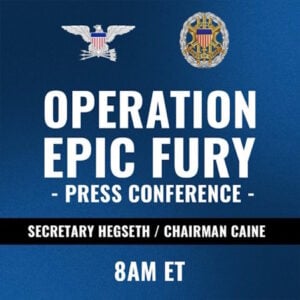
As the sun rises over Washington this Tuesday, May 5, 2026, the world’s attention is fixed on the Pentagon. In less than eight hours, at 8:00 AM, Secretary of Defense Pete Hegseth and the Chairman of the Joint Chiefs of Staff, General Dan Caine, will step behind the podium for a joint news conference. The briefing follows a weekend of dramatic military escalation in the Strait of Hormuz—an exchange of shots that has effectively shattered the fragile ceasefire established on April 8 and pushed the global economy to the brink of a systemic energy collapse.
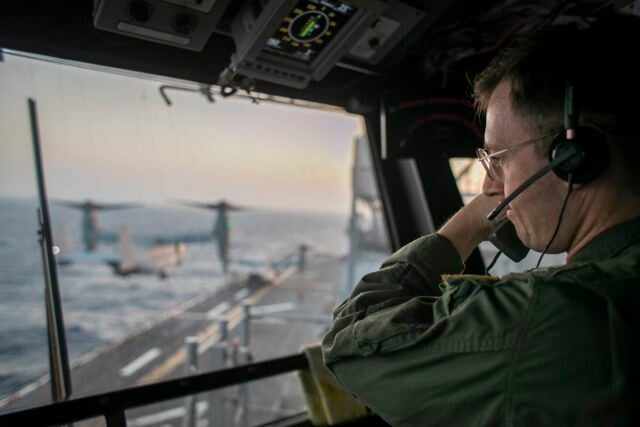
The latest “exchange of shots” represents the most significant direct combat between Iranian forces and the U.S. Navy since the initial launch of Operation Epic Fury in late February. According to Central Command (CENTCOM), the engagement began on Monday morning when U.S. guided-missile destroyers entered the Strait of Hormuz to facilitate the exit of two U.S.-flagged merchant vessels. These movements, part of the newly dubbed “Project Freedom,” were met with a barrage of Iranian cruise missiles, ballistic missiles, and suicide drones launched from coastal batteries and fast-attack craft.
By the end of the day, the U.S. military reported the destruction of seven small Iranian boats and the neutralization of over a dozen incoming projectiles. However, the cost of the confrontation is still being tallied, with reports of damage to commercial shipping and rising casualties among Iranian military personnel.

Operation Epic Fury: The Origins of the 2026 Conflict
To understand the intensity of this morning’s briefing, one must look back to February 28, 2026. On that day, the United States and Israel launched a massive, coordinated military campaign—Operation Epic Fury (U.S.) and Operation Roaring Lion (Israel)—against the Islamic Republic of Iran.
The justification provided by the Trump administration was multifaceted, though primarily focused on the “existential threat” of Iran’s nuclear program. Secretary Hegseth has consistently argued that diplomacy was exhausted after the failure of the Islamabad Talks in January. The initial strikes were unprecedented in scale, targeting nuclear enrichment facilities at Fordow and Natanz, as well as military command structures and leadership hubs.
“The U.S. war in Iran is a gift to the world. We are finally addressing a cancer that has metastasized for decades.” — Secretary Pete Hegseth, April 24, 2026
The conflict quickly spiraled into a regional conflagration. In retaliation for the assassination of key Iranian officials, including Supreme Leader Ali Khamenei, Iran launched hundreds of drones and ballistic missiles at Israel, U.S. bases in Qatar and Bahrain, and energy infrastructure in Saudi Arabia and the UAE.
The Human and Economic Toll
The first 40 days of sustained combat took a staggering toll. While the U.S. claims to have degraded over 70% of Iran’s conventional missile capabilities, the human cost has been immense:
- Iran: Over 6,000 military personnel killed and 15,000 wounded.
- United States: At least 15 service members killed and over 500 wounded.
- Israel: 28 civilians and 18 soldiers killed, with thousands injured by missile barrages.
The Ceasefire That Wasn’t
On April 8, 2026, a temporary ceasefire was announced, ostensibly to allow for humanitarian aid and a pause in the heavy aerial bombardment of Iranian cities. However, the peace was always illusory. The U.S. maintained a rigorous naval blockade, which it termed “maritime interdiction,” to prevent Iran from exporting oil or receiving military supplies.
Tensions flared again in late April when General Dan Caine reported that U.S. forces had seized three merchant vessels of the “Dark Fleet” suspected of carrying Iranian oil. The seizure of the Tousca, which followed the firing of warning shots by a Navy destroyer, was condemned by Tehran as a “truce violation.”
By May 3, President Trump declared that the U.S. would no longer permit the Strait of Hormuz to be “held hostage” by Iranian mine-laying activities. This led to the authorization of Project Freedom, the operational name for the U.S. Navy’s effort to clear shipping lanes and escort commercial tankers through the narrow waterway.
Monday’s Clashes: A Detailed Breakdown
Monday, May 4, marked the collapse of the April 8 status quo. According to reports from Argus Media and CBS News, the exchange was initiated when Iranian fast boats attempted to harass a U.S.-escorted convoy.
- 09:00 AM (local time): U.S. destroyers detect Iranian cruise missile signatures from the Tebat area of Oman’s enclave.
- 10:15 AM: Iran’s Fars News Agency claims a U.S. naval vessel was struck. CENTCOM immediately denies this, reporting that all incoming threats were defeated by “clinical application of defensive munitions.”
- 12:30 PM: U.S. forces engage and sink seven small Iranian craft identified as laying mines in the path of outgoing tankers.
- 02:00 PM: Reports emerge of Iranian ballistic missile strikes on the UAE port of Fujairah, further disrupting regional energy exports.
This exchange has sent global oil prices to historic highs, with butane and LPG exports from the U.S. hitting record levels as Asian and European markets scramble for alternatives to Middle Eastern supply.
Geopolitical Fallout: The China Factor and European Discontent
The 2026 Iran war has not just been a Middle Eastern conflict; it is a global one. China has remained Iran’s most significant economic lifeline, allegedly helping Tehran evade the blockade by faking vessel tracking data and utilizing Pakistani territorial waters. This has led to sharp rebukes from Secretary Hegseth, who has labeled some U.S. allies in Europe as “free-riders” for their reluctance to join the naval mission.
French President Emmanuel Macron has been particularly vocal, stating that the U.S. cannot expect European support for an “operation they chose to undertake alone.” This division within the NATO alliance has emboldened Iranian proxies, including Hezbollah, though a separate ceasefire has largely held on the Lebanese border since April 16.
What to Expect at the 8:00 AM Briefing
When Secretary Hegseth and General Caine take the stage this morning, they are expected to address three critical areas:
1. The Success of Project Freedom
General Caine is likely to present evidence of the U.S. military’s ability to “clear the lanes.” Expect a display of satellite imagery showing the destruction of Iranian mine-laying vessels and the successful transit of commercial ships.
2. The Budgetary “Gift”
Secretary Hegseth will likely use the recent escalation to lobby for the Trump administration’s $1.5 trillion defense budget for 2027. He has previously characterized domestic political opposition as the “biggest adversary” to the war effort, and he is expected to double down on the necessity of “total victory” to prevent a nuclear-armed Iran.
3. Escalation Rules of Engagement
Following the exchange of fire, there is speculation that the U.S. may expand its targeting to include Iranian infrastructure that supports the fast-boat fleet. The “shoot and kill” order issued by President Trump for any boat deploying mines will likely be a central theme of the Q&A session.
Conclusion: A World on Edge
The exchange of shots on May 4 serves as a grim reminder that the 2026 Iran war is far from over. As the U.S. pivots from a policy of containment to one of active maritime liberation, the risk of a full-scale regional eruption remains at an all-time high. The Hegseth-Caine news conference will provide the first definitive look at whether the U.S. intends to pursue a new ceasefire or if “Project Freedom” is the opening salvo of a much larger, more permanent escalation.
Sources Used and Links:
- Argus Media: US, Iran exchange fire in Hormuz: Update
- CBS News: Live Updates: U.S. sinks 7 small Iranian boats
- PBS News: Hegseth calls U.S. war in Iran a ‘gift to the world’
- PBS News: Hegseth calls congressional Democrats, some Republicans ‘biggest adversary’ in Iran war
- AJC: The Iran Strikes, Explained: How We Got Here and What It Means
- Wikipedia: 2026 Iran war
- Joint Chiefs of Staff (JCS.mil): Official Website of the Joint Chiefs of Staff
- War.gov: Transcript: Secretary of War Pete Hegseth and Chairman of the Joint Chiefs Air Force Gen. Dan Caine Hold a Press Briefing
Disclaimer
Artificial Intelligence Disclosure & Legal Disclaimer
AI Content Policy.
To provide our readers with timely and comprehensive coverage, South Florida Reporter uses artificial intelligence (AI) to assist in producing certain articles and visual content.
Articles: AI may be used to assist in research, structural drafting, or data analysis. All AI-assisted text is reviewed and edited by our team to ensure accuracy and adherence to our editorial standards.
Images: Any imagery generated or significantly altered by AI is clearly marked with a disclaimer or watermark to distinguish it from traditional photography or editorial illustrations.
General Disclaimer
The information contained in South Florida Reporter is for general information purposes only.
South Florida Reporter assumes no responsibility for errors or omissions in the contents of the Service. In no event shall South Florida Reporter be liable for any special, direct, indirect, consequential, or incidental damages or any damages whatsoever, whether in an action of contract, negligence or other tort, arising out of or in connection with the use of the Service or the contents of the Service.
The Company reserves the right to make additions, deletions, or modifications to the contents of the Service at any time without prior notice. The Company does not warrant that the Service is free of viruses or other harmful components.