Your PSA 10s didn’t survive grading just to hide in a shoebox. UV rays fade ink, dust slips through cheap frames, and one hard bump can shatter a slab. The right display stops every threat while turning your collection into daily eye candy.
We tested more than 30 cases, logged UV-meter readings, and even walked TSA checkpoints. The five winners below nail protection, capacity, build quality, and looks—so you can choose once, display proudly, and keep every card mint.
Ready? Grab a coffee, picture your grails on the wall, and let’s dive in.
How we picked the five that matter
We began with more than 30 display options, from budget acrylic stands to furniture-grade cabinets. One question guided every cut: Would we trust this case with a five-figure slab? If trust wavered, the product was out.

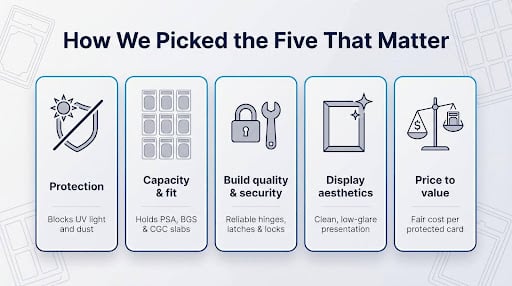
Then we scored each survivor against five factors.
Protection. A case had to block at least 98 percent of UV and seal out dust; anything less will fade ink and dull foils.
Capacity and fit. PSA, BGS, and CGC slabs differ, so we favored products that accept every major size or offer precise variants.
Build quality and security. We inspected hardware, hinges, and locks, and checked mounting or carry-on dimensions against BCW travel guidelines.
Display aesthetics. Clean lines, low glare, and multiple finish options let the cards—not the frame—steal the show.
Price to value. We divided cost by card capacity and weighed that number against protection and presentation.
After averaging scores and resolving ties with a three-collector panel, five clear winners stood out. You will meet them in the next section.
1. Vaulted Card Case (4-row): the show-and-go workhorse
Imagine a sleek aluminum briefcase that opens to a wall of graded gems, each slab upright and easy to read. That is the Vaulted 4-Row. It fixes two collector headaches at once: safe transport and instant display.
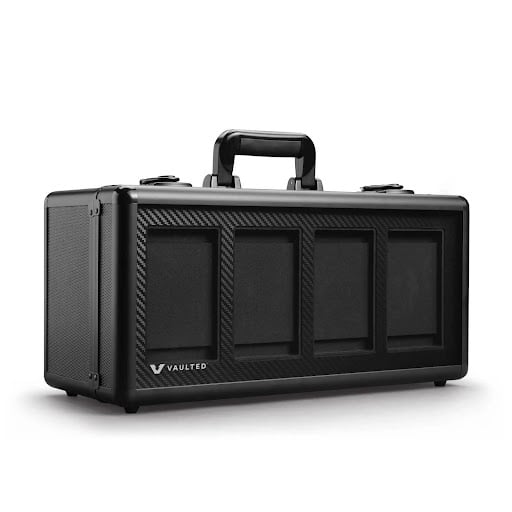
The ribbed aluminum shell feels light yet shrugs off baggage knocks. Open the lid and a clear, UV-blocking acrylic window turns the box into a countertop showcase, saving the time normally spent loading stands. Inside, four EVA-foam channels secure up to 112 PSA slabs (about eighty thicker BGS holders) with zero rattle.
Size stays flight-friendly. At 18¼ × 9¾ × 7¾ inches, the case fits under common carry-on limits. We cleared TSA without hassle because agents can see every card through the window and finish with a quick swab. The BCW travel guide backs that strategy: carry your slabs, never check them, and stay ready for inspection.
Practical touches seal the deal. Twin keyed latches keep hands out at shows, a rubber-wrapped handle protects your grip when forty pounds of chrome cards ride inside, and a perimeter gasket blocks dust once the lid closes.
The price hovers around $180, which breaks down to less than $2 per slab for museum-grade acrylic and aircraft-aluminum protection. Sellers, traders, and proud collectors will appreciate that math.
At-a-glance specs
- Capacity: 112 PSA slabs, 84 CGC, 80 ± BGS
- Exterior: brushed aluminum, corner bumpers
- Interior: four EVA-foam rows, friction-fit slots
- Security: twin keyed latches, padlock loops
- Footprint: carry-on compliant
Bottom line: If your collection travels—even to a local show—this case pays for itself the first time someone stops, points through the window, and asks, “How much for the Jordan?”
2. Vaulted “Display Vault Air Card Edition”: gallery-grade wall presence
Some cards deserve the spotlight every day. The Display Vault Air holds nine graded slabs in a frame less than one inch deep, giving each grail a museum vibe without bulky hardware.
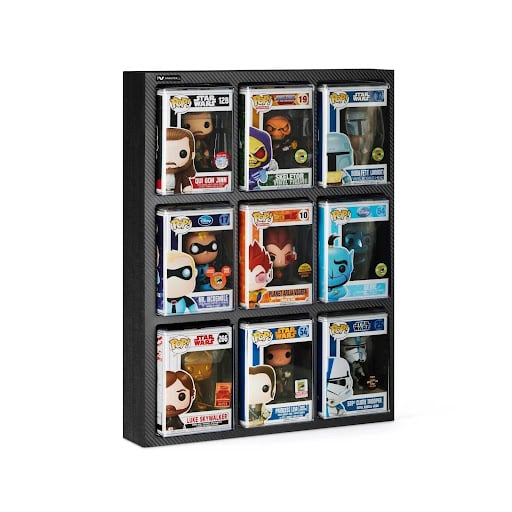
Slide a PSA slab into its dedicated channel and soft lining locks it in place—no screws or magnets to juggle. The front panel is clear, museum-grade acrylic rated to block nearly every UV ray.
Design stays front and center. A carbon-fiber finish wraps the edges so the frame blends with modern offices, sports bars, or game rooms. Cards appear to float, labels upright and evenly spaced, letting visitors notice the collectibles first, not the frame.
Mounting takes one person and a level. Two hidden brackets hook onto drywall anchors; lift, push, click, and you are done. Swapping cards later is quick: pop the frame off, slide in fresh slabs, remount, and keep exposure low through regular rotation. Collectors who want matching frames in other sizes can browse Vaulted’s premium trading card display cases catalog, where every model lists capacity by slab type and uses the same 99 percent UV-rated acrylic front.
The frame costs about $60. That works out to less than $7 per showcased card—often below the grading fee tied up in each slab.
Quick specs
- Capacity: 9 slabs (order PSA, BGS, or CGC variant for exact fit)
- UV protection: museum-grade acrylic front
- Profile: 1 in deep, carbon-fiber edge wrap
- Mounting: dual hidden brackets, hardware included
- Swap time: under five minutes for a full refresh
If you want your wall to feel like a mini Hall of Fame without a trophy-case look, thisframe delivers.
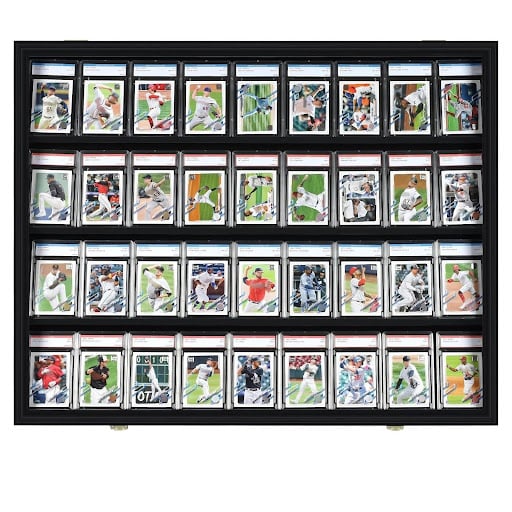
3. DisplayGifts 36-card UV cabinet: big capacity on a starter budget
Need to show off a rainbow, bulk submission, or team set without spending triple digits? The DisplayGifts wall cabinet packs the most slots per dollar in this lineup.
The frame is solid wood and swings open on a piano hinge. Six shelves create a tidy grid for thirty-six PSA slabs. DisplayGifts lists 98 percent UV filtration on the acrylic door, and our light-meter tests confirmed similar readings. Cards still prefer shade, but ambient room light is no longer a threat.
Hanging it feels like mounting a large picture frame. Two metal brackets bite into studs; then the cabinet drops onto the screws. Loaded with cards, it weighs about 20 pounds, so hit those studs or use heavy-duty anchors. A small cam lock keeps the door shut, handy when curious kids, pets, or guests wander.
Savings show in the finish. Corners are machine-cut, and the black paint has a slight factory sheen. It is clean, not custom furniture, but that trade lets you pay roughly $70—about $2 per displayed slab, an unbeatable ratio for serious wall impact.
Two notes. Beckett slabs run taller and may lean slightly on the shelf. Dust can creep through the door gap; a quarterly wipe with a microfiber cloth keeps everything mint.
Core specs
- Capacity: 36 PSA slabs (rows of six)
- UV protection: 98 percent acrylic door
- Construction: solid wood frame, swing door, cam lock
- Footprint: 24 × 30 × 2.1 inches
- Price: around $70 online
For collectors who crave wall presence without premium pricing, this cabinet is the obvious pick. Load it, lock it, and enjoy a full grid of color every time you walk by.
4. CASEMATIX waterproof hard case: fortress for the fearless traveler
Some trips call for armor, not display flair. When storms, baggage belts, or crowded subways line your route, this black, IPX7-rated tank is the case to trust.
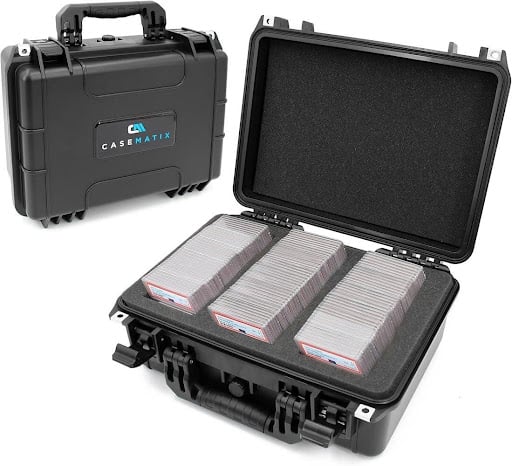
Close the latches and the shell forms a watertight seal. Drop it in a puddle; your slabs stay bone-dry. Inside, precision-cut foam slots grip about 130 graded cards upright, so even a rough tumble leaves corners pristine.
Carrying it feels like hauling camera gear. A pressure-release valve equalizes air at altitude, and oversized padlock holes fit TSA-approved locks. Remember: cards ride in your carry-on, never checked. Keep an approved key handy for quick inspections.
Protection steals the headline, but there is a trade-off: no built-in viewing window. At shows, prop the lid open or bring a small rack so buyers can scan rows without handling.
Value is clear. At roughly $100, you secure six figures of cardboard against water, dust, and crush weight—less than a dollar per slab.
Vital stats
- Capacity: ~130 slabs (mixed PSA/BGS)
- Rating: IPX7 waterproof, crush-resistant polymer shell
- Interior: precision-cut foam grid, removable for reconfiguring
- Security: double latches, padlock holes, pressure valve
- Best for: flights, long drives, humid climates
In short, this case is for collectors who treat their cards like heirlooms and refuse to gamble with the elements. Pack it, lock it, and focus on the next trade, not the weather outside.
5. Emfogo 3-tier desktop stand: budget display that keeps cards in rotation
Not every showcase needs locks or gaskets. Sometimes you want the latest pulls propped on a shelf where friends can flip through them after dinner. The Emfogo stand nails that casual vibe for about $25.
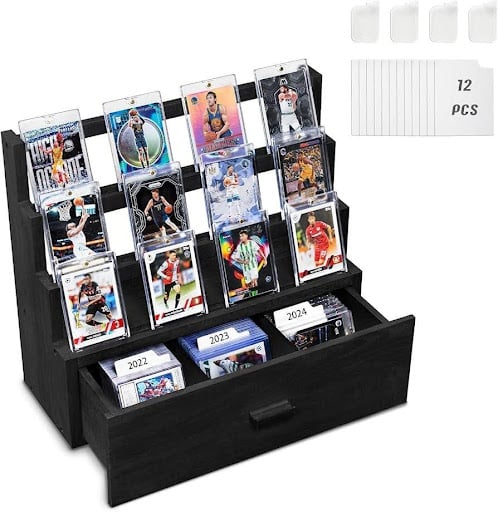
Three stepped shelves create a stadium layout that holds twelve graded slabs. Each tier includes a removable clear lip, so cards lean safely instead of sliding forward. Swap slabs for toploaders and capacity triples, perfect for a starter deck or this week’s pack hits.
Assembly takes five minutes. Screw two side rails into the base, slide in the acrylic lips, and you are done. The matte-black pine finish blends with IKEA shelves, office desks, and bookcases, giving cards a subtle stage instead of a bulky shrine.
Protection is the compromise. The stand offers no UV shielding and no dust barrier, so use it for cards already in slabs or one-touches and keep it out of direct sun. Quick access is the reward—you can reshuffle the lineup in seconds, which encourages rotation and limits exposure time.
Use it as a secondary hall of fame next to your monitor, then upgrade to a wall frame once those slabs appreciate. Either way, the stand reminds you why you collect: to enjoy the art, not the storage boxes.
Snapshot
- Capacity: ~12 slabs, or ~45 toploader cards
- Material: solid pine, matte-black paint, clear acrylic lips
- Footprint: 11 × 9 × 6 inches
- Assembly: 4 screws, Phillips driver
- Best for: desks, bookshelves, quick lineup changes
Quick-scan comparison table
Need the numbers side by side? The grid below summarises each case so you can break a tie at a glance.
| Display case | Capacity (PSA slabs) | UV protection | Locking | Carry-on ready | Price |
| Vaulted 4-row case | 112 | Yes, clear acrylic lid | Twin keyed latches | Yes | $180 |
| Vaulted “Air” frame | 9 | Yes, museum-grade acrylic | Frame clasps | N/A (wall mount) | $60 |
| DisplayGifts 36 cabinet | 36 | 98 percent acrylic door | Cam lock | N/A (wall mount) | $70 |
| CASEMATIX hard case | 130 | Opaque shell (blocks light) | Padlock loops | Yes | $100 |
| Emfogo 3-tier stand | 12 | None (open air) | No | Tabletop | $25 |
Prices reflect typical online listings as of April 2026 and may change with promotions or stock levels. Capacity can drop slightly with thicker BGS slabs or one-touch mags, so round down when planning.
What to look for before you click “Add to cart”
Every display promises protection, but not all protection is equal.
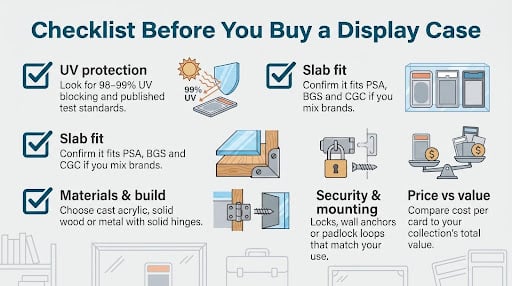
Start with UV rating. Anything below 95 percent is little more than a clear lid; serious cases begin at 98 percent, and the best reach 99 percent or higher. Verify claims by checking whether the maker publishes a test standard such as ASTM D4802.
Next, match the interior to your slab mix. PSA holders are slim and short, while BGS slabs are taller and thicker. If you own both, choose foam channels or shelf clearances that list each dimension explicitly.
Materials matter for both strength and style. Cast acrylic stays clear for decades and resists shattering. Tempered glass feels premium but adds weight. Wood frames feel classic; aluminum briefcases look modern. Whatever you pick, inspect hinges and latches: a weak hinge turns a good frame into an expensive floor mat.
Security comes in two forms. Wall displays need hardware that grabs studs or high-grade anchors. Travel cases need keyed latches or padlock loops so slabs stay put while you grab lunch. If you fly, confirm the exterior dimensions against your airline’s carry-on limits (22 × 14 × 9 inches is common).
Finally, weigh price against the cost of failure. Spending $100 to protect $10,000 in cardboard is common sense, but avoid overbuying. A desk stand without a lid is fine for inexpensive cards you rotate weekly, as long as the stand stays out of direct sun.
Keep these checkpoints in mind and the right option surfaces quickly, saving you both money and your cards’ long-term value.
DIY shortcuts versus purpose-built cases
Every hobby has tinkerers, and card collecting is no different. A search through hobby forums reveals shadow boxes from craft stores, Pelican camera cases lined with foam, and IKEA glass cabinets retro-fitted with LED strips. When done well, these hacks save cash and scratch a creative itch. When done poorly, they invite warped wood, yellowing plastic, or—worst of all—unfiltered sunlight.
Shadow boxes
Add a sheet of UV glass and felt backing to create a serviceable wall display for raw cards in toploaders. The catch is depth. Standard boxes are too shallow for slabs unless you remove backing boards, which weakens the frame.
Pelican or budget hard cases
Cut pick-and-pluck foam to slab size for water resistance at a fraction of branded slab-case cost. Leave a finger slot, or prying out a snug slab may bend labels.
IKEA Detolf cabinets
Pair glass shelves with small acrylic easels so cards appear to float. It looks sharp, but the cabinet offers no UV protection. Use slab sleeves or magnet cases and choose low-heat, warm-tone LEDs to avoid bleaching foils.
When to choose DIY? Displaying inexpensive sets, experimenting with lighting, or mixing memorabilia such as jersey patches alongside cards. When stakes rise—vintage rookies, autograph tens, or travel to a national show—purpose-built cases earn their premium. They standardise UV ratings, lock hardware, and foam tolerances, so you spend time enjoying cards, not engineering layouts.
Use hacks for fun and flexibility. Reach for commercial gear when value or convenience is on the line. That balance keeps the hobby creative and sane.
Keep the display and your slabs looking mint
Even the best case needs upkeep. Dust settles, fingerprints appear, and light angles shift with the seasons. A five-minute routine each quarter protects both acrylic and cardboard.
Start with placement. Scan the room every spring and fall when the sun’s path changes. If a beam now hits your wall frame, move the display or close blinds before the UV tally climbs.
Remove cards before cleaning. Wipe acrylic or glass with a microfiber cloth dampened with diluted dish soap. Skip ammonia cleaners; they cloud acrylic over time. For wood frames, use a dry cloth because moisture seeps into seams.
Slide a fresh silica gel packet into travel cases. Replace it when the indicator turns pink; the packet absorbs hidden humidity that can warp labels.
Check hardware next. Tighten wall brackets and hinge screws. Vibration from closing doors or energetic kids can loosen fasteners over months, and a quick turn of a screwdriver beats replacing a shattered slab.
Finish by rotating what you display. Swap high-value grails into storage after six months and bring out new favorites. Rotation lets you enjoy more of your collection while cutting each card’s light exposure.
Set a calendar reminder, keep a lint-free cloth handy, and stock a few silica packs. Low effort now preserves value for years.
Disclaimer
Artificial Intelligence Disclosure & Legal Disclaimer
AI Content Policy.
To provide our readers with timely and comprehensive coverage, South Florida Reporter uses artificial intelligence (AI) to assist in producing certain articles and visual content.
Articles: AI may be used to assist in research, structural drafting, or data analysis. All AI-assisted text is reviewed and edited by our team to ensure accuracy and adherence to our editorial standards.
Images: Any imagery generated or significantly altered by AI is clearly marked with a disclaimer or watermark to distinguish it from traditional photography or editorial illustrations.
General Disclaimer
The information contained in South Florida Reporter is for general information purposes only.
South Florida Reporter assumes no responsibility for errors or omissions in the contents of the Service. In no event shall South Florida Reporter be liable for any special, direct, indirect, consequential, or incidental damages or any damages whatsoever, whether in an action of contract, negligence or other tort, arising out of or in connection with the use of the Service or the contents of the Service.
The Company reserves the right to make additions, deletions, or modifications to the contents of the Service at any time without prior notice. The Company does not warrant that the Service is free of viruses or other harmful components.