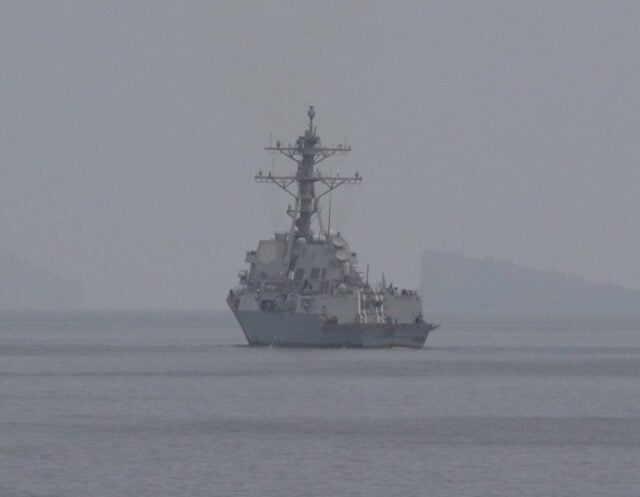
WASHINGTON, D.C. — At exactly 10:00 a.m. ET today, Monday, April 13, 2026, the United States Central Command (CENTCOM) initiated a full-scale naval blockade of all Iranian ports. This military maneuver, authorized by President Donald Trump following the dramatic collapse of peace negotiations in Islamabad, officially severs maritime access to the Islamic Republic and marks the most aggressive posture taken by a Western power in the Persian Gulf in modern history.
The blockade, which CENTCOM officials describe as “impartial and comprehensive,” is currently being enforced across the Arabian Gulf and the Gulf of Oman. While the U.S. Navy has clarified that it will not impede freedom of navigation for vessels transiting the Strait of Hormuz to non-Iranian ports, the psychological and economic impact has already pushed the global financial system into a state of high-velocity volatility.
Energy Markets and the $100 Barrel
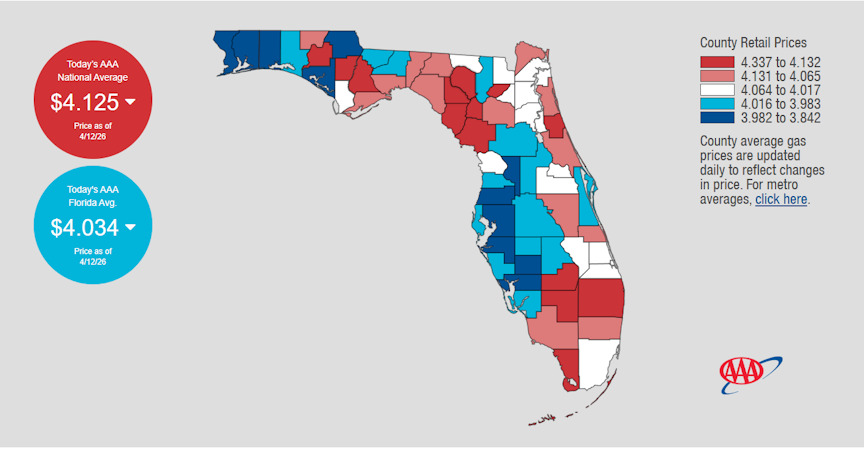 The immediate reaction from the energy sector has been nothing short of historic. As the 10:00 a.m. deadline passed, Brent crude oil futures surged past the critical $100 mark, trading at $103.19 a barrel, an 8.4% increase within a single trading session. West Texas Intermediate (WTI) followed a similar trajectory, gaining roughly 8.5% to settle near $104.88.
The natural gas market has been even more reactive. European natural gas futures jumped as much as 17% in early trading today. This spike follows a particularly brutal 2025-2026 winter that left European gas storage levels at an estimated 30% capacity, their lowest in years. Analysts at the International Energy Agency (IEA) have characterized the current situation as the “greatest global energy security challenge in history,” warning that the closure of Iranian maritime traffic could permanently alter the global energy landscape.

Precious Metals and the Flight to Currency
Contrary to traditional safe-haven behavior, precious metals have seen a complex reaction. While gold typically rises during times of war, the metal fell 1.7% to $4,671.44 an ounce this morning. Market analysts suggest that investors are currently prioritizing the U.S. Dollar over bullion, as rising energy prices fuel fears of sustained inflation and force central banks to postpone long-awaited interest rate cuts.
- Silver: Dropped significantly as industrial demand in Asia—already reeling from supply chain disruptions—began to wane.
- The U.S. Dollar Index (DXY): Has surged to a multi-year high, as global capital seeks the liquidity of the greenback amidst the naval uncertainty.
Stock Market Outlook: A Global Sell-Off
Equity markets opened in a sea of red. S&P 500 futures fell by 1.2%, signaling a difficult opening for Wall Street. In Asia, the S&P/ASX 200 in Australia fell 50.6 points, with tech stocks being the hardest hit.
- Sector Highlights: Interest-rate-sensitive tech giants like WiseTech Global and Xero saw declines of over 2%, while companies like Life360 plunged nearly 10% following internal restructuring news compounded by the geopolitical shock.
- The Winners: Domestic energy and defense stocks are the lone outliers. Woodside Energy and Whitehaven Coal rose by 3.4% and 2.7%, respectively, as investors bet on “energy switching” and increased domestic production to fill the Iranian void.
The “Asia Shock”: A Continent Under Pressure
Asia stands as the region most vulnerable to the blockade’s success. Approximately 75% of oil and 59% of LNG exports from the Persian Gulf are destined for Asian nations, specifically China, India, Japan, and South Korea.
China and India’s Response
For Beijing and New Delhi, the blockade represents a direct threat to industrial stability. The International Energy Agency reports that the suspension of Iranian crude has created the “largest supply disruption in the history of the global oil market.” China has reportedly begun tapping into its strategic petroleum reserves at record rates, while India has warned that its manufacturing sector could see a “lost year” of growth if the blockade extends beyond the current quarter.
Currency Volatility in the East
The Japanese Yen and South Korean Won have faced immense pressure as energy import costs skyrocket. This “second major energy crisis” since 2022 is threatening to push these economies into a period of prolonged stagflation—high inflation coupled with stagnant economic growth.
Europe: Facing Deindustrialization
The crisis in Europe is not merely one of price, but of survival for its heavy industry. The suspension of Qatari LNG shipments through the Strait of Hormuz—caused by the surrounding maritime instability—has forced QatarEnergy to declare force majeure on all exports.
- Industrial Surcharges: Chemical and steel manufacturers in the UK and EU have already imposed surcharges of up to 30% to offset feedstock costs.
- The Threat of Permanent Loss: Analysts at Deutsche Welle suggest that without a resolution, Europe may face “permanent deindustrialization” as energy-dependent sectors move operations to regions with more stable and affordable energy access.
International Dissent: The Fractured Coalition
Despite President Trump’s claims that the world is “uniting” against Iran’s nuclear ambitions, several key nations have refused to support the blockade.
- The Mediators: Turkey, Egypt, and Pakistan have led a diplomatic push for an immediate ceasefire. Field Marshal Asim Munir of Pakistan has been in high-level contact with Vice President JD Vance, urging a return to the negotiating table.
- The Gulf States: The UAE and Qatar find themselves in an impossible position. While both have faced Iranian-backed drone and missile strikes, they have maintained a posture of neutrality, fearing that joining the U.S. blockade would invite total regional war.
- Russia and China: Both nations have condemned the blockade as a violation of international maritime law and have warned that they may use their own naval assets to “protect their commercial interests,” a move that could lead to a direct military confrontation with the U.S. Navy.
The Moral Clash: Trump vs. Pope Leo XIV
A startling new dimension to the conflict emerged this morning as President Trump escalated his verbal feud with the Vatican. Pope Leo XIV, the first American-born Pope, issued a passionate plea for peace from St. Peter’s Square, calling the blockade an “unacceptable threat against an entire people” and urging “those responsible for this conflict” to “let the fire cease.”
President Trump responded via social media, lambasting the Pontiff for what he termed “catering to the Radical Left.”
“We’re not looking to do a ceasefire,” Trump stated in a recent press conference. “You don’t do a ceasefire when you’re literally obliterating the other side… [Iran] doesn’t have a navy, they don’t have an air force… their leaders have all been killed at every level.”
This exchange has caused a significant rift within the American Catholic community, with latest polls showing Catholic support for the President dropping below 50% for the first time since his second term began.
The Rising Cost of Living: Fees and “Hidden” Increases
The blockade’s effects are filtering down to the household level through a series of unprecedented fees and price hikes.
1. The “Grocery Supply Emergency”
The Gulf Cooperation Council (GCC) states, which rely on the Strait for 80% of their caloric intake, are facing a critical food shortage. Retailers like Lulu Retail have been forced to airlift staples into the region, leading to price increases of 40% to 120% on basic goods.
2. Maritime and Logistics Fees
- War Risk Premiums: Insurance for any vessel operating in the Indian Ocean has doubled overnight.
- Freight Rerouting: Shipping lines are abandoning the Suez Canal in favor of the Cape of Good Hope, adding 10 to 15 days to travel times. This has triggered a mandatory “Green-Sea Surcharge” for many carriers.
- Diesel and Jet Fuel: The price of kerosene-based products has more than doubled, forcing airlines to either cancel flights or pass on massive ticket price increases to consumers.
Conclusion
As the clock ticks past 10:00 a.m. ET, the global community is entering uncharted waters. With the U.S. Navy now physically preventing the flow of Iranian commerce, the world’s focus shifts to Tehran’s potential retaliation. If the IRGC attempts to mine the Strait of Hormuz or launch further missile strikes against regional ports, the current economic turmoil will be viewed as merely the preamble to a much larger, more devastating global catastrophe.
Sources Used and Links:
- Anadolu Ajansi: US Central Command announces blockade of all Iranian ports as of April 13
- Times of India: US blocks ‘all maritime traffic’ to Iran ports after Islamabad talks fail
- Wikipedia: Economic impact of the 2026 Iran war
- IndoPremier / IPOTNEWS: ASX opens down as oil soars on Mid-East unrest
- National Catholic Register: Trump After Pope Leo XIV’s Call for Ceasefire in Iran: ‘We’re Not Looking to Do That’
- TribLive: Trump lambasts Pope Leo XIV, extending feud over Iran war
- FXStreet: Gold falls to near $4,650 as Oil surge, US–Iran tensions hit Fed cuts
- Council on Foreign Relations (CFR): The Iran War’s Global Economic Impact
- The Guardian: Talks to end Iran war appear to falter a day before Trump deadline
- IISS: The Gulf states’ offensive options against Iran
Disclaimer
Artificial Intelligence Disclosure & Legal Disclaimer
AI Content Policy.
To provide our readers with timely and comprehensive coverage, South Florida Reporter uses artificial intelligence (AI) to assist in producing certain articles and visual content.
Articles: AI may be used to assist in research, structural drafting, or data analysis. All AI-assisted text is reviewed and edited by our team to ensure accuracy and adherence to our editorial standards.
Images: Any imagery generated or significantly altered by AI is clearly marked with a disclaimer or watermark to distinguish it from traditional photography or editorial illustrations.
General Disclaimer
The information contained in South Florida Reporter is for general information purposes only.
South Florida Reporter assumes no responsibility for errors or omissions in the contents of the Service. In no event shall South Florida Reporter be liable for any special, direct, indirect, consequential, or incidental damages or any damages whatsoever, whether in an action of contract, negligence or other tort, arising out of or in connection with the use of the Service or the contents of the Service.
The Company reserves the right to make additions, deletions, or modifications to the contents of the Service at any time without prior notice. The Company does not warrant that the Service is free of viruses or other harmful components.