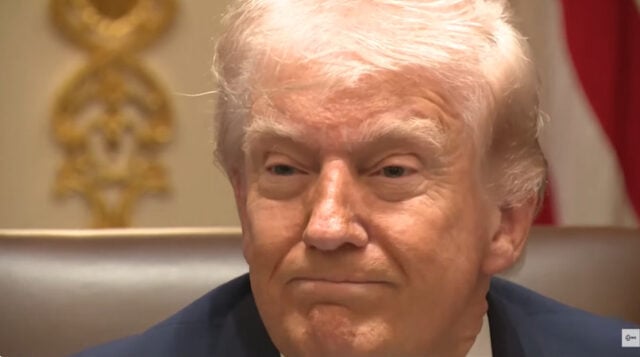
On Thursday, March 26, 2026, President Donald Trump convened a high-stakes Cabinet meeting at the White House, marking a critical juncture for his administration’s second year. The session, held in the Cabinet Room, was dominated by two pressing crises: an escalating military conflict in the Middle East and a 41-day partial government shutdown that has begun to ripple through the nation’s infrastructure.
Throughout the meeting, the President alternated between a posture of wartime commander—detailing a 15-point peace proposal for Iran—and that of a negotiator-in-chief, warning Congress of “drastic measures” if a funding agreement is not reached immediately. The gathering also served as a progress report on the administration’s broader “Golden Age of Innovation” and “Energy Dominance” agendas, showcasing a government in the midst of rapid transformation even as it faces significant geopolitical and domestic headwinds.
The Middle East Conflict and the 15-Point Peace Plan
The most immediate concern addressed during the meeting was the ongoing war with Iran. President Trump revealed that the United States has presented Tehran with a comprehensive 15-point plan intended to provide an “off-ramp” for the conflict. In his characteristic style, Trump claimed that Iran is “begging to make a deal,” suggesting that recent U.S. and allied military actions have significantly shifted the calculus in the region.
The President noted that Iran has begun to allow some oil tankers through the Strait of Hormuz as a “sign of good faith,” which he characterized as a “present” to the international community. This development comes on the heels of a major military escalation: U.S. Central Command (CENTCOM) confirmed that a high-ranking Islamic Revolutionary Guard Corps (IRGC) naval commander was killed in an Israeli strike, a move that Trump suggested has further destabilized the Iranian leadership’s resolve.

“Frankly, I thought the oil prices would go up more and I thought the stock market would go down more,” Trump told the assembled Cabinet members, expressing surprise at the resilience of the global economy despite the conflict. He attributed this stability to market confidence in his administration’s leadership. “I think they have confidence in maybe the American president and maybe the people sitting around this table.”
However, the President did not spare his allies from criticism. He directed sharp barbs at NATO and the United Kingdom, claiming they have done “absolutely nothing” to assist the United States in the Iranian conflict. This rhetoric mirrors the administration’s “America First” approach, emphasizing that while the U.S. is leading the diplomatic and military effort, it expects greater burden-sharing from its international partners.
The Domestic Front: A 41-Day Shutdown
While foreign policy dominated the opening remarks, the reality of the domestic funding stalemate cast a long shadow over the proceedings. The federal government has been in a partial shutdown for 41 days, primarily affecting the Department of Homeland Security (DHS), the Transportation Security Administration (TSA), and the Federal Emergency Management Agency (FEMA).
President Trump issued a stern warning to Congress, stating, “They need to end this shutdown immediately or we’ll have to take drastic measures.” The shutdown has led to significant operational challenges, with airport delays mounting as TSA officers face missed paychecks. Reports indicate callout rates of over 40% at several major airports, threatening to grind national air travel to a halt as the spring break travel season approaches.
The President’s mention of “drastic measures” sparked immediate speculation about the potential use of executive orders or the redirection of funds to bypass the legislative impasse—a tactic the administration has employed previously to fund border security initiatives.
Economic Resilience and “Energy Dominance”
Despite the shutdown and the war, the Cabinet discussed a series of economic wins. The administration pointed to a GDP growth rate of 5.4% over the past year and the S&P 500 reaching historic heights. A central pillar of this economic success, according to the President, is the “Energy Dominance” strategy.
Energy Secretary Chris Wright and other officials briefed the President on the implementation of the “Ratepayer Protection Pledge.” This initiative involves major technology firms—including Amazon, Google, Meta, and OpenAI—committing to build or purchase new generation resources to power their massive data centers. The goal is to ensure that the “data center boom” does not lead to price spikes for average American households.
The administration also highlighted its efforts to revive the coal industry, with Trump reiterating his support for “clean, beautiful coal” and reporting that the National Energy Dominance Council (NEDC) has successfully intervened to save dozens of coal power plants from closure. These actions are part of a broader deregulation push aimed at lowering energy costs and accelerating the development of domestic power infrastructure.
Trade Wars and Universal Tariffs
Trade policy remains a cornerstone of the administration’s economic toolkit. The Cabinet reviewed the status of the universal 10% ad valorem duty on all imports, which was implemented on February 20, 2026. This “baseline” tariff is intended to incentivize domestic manufacturing and provide leverage in bilateral trade negotiations.
The United States Trade Representative (USTR) also briefed the Cabinet on the launch of Section 301 investigations into the forced labor practices of 60 different economies, including China and the European Union. These investigations aim to determine if lax enforcement of labor standards abroad creates an unfair competitive advantage that harms American workers.
Additionally, the Customs and Border Protection (CBP) agency reported progress on the “Consolidated Administration and Processing of Entries” (CAPE) system. This new technological framework is designed to automate the processing of tariff refunds and manage the complex logistics of the administration’s aggressive trade posture.
The “Golden Age of Innovation”
In a forward-looking segment of the meeting, the President discussed his recent appointments to the President’s Council of Advisors on Science and Technology (PCAST). The council, co-chaired by David Sacks and Michael Kratsios, includes industry titans such as Larry Ellison, Marc Andreessen, and Jensen Huang.
The focus of PCAST under the current administration is to “Restore American Leadership in Science and Technology,” specifically targeting artificial intelligence (AI) dominance and space modernization. The President emphasized that the “Golden Age of Innovation” must benefit the American workforce, ensuring that emerging technologies do not displace workers but instead create new opportunities.
Cabinet Confirmations and Leadership
The meeting also highlighted the gradual completion of the President’s leadership team. As of late March, the Senate has confirmed 22 Cabinet-level members. Notable recent confirmations include Markwayne Mullin as Secretary of Homeland Security, Brooke Rollins as Secretary of Agriculture, and Scott Turner as Secretary of Housing and Urban Development.
The presence of Robert F. Kennedy Jr. as Secretary of Health and Human Services and Lee Zeldin as EPA Administrator underscored the administration’s shift toward unconventional and reform-minded leadership. Each secretary provided brief updates on their department’s efforts to implement the “Day One” executive orders aimed at streamlining government and reducing the federal footprint.
Conclusion: A Nation at a Crossroads
The March 26 Cabinet meeting painted a picture of an administration operating at full throttle across multiple fronts. From the battlefields of the Middle East to the regulatory halls of Washington, the President’s agenda is characterized by a high-velocity, disruptive approach to governance.
As the meeting adjourned, the immediate focus remained on the dual threats of war and the shutdown. The world now waits to see if the 15-point peace plan will bring Tehran to the table and whether the President’s “drastic measures” will finally break the legislative logjam on Capitol Hill. For now, the administration continues to project confidence, betting that its mix of economic nationalism, energy dominance, and aggressive diplomacy will define the “Golden Age” it has promised.
Sources Used and Links
- Associated Press: A look at false and misleading claims made during Trump’s first Cabinet meeting of 2026 – https://apnews.com/article/fact-check-trump-cabinet-economy-housing-energy-health-california-f4b4fb985300724a7e717863626e5506
- The Guardian: Middle East crisis live: Trump claims Iran ‘begging to make a deal’ – https://www.theguardian.com/world/live/2026/mar/26/iran-war-live-updates-trump-deal-us-military-strikes-israel-lebanon-hezbollah
- CBS News: Live Updates: Witkoff says U.S. presented Iran with 15-point plan – https://www.cbsnews.com/live-updates/iran-war-trump-israel-tehran-denies-ceasefire-talks-strait-of-hormuz/
- The White House: President Trump Announces Appointments to PCAST – https://www.whitehouse.gov/releases/2026/03/president-trump-announces-appointments-to-presidents-council-of-advisors-on-science-and-technology/
- The White House: Fact Sheet: President Donald J. Trump Advances Energy Affordability – https://www.whitehouse.gov/fact-sheets/2026/03/fact-sheet-president-donald-j-trump-advances-energy-affordability-with-the-ratepayer-protection-pledge/
- JDSupra: Trump Tariff Tracker – March 20, 2026 – https://www.jdsupra.com/legalnews/trump-tariff-tracker-march-20-2026-5789251/
- Ballotpedia: Donald Trump’s Cabinet, 2025-2026 – https://ballotpedia.org/Donald_Trump%27s_Cabinet,_2025-2026
- LA Times: Pressure mounts on Congress to end the funding shutdown – https://www.latimes.com/world-nation/story/2026-03-26/missed-paychecks-airport-delays-pressure-mounts-on-congress-to-end-funding-shutdown
Disclaimer
Artificial Intelligence Disclosure & Legal Disclaimer
AI Content Policy.
To provide our readers with timely and comprehensive coverage, South Florida Reporter uses artificial intelligence (AI) to assist in producing certain articles and visual content.
Articles: AI may be used to assist in research, structural drafting, or data analysis. All AI-assisted text is reviewed and edited by our team to ensure accuracy and adherence to our editorial standards.
Images: Any imagery generated or significantly altered by AI is clearly marked with a disclaimer or watermark to distinguish it from traditional photography or editorial illustrations.
General Disclaimer
The information contained in South Florida Reporter is for general information purposes only.
South Florida Reporter assumes no responsibility for errors or omissions in the contents of the Service. In no event shall South Florida Reporter be liable for any special, direct, indirect, consequential, or incidental damages or any damages whatsoever, whether in an action of contract, negligence or other tort, arising out of or in connection with the use of the Service or the contents of the Service.
The Company reserves the right to make additions, deletions, or modifications to the contents of the Service at any time without prior notice. The Company does not warrant that the Service is free of viruses or other harmful components.