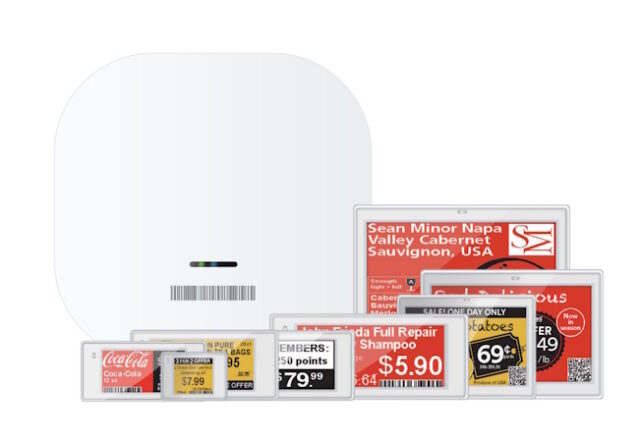
As Walmart and other major retailers race to digitize their shelves by the end of 2026, they are facing a wall of legislative resistance. Lawmakers at both the federal and state levels are concerned that the technology—which allows prices to be updated in seconds—will be used to implement “surveillance pricing.” This practice involves using consumer data, such as purchase history, facial recognition, or mobile app usage, to set individualized prices or engage in surge pricing during peak hours.
While retailers argue that the transition is about operational efficiency and reducing labor costs, the following table compares the primary legislative efforts currently being proposed to regulate or ban the use of digital price labels and algorithmic pricing across the United States.
Comparison of Proposed Legislation on Digital Price Tags (2026)
| Jurisdiction | Proposed Legislation | Primary Objective & Restrictions | Current Status |
| Federal (U.S.) | Stop Price Gouging in Grocery Stores Act of 2026 (S. 3892 / H.R. 4966) | Bans electronic shelf labels (ESLs) in grocery stores larger than 10,000 sq ft; prohibits “surveillance pricing” based on personal data; requires disclosure of facial recognition. | Introduced in Senate and House (Feb/March 2026); referred to committee. |
| New York | One Fair Price Package (A9349 / A9396 / S. 8616) | Prohibits ESLs and digital shelf technology in food/drug retail; bans personalized algorithmic pricing based on consumer data; creates a private right of action for consumers. | Introduced March 2026; backed by Attorney General Letitia James. |
| Maryland | Protection from Predatory Pricing Act (SB 0387 / HB 387) | Requires grocery prices to remain fixed for at least one business day; bans the use of “surveillance data” to set individualized prices; violations treated as consumer fraud. | First reading completed (Feb 2026); currently in committee. |
| Washington | House Bill 2481 | Pauses the rollout of ESLs in stores larger than 15,000 sq ft until 2030; prohibits surge pricing on essentials and individual tracking for pricing. | Passed House Technology Committee (8-3); awaiting Appropriations vote. |
| New Jersey | Unnumbered Senate Proposal (Advanced by Sen. Cryan) | Bars supermarkets from using algorithms to adjust prices for individual shoppers; aims to prevent “online style” price fluctuations in physical stores. | Advanced by Senate Commerce Committee (March 2026). |
| Tennessee | House Bill (General Consumer Protection) | Seeks to ban ESLs and digital shelf displays in retail establishments over 15,000 sq ft and forbid personalized pricing models. | Under consideration by House Banking and Consumer Affairs Subcommittee. |
| Pennsylvania | Surveillance Pricing Act | Prohibits corporations from using AI and harvested personal information to manipulate pricing for basic necessities. | Introduced late 2025/early 2026; pending committee review. |
| Wisconsin | Senate Bill (Discriminatory Pricing) | Requires fair, transparent, and non-discriminatory pricing; prevents the use of dynamic pricing for in-person and online retail. | Introduced March 2026 by Sen. Kelda Roys. |
Understanding the Key Legal Terms
- Surveillance Pricing: A scheme where companies use individual consumer data (e.g., zip code, income, or biometrics) to set unique, individualized prices for the same product.
- Dynamic/Surge Pricing: The practice of fluctuating prices based on real-time market conditions, such as high demand during lunch hours or weather events.
- One Business Day Rule: A regulatory standard proposed in states like Maryland to ensure that once a price is set in the morning, it cannot be changed digitally until the following day.
Sources and Links
- JD Supra: “Algorithmic and Surveillance-Based Pricing in State AGs’ Crosshairs”
- NY Attorney General Press Office: “Attorney General James Calls for Passage of Legislation to Protect New Yorkers from Predatory Pricing Schemes”
- Maryland Governor Press Office: “Governor Moore Announces Legislation to Protect Marylanders’ Pocketbooks, Data Privacy at the Grocery Store”
- U.S. Senator Ben Ray Luján: “Luján, Merkley Introduce Legislation to Stop Grocery Price Gouging and Lower Costs for Americans”
- Grocery Dive: “Grocers face state and federal lawmakers’ scrutiny over ‘surveillance’ pricing”
- TVW Washington State: “Bill targets AI-Driven Price Fluctuations on Groceries”
- BillTrack50: “NY A09396 – Prohibits the use of electronic shelving labels”
- King & Spalding (KSLaw): “Federal and State Lawmakers Take Aim at Surveillance Pricing Practices”
- Pluribus News: “Democrats target groceries in push to ban dynamic pricing”
Disclaimer
Artificial Intelligence Disclosure & Legal Disclaimer
AI Content Policy.
To provide our readers with timely and comprehensive coverage, South Florida Reporter uses artificial intelligence (AI) to assist in producing certain articles and visual content.
Articles: AI may be used to assist in research, structural drafting, or data analysis. All AI-assisted text is reviewed and edited by our team to ensure accuracy and adherence to our editorial standards.
Images: Any imagery generated or significantly altered by AI is clearly marked with a disclaimer or watermark to distinguish it from traditional photography or editorial illustrations.
General Disclaimer
The information contained in South Florida Reporter is for general information purposes only.
South Florida Reporter assumes no responsibility for errors or omissions in the contents of the Service. In no event shall South Florida Reporter be liable for any special, direct, indirect, consequential, or incidental damages or any damages whatsoever, whether in an action of contract, negligence or other tort, arising out of or in connection with the use of the Service or the contents of the Service.
The Company reserves the right to make additions, deletions, or modifications to the contents of the Service at any time without prior notice. The Company does not warrant that the Service is free of viruses or other harmful components.