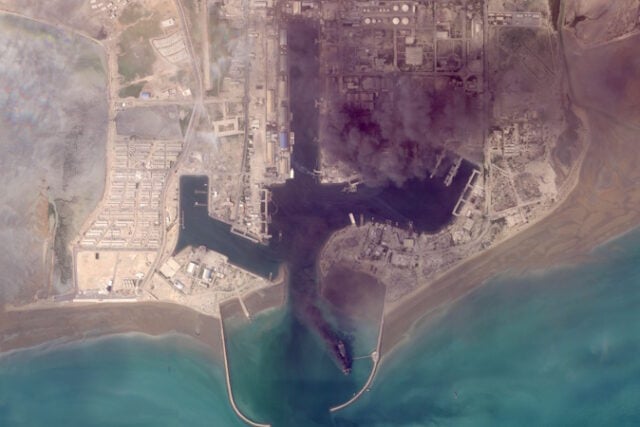
The landscape of the Middle East has been irrevocably altered over the past three weeks as the 2026 Iran War, initiated on February 28, continues to escalate. What began as a massive, lightning-strike campaign dubbed Operation Epic Fury by the United States and Roaring Lion by Israel has transformed into a sustained military effort to dismantle the Islamic Republic’s nuclear capabilities and command hierarchy. As of March 21, 2026, the conflict has entered a critical new phase with renewed strikes on the Natanz nuclear facility and the reported elimination of several high-ranking military officials.
Update from CENTCOM Commander on Operation Epic Fury: pic.twitter.com/8yTLrVy4jk
— U.S. Central Command (@CENTCOM) March 21, 2026
“Iran’s capabilities are declining…” – Adm. Brad Cooper, CENTCOM Commander pic.twitter.com/FC3TgpEGpJ
— U.S. Central Command (@CENTCOM) March 21, 2026
U.S. forces continue to degrade Iranian combat capabilities by striking military targets deep inside Iran. pic.twitter.com/mKWs2G6SEx
— U.S. Central Command (@CENTCOM) March 20, 2026

The Strike on Natanz
In the early hours of Saturday morning, coordinated U.S. and Israeli air assets launched a fresh wave of precision strikes against the Natanz uranium-enrichment facility. This site, long a centerpiece of international concern regarding Iran’s nuclear ambitions, was previously targeted during the opening hours of the war and again during the “Twelve-Day War” in June 2025.
Iranian state-linked media, including the Tasnim news agency, confirmed the attack, labeling it a “criminal act.” While the Iranian Atomic Energy Organization reported that the enrichment complex sustained significant structural damage, they emphasized that there has been no leakage of radioactive materials. The International Atomic Energy Agency (IAEA) has been notified and confirmed that off-site radiation levels remain normal, though Director General Rafael Mariano Grossi warned that continued strikes on such facilities carry the “possibility of radiological release with serious consequences.”
Decapitation of Leadership
The primary objective of the initial February 28 salvo was the “decapitation” of the Iranian regime. This was largely achieved with the confirmed death of Supreme Leader Ayatollah Ali Khamenei in the first hours of the campaign. Since then, the coalition has systematically targeted the Assembly of Experts and the Islamic Revolutionary Guard Corps (IRGC) command.
Recent reports from the third week of March indicate that:
- Ali Mohammad Naini, a spokesperson and deputy of public relations for the IRGC, was killed in recent strikes.
- Esmail Ahmadi, the head of intelligence for the Basij force, was also confirmed dead.
- Ali Larijani, a pragmatic senior official and former speaker of the parliament, was reportedly killed on March 17.
Despite these losses, the Iranian Assembly of Experts moved quickly to appoint Mojtaba Khamenei, the son of the late Supreme Leader, as the new head of state. This succession has been met with defiance from Washington; President Donald Trump recently described the younger Khamenei as “unacceptable” and suggested that the U.S. intends to be involved in the eventual transition to a more cooperative government.
Detailed Military Assets Deployed
The sheer scale of the coalition’s force posture is historic, representing the largest buildup in the Middle East since 2003. Central Command (CENTCOM) has deployed a multi-layered “hammer and anvil” strategy utilizing high-end stealth and long-range capabilities.
Naval Presence
The U.S. Navy has established a massive presence in the Arabian Sea and Eastern Mediterranean:
- Carrier Strike Group 3: Centered on the USS Abraham Lincoln, operating in the northern Arabian Sea. Its air wing includes F-35C Lightning II and F/A-18E/F Super Hornets.
- Carrier Strike Group 12: Led by the USS Gerald R. Ford, the world’s largest aircraft carrier, positioned off the coast of Israel to provide regional defense and additional strike reach.
- Guided-Missile Destroyers: At least eight Arleigh Burke-class destroyers have been confirmed launching Tomahawk Land Attack Missiles (TLAMs) against hardened Iranian missile silos and command bunkers.
Aerial Dominance and Strategic Bombing
Air supremacy was established within the first hours by neutralizing Iran’s integrated air defense systems (IADS):
- Stealth Assets: F-22 Raptors (deployed to Ovda Airbase in Israel) and F-35A Adirs (Israel) have been used for suppression of enemy air defenses (SEAD). An Israeli F-35 reportedly recorded the first-ever manned air-to-air kill for the platform by downing an Iranian Yak-130.
- Heavy Bombers: B-2 Spirit stealth bombers flying from the U.S. mainland, along with B-52H Stratofortresses and B-1 Lancers based at Diego Garcia and RAF Fairford, have delivered massive payloads on deep-underground nuclear facilities.
- Support Craft: Over 135 aerial refueling tankers (KC-135 and KC-46) have been deployed to ensure non-stop operations over the vast Iranian territory.
- Precision Ground and Unmanned Systems
- M-142 HIMARS: Utilizing the new Precision Strike Missile (PrSM) to hit mobile ballistic missile launchers from standoff distances.
- Unmanned Systems: Massive use of MQ-9 Reapers for persistent surveillance and the Low-cost Uncrewed Combat Attack System (LUCAS), which mimics the swarming tactics previously used by Iranian Shahed drones.
Regional Contagion and Economic Fallout
The war is no longer confined to Iranian soil. Iran has responded with “horizontal escalation,” launching hundreds of drones and ballistic missiles at U.S. military bases and embassies across the region, including sites in Bahrain, Jordan, Kuwait, Qatar, Saudi Arabia, and the United Arab Emirates.
The most significant global impact remains the effective closure of the Strait of Hormuz. With nearly 20% of the world’s oil and liquefied natural gas (LNG) transiting through this narrow waterway, the blockade has sent global oil prices soaring. Nations like Japan and South Korea, which rely heavily on Persian Gulf crude, have begun implementing emergency fuel rationing.
Humanitarian Toll
The humanitarian cost of the three-week-old war is mounting rapidly. Estimates from human rights organizations suggest the death toll has exceeded 5,000, including at least 1,400 civilians. A particularly tragic incident occurred near Bandar Abbas, where a U.S. missile reportedly struck a girls’ school adjacent to an IRGC naval base, killing approximately 170 people.
Israeli Defense Minister Israel Katz has indicated that operations will “intensify” in the coming week. As the coalition maintains air supremacy, the world watches to see if the regime’s internal stability—already weakened by domestic protests in early 2026—will collapse under the weight of the bombardment.
Sources Used and Links
- American Jewish Committee (AJC): The Iran Strikes, Explained: How We Got Here and What It Means
- House of Commons Library: US-Israel strikes on Iran: February/March 2026
- Wikipedia: 2026 United States military buildup in the Middle East
- The International Institute for Strategic Studies (IISS): The US-Israel campaign in Iran
- Military Times: US military assembles largest force of warships, aircraft in Middle East in decades
- Department of War: Operation Epic Fury Fact Sheet: The First 10 Days
- Times of Israel: To conserve interceptors, IAF choosing not to shoot down some Iranian cluster bomblets
- OSW Centre for Eastern Studies: Operation Epic Fury and the US military presence in Europe
Disclaimer
Artificial Intelligence Disclosure & Legal Disclaimer
AI Content Policy.
To provide our readers with timely and comprehensive coverage, South Florida Reporter uses artificial intelligence (AI) to assist in producing certain articles and visual content.
Articles: AI may be used to assist in research, structural drafting, or data analysis. All AI-assisted text is reviewed and edited by our team to ensure accuracy and adherence to our editorial standards.
Images: Any imagery generated or significantly altered by AI is clearly marked with a disclaimer or watermark to distinguish it from traditional photography or editorial illustrations.
General Disclaimer
The information contained in South Florida Reporter is for general information purposes only.
South Florida Reporter assumes no responsibility for errors or omissions in the contents of the Service. In no event shall South Florida Reporter be liable for any special, direct, indirect, consequential, or incidental damages or any damages whatsoever, whether in an action of contract, negligence or other tort, arising out of or in connection with the use of the Service or the contents of the Service.
The Company reserves the right to make additions, deletions, or modifications to the contents of the Service at any time without prior notice. The Company does not warrant that the Service is free of viruses or other harmful components.