The rhythmic hum of American aviation is stuttering into a discordant halt. Across the United States, the invisible gears of the Transportation Security Administration (TSA) are grinding under the weight of a historic funding impasse. As of March 20, 2026, a partial government shutdown—now entering its second month—has left approximately 50,000 TSA officers working without pay, triggering a wave of “sick outs” and resignations that have turned major travel hubs into logistical nightmares.
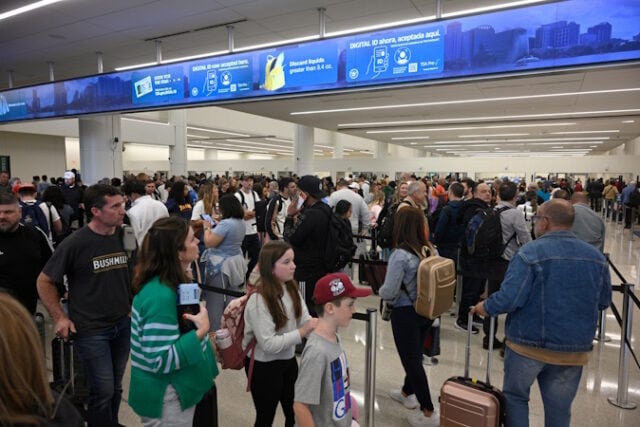
From the sweltering terminals of Houston to the sprawling corridors of Atlanta, the reality of the “no pay, no show” crisis is manifesting in security lines that snake through parking garages and wait times that have, in some instances, exceeded four hours.
A Workforce at the Breaking Point
The root of the crisis is simple but devastating: TSA workers have missed their first full paychecks as of mid-March. For a workforce that largely lives paycheck-to-paycheck, the inability to cover basic costs like gas, childcare, and rent has moved the struggle from the political arena to the household table.
Acting Deputy TSA Administrator Adam Stahl recently warned that the agency has “exhausted any sources of available workers.” In a sobering television appearance, Stahl noted that some officers are quite literally sleeping in their cars at the airport because they cannot afford the commute, while others have been forced to sell plasma or visit food banks just to survive the week.

According to Department of Homeland Security (DHS) data, the national unscheduled absence rate—typically below 2%—surged to over 10% this week. However, those numbers tell only part of the story. In specific travel “hot zones,” the absenteeism is catastrophic:
- Houston (Bush and Hobby): Call-out rates peaked at a staggering 55% on March 14.
- Atlanta (Hartsfield-Jackson): Nearly 40% of the workforce was absent on March 16.
- New Orleans (Louis Armstrong): Absentee rates reached 39% this week.
- New York (JFK): Approximately 25% of staff failed to report for duty.
The Passenger Experience: A “Guessing Game”
For travelers, the impact is as unpredictable as it is frustrating. Travel experts have dubbed the current state of airport security a “guessing game,” where a morning traveler might breeze through in ten minutes, while an afternoon passenger at the same terminal faces a three-hour gauntlet.
In Houston, travelers at George Bush Intercontinental reported scenes of “pure insanity,” where even those with expedited credentials like TSA PreCheck or Clear+ were funneled into single, massive lines due to a lack of open screening lanes. The ripple effect has been immediate: hundreds of missed flights, desperate pleas to airline representatives to “cut the line,” and a surge in flight delays. FlightAware reported over 2,500 domestic delays on Friday alone, many attributed to the “staffing-induced friction” at security checkpoints.
The Threat of “Ghost Airports”
While major hubs like LAX have remained relatively stable, the Department of Transportation has issued a dire warning for the nation’s smaller, regional airports. Secretary Sean Duffy cautioned that if the shutdown extends into next week—when a second full paycheck will be missed—the current delays will look like “child’s play.”
“You’re going to see small airports, I believe, shut down,” Duffy stated. The logic is purely mathematical: in a smaller facility with only a handful of certified screeners, just two or three call-outs can effectively shutter the entire security operation, grounding all commercial traffic for that region.
The Political Stalemate
The crisis is the byproduct of a fierce legislative deadlock. In early February, Congress passed a $1.2 trillion spending package but intentionally excluded the Department of Homeland Security. Democrats have refused to sign off on DHS funding unless the package includes strict new regulations on Immigration and Customs Enforcement (ICE) and U.S. Customs and Border Protection (CBP). These demands follow a controversial federal immigration crackdown that resulted in the deaths of two U.S. citizens.
Republicans have dismissed these demands as “partisan poison pills,” leading to the current lapse in funding. While federal law guarantees that TSA workers will eventually receive back pay once the government reopens, that promise does nothing to pay the rent due today.
Seeking a Way Out
The travel industry, currently in the throes of a record-breaking spring break season with an estimated 171 million passengers expected to fly, is losing patience. Airline CEOs have called the situation “simply unacceptable,” noting that 93% of Americans support paying federal aviation workers regardless of a shutdown.
As the standoff continues, the TSA is attempting to manage the crisis with a “national deployment force”—a pool of backup officers sent to the hardest-hit airports. However, leadership admits that this reservoir is now dry. With no immediate end to the political bickering in Washington, the friendly skies of 2026 are looking increasingly grounded.
How to Check Airport Wait Times
The most reliable, real-time source for monitoring security wait times is the MyTSA app, which is available for free on both iOS and Android devices. This app provides:
- Crowdsourced Wait Times: The most crucial feature is the section where users input their actual wait times. This data, marked “Waiting in Security,” often provides a more current picture of the chaos than official estimates.
- Official Agency Data: The app displays the current, official estimated wait range (e.g., “15–30 minutes”).
- Checkpoint Maps: Visual maps showing the location and status of different checkpoints (Standard, PreCheck).
- Prohibited Items Search: A useful “Can I Bring?” tool to avoid delays caused by forbidden items in carry-on luggage.
In addition to the MyTSA app, major airports like Atlanta (Hartsfield-Jackson), Houston (George Bush Intercontinental), and Denver International (DIA) often post real-time wait times directly on their official websites.
Checklist: Navigating Airport Chaos During the TSA Shutdown
- Arrive Early, Then Add More Time: Current recommendations are at least 3 hours before domestic flights and 4–5 hours for international flights. If traveling through a “hot zone” (e.g., Houston, Atlanta, New Orleans), consider adding even more time.
- Monitor the MyTSA App Consistently: Check the crowdsourced wait times leading up to your arrival at the airport to get a realistic sense of what to expect.
- Monitor the Airport’s Website: Many large airports host their own wait-time pages.
- Enroll in TSA PreCheck/Clear+ (If Possible): While not immune to delays, these programs generally move faster, even during a shutdown. However, expect longer-than-usual waits even in these lanes.
- Pack Light and Efficiently: Every extra item in your carry-on requires scrutiny, slowing down the line. Utilize the “Can I Bring?” tool on the MyTSA app to avoid prohibited items.
- Dress for Efficiency: Wear slip-on shoes. Avoid bulky jewelry or accessories that need to be removed. Have electronics (laptops, tablets) easily accessible.
- Choose Checked Baggage: If possible, check your bags to minimize what you must carry through security.
- Pack Snacks and Entertainment: Be prepared for long wait times inside the terminal after you clear security.
- Keep Your Travel Documents Accessible: Have your ID and boarding pass ready at all times.
- Be Patient and Civil: The TSA officers working are doing so without pay, facing extreme stress and a heavy workload. They are not responsible for the political shutdown; treat them with courtesy.
Sources Used and Links
- ASIS International: “10 Percent of TSA Agents Call Off Work During Partial Shutdown” (March 18, 2026)
- https://www.asisonline.org/security-management-magazine/latest-news/today-in-security/2026/march/tsa-shutdown-careers/
- The Guardian: “Travelers in US continue to face delays at airport security amid DHS shutdown” (March 20, 2026)
- https://www.theguardian.com/us-news/2026/mar/20/airport-security-delays-tsa
- Travel Weekly: “Ongoing DHS shutdown could force some airports to close, TSA says” (March 18, 2026)
- https://www.travelweekly.com/Travel-News/Airline-News/tsa-airports-might-close-during-government-shutdown
- CBS News: “Over a third of TSA officers call out at 3 major U.S. airports in single day” (March 19, 2026)
- https://www.cbsnews.com/news/tsa-officers-third-call-out-major-us-airports-funding-standoff/
- Al Jazeera: “Why the US Homeland Security shutdown is raising fears of airport delays” (March 19, 2026)
- https://www.aljazeera.com/economy/2026/3/19/why-the-us-homeland-security-shutdown-is-raising-fears-of-airport-delays
- Atlanta Journal-Constitution: “At world’s busiest airport, unpaid TSA workers weigh showing up or staying afloat” (March 19, 2026)
- https://www.ajc.com/news/2026/03/at-worlds-busiest-airport-unpaid-tsa-workers-weigh-showing-up-or-staying-afloat/
- TSA Official Statement: “Oversight Hearing – Potential DHS Shutdown Impacts” (February 11, 2026)
- https://www.tsa.gov/news/press/testimony/2026/02/11/oversight-hearing-potential-dhs-shutdown-impacts
- TSA Official Website: “MyTSA App” (Accessed March 20, 2026)
- https://www.tsa.gov/mobile
Disclaimer
Artificial Intelligence Disclosure & Legal Disclaimer
AI Content Policy.
To provide our readers with timely and comprehensive coverage, South Florida Reporter uses artificial intelligence (AI) to assist in producing certain articles and visual content.
Articles: AI may be used to assist in research, structural drafting, or data analysis. All AI-assisted text is reviewed and edited by our team to ensure accuracy and adherence to our editorial standards.
Images: Any imagery generated or significantly altered by AI is clearly marked with a disclaimer or watermark to distinguish it from traditional photography or editorial illustrations.
General Disclaimer
The information contained in South Florida Reporter is for general information purposes only.
South Florida Reporter assumes no responsibility for errors or omissions in the contents of the Service. In no event shall South Florida Reporter be liable for any special, direct, indirect, consequential, or incidental damages or any damages whatsoever, whether in an action of contract, negligence or other tort, arising out of or in connection with the use of the Service or the contents of the Service.
The Company reserves the right to make additions, deletions, or modifications to the contents of the Service at any time without prior notice. The Company does not warrant that the Service is free of viruses or other harmful components.