TEHRAN and WASHINGTON, D.C. — The shadows of a wider regional conflict have darkened into a grim new reality as the war between the United States-Israeli coalition and the Islamic Republic of Iran entered its third week of high-intensity operations. On Wednesday, March 18, 2026, the conflict reached a critical inflection point characterized by direct, devastating exchanges targeting the world’s most vital energy assets, a staggering $200 billion emergency funding request from the Pentagon, and a global economic tremor that has sent oil prices soaring toward historic highs while dragging the Dow Jones Industrial Average to its lowest point of the year.
The “Gas War” Ignites: South Pars and Ras Laffan Under Fire
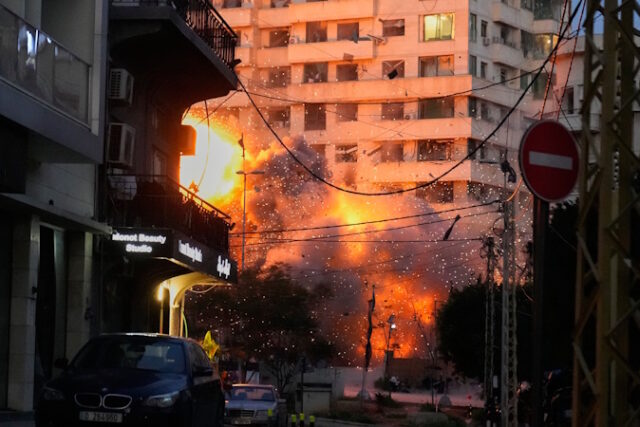
The day’s escalations began in the early hours of Wednesday when a coordinated series of Israeli and American precision strikes targeted the South Pars gas field in the Persian Gulf. As the world’s largest natural gas reserve—shared between Iran and Qatar—South Pars is the backbone of Iran’s domestic energy grid, supplying approximately 70% of the nation’s natural gas.
Iranian state media, citing Ehsan Jahanian, the deputy governor of Bushehr province, confirmed that projectiles struck the South Pars Special Economic Energy Zone in Asaluyeh, sparking massive fires visible from space. While the Israel Defense Forces (IDF) typically maintain a policy of ambiguity regarding specific targets, US officials confirmed they were “informed” of the operation but did not directly participate in the strike on the field itself.
The retaliation from Tehran was swift and strategically calculated to inflict maximum pain on the global energy market. Within hours, Iranian-aligned forces launched a barrage of ballistic missiles and “suicide” drones targeting the energy infrastructure of Israel’s regional allies. Qatar’s Ras Laffan Industrial City, home to the world’s largest liquefied natural gas (LNG) export complex, sustained what QatarEnergy described as “extensive damage.”

The attack on Ras Laffan represents a dramatic shift in Iranian doctrine. By striking a facility shared with or adjacent to Qatari interests, Tehran has sent a clear message: no energy asset in the Gulf is safe. The UAE’s Al Hasan gas field and Saudi Arabia’s Samref Refinery were also reportedly targeted, with Emirati officials reporting the interception of at least 13 ballistic missiles and 27 drones over their territory.
Intelligence Assessment: A Regime Intact but Unyielding
As the smoke rose over the Persian Gulf, Director of National Intelligence Tulsi Gabbard appeared before the Senate Intelligence Committee in Washington to provide the first comprehensive public accounting of the war’s progress. Her testimony painted a picture of a “degraded but intact” Iranian leadership.
“The regime in Tehran appears to be resilient despite the loss of key strategic assets,” Gabbard told lawmakers. Her assessment followed the confirmed deaths of high-ranking Iranian officials, including Intelligence Minister Esmail Khatib and Ali Larijani, a top advisor to the Supreme Leader, both killed in recent Israeli strikes.
Crucially, Gabbard’s testimony revealed a deep divide within the U.S. government regarding the war’s justification. While President Donald Trump has consistently cited an “imminent nuclear threat” as the rationale for the February 28 launch of hostilities, Gabbard’s written testimony—which she notably avoided reading aloud during the televised portion of the hearing—concluded that Iran had made “no efforts” to rebuild its nuclear enrichment program since it was “obliterated” during “Operation Midnight Hammer” in June 2025.
Despite this internal friction, the intelligence community’s consensus is that the Iranian regime is currently “not willing to negotiate” on the “maximalist terms” demanded by the White House. These terms reportedly include the total dismantlement of Iran’s remaining ballistic missile program and a permanent cessation of all enrichment activities. Sources familiar with the failed March 2 technical talks in Muscat suggest that Tehran views these demands as equivalent to unconditional surrender, leading to a total breakdown in diplomatic channels.
The $200 Billion Gamble: The Pentagon’s Price Tag for Victory
Against this backdrop of military stalemate and diplomatic silence, the Pentagon has moved to secure the financial resources necessary for a prolonged campaign. On Wednesday, the Department of Defense officially requested an additional $200 billion in supplemental funding from Congress.
This staggering figure—which exceeds the peak annual cost of the Iraq War and surpasses the total U.S. aid sent to Ukraine over three years—is intended to “urgently expand production of critical precision weapons” that have been depleted at an alarming rate over the last 21 days. Senior administration officials noted that the war burned through $11 billion in its first week alone.
The request has set the stage for a fierce partisan battle on Capitol Hill. While some Republican hawks, led by Senator Tom Cotton, argue that the “vast Iranian missile arsenal” poses a “grave and growing threat” that must be neutralized at any cost, the Democratic minority has voiced increasing skepticism. Minority Leader Chuck Schumer pointed to the shifting justifications for the war, questioning why American taxpayers should foot a $200 billion bill for a conflict that intelligence officials suggest was preceded by no “imminent” nuclear threat.
Economic Fallout: Oil Surges and the Dow Recedes
The immediate impact of the “Gas War” and the Pentagon’s budget request was felt most acutely in the global financial markets. Oil prices, already volatile since the start of the conflict on February 28, surged another 5% on Wednesday. Brent crude, the international benchmark, neared $110 per barrel, representing a 50% increase since the war began.
The near-total closure of the Strait of Hormuz by Iranian naval forces and mine-laying operations has trapped approximately 20% of the world’s daily oil supply. While Saudi Arabia and Iraq have attempted to bypass the blockade using Red Sea pipelines and northern routes through Turkey, analysts at Goldman Sachs warn that these alternatives can only compensate for a fraction of the lost volume. In the United States, gasoline prices have begun a daily climb of 5 to 10 cents, with the national average hitting $3.85 per gallon and some California stations reporting prices exceeding $8.
The combination of soaring energy costs and the prospect of a $200 billion military expenditure triggered a massive sell-off on Wall Street. The Dow Jones Industrial Average plunged 668 points on Wednesday, closing at 46,222.41—its lowest level of 2026. Investors are increasingly worried that the “energy-driven inflation” will force the Federal Reserve to abandon any plans for interest rate cuts this year, potentially pushing the U.S. economy into a “war-induced recession.”
Regional Consequences and the “Forever War” Outlook
As the conflict enters its fourth week, the humanitarian and environmental risks are mounting. The strikes on natural gas facilities in the Gulf have not only threatened global supply but have also created an ecological crisis, with massive methane leaks and smoke plumes affecting air quality across the region.
The targeting of Gulf Arab infrastructure has also strained the U.S. alliance network. While countries like the UAE and Saudi Arabia have defended their airspace against Iranian retaliation, there is growing frustration over the lack of a clear exit strategy. President Trump’s recent social media declaration that “WE DON’T NEED THE HELP OF ANYONE!” has further alienated allies who were already hesitant to commit naval forces to a mission to reopen the Strait of Hormuz.
With the Iranian regime proving more resilient than anticipated and the U.S. military asking for unprecedented sums to continue the fight, the specter of another “Forever War” looms large over 2026. The exchange of strikes on the South Pars and Ras Laffan fields signals a move toward total economic warfare, where the “economic lifeblood” of the entire world is now a legitimate target.
As the sun set over a burning Persian Gulf on Wednesday, the question in both Washington and Tehran remained the same: how much more can the global economy—and the peoples of the Middle East—endure before the “maximalist” goals of either side lead to a total regional collapse?
Sources and References
- Arab News Japan: “Iran says Israel, US strike South Pars – world’s largest gas field”. https://www.arabnews.jp/en/middle-east/article_166225/
- World Oil: “Iran, Israel strikes hit key oil and LNG infrastructure as Middle East war escalates” https://www.worldoil.com/news/2026/3/18/iran-israel-strikes-hit-key-oil-and-lng-infrastructure-as-middle-east-war-escalates/
- WRAL / Associated Press: “The Latest: US knew Israel would strike an Iranian gas field, AP source says” https://www.wral.com/news/ap/5b433-the-latest-iran-attacks-israel-and-gulf-countries-after-an-israeli-strike-kills-its-security-chief/
- The Washington Post: “Gabbard tells senators Iranian regime is degraded but still intact” https://www.washingtonpost.com/national-security/2026/03/18/tulsi-gabbard-iran-intelligence-hearing/
- Global Nation / AFP: “Iran was not rebuilding nuclear enrichment, US intelligence finds” https://globalnation.inquirer.net/314564/iran-was-not-rebuilding-nuclear-enrichment-us-intelligence-finds
- Middle East Eye: “Report: Pentagon seeks $200 billion for war with Iran”
- https://www.middleeasteye.net/live-blog/live-blog-update/report-pentagon-seeks-200-billion-war-iran-report
- Xinhua: “Pentagon seeks over 200 bln USD to fund war on Iran: report” https://english.news.cn/northamerica/20260319/5b96557f4a6e46b599e718c2865ca501/c.html
- WSWS: “Trump’s $200 billion Iran funding request points to massive scale of war plans” https://www.wsws.org/en/articles/2026/03/19/qzqr-m19.html
- Goldman Sachs Research: “How Will the Iran Conflict Impact Oil Prices?”
- https://www.goldmansachs.com/insights/articles/how-will-the-iran-conflict-impact-oil-prices
- Wikipedia: “Economic impact of the 2026 Iran war” https://en.wikipedia.org/wiki/Economic_impact_of_the_2026_Iran_war
- The Guardian: “US oil prices could see another day of wild fluctuation as Iran war drags on” https://www.theguardian.com/business/2026/mar/16/us-oil-prices-fluctuation-iran-war
- PBS NewsHour: “Both sides in Iran war ratchet up attacks as oil prices surge”
- https://www.pbs.org/newshour/world/both-sides-in-iran-war-ratchet-up-attacks-as-oil-prices-surge
- Investing.com: “Dow Jones Industrial Average Historical Data (DJI)” https://www.investing.com/indices/us-30-historical-data
Disclaimer
Artificial Intelligence Disclosure & Legal Disclaimer
AI Content Policy.
To provide our readers with timely and comprehensive coverage, South Florida Reporter uses artificial intelligence (AI) to assist in producing certain articles and visual content.
Articles: AI may be used to assist in research, structural drafting, or data analysis. All AI-assisted text is reviewed and edited by our team to ensure accuracy and adherence to our editorial standards.
Images: Any imagery generated or significantly altered by AI is clearly marked with a disclaimer or watermark to distinguish it from traditional photography or editorial illustrations.
General Disclaimer
The information contained in South Florida Reporter is for general information purposes only.
South Florida Reporter assumes no responsibility for errors or omissions in the contents of the Service. In no event shall South Florida Reporter be liable for any special, direct, indirect, consequential, or incidental damages or any damages whatsoever, whether in an action of contract, negligence or other tort, arising out of or in connection with the use of the Service or the contents of the Service.
The Company reserves the right to make additions, deletions, or modifications to the contents of the Service at any time without prior notice. The Company does not warrant that the Service is free of viruses or other harmful components.