WASHINGTON/TEHRAN/BRUSSELS — The world stands at a historic crossroads this March 17, 2026, as the “Maximum Pressure” foreign policy of the second Trump administration collides with the shifting realities of a multipolar world. From the smoking ruins of military installations in Iran to the silent, oil-starved harbors of Havana, the geopolitical map is being redrawn in real-time. Operation “Epic Fury,” the joint U.S.-Israeli campaign against the Islamic Republic, has not only decapitated the Iranian leadership but has also triggered a cascade of economic and diplomatic crises that are testing the very foundations of Western alliances.
The Fire in the Gulf: Operation Epic Fury and the Death of Khamenei
The current crisis traces its origins to February 28, 2026, when a massive, coordinated strike by U.S. and Israeli forces targeted nearly 900 sites across Iran. The operation, dubbed “Epic Fury,” achieved its most significant—and controversial—objective in its first hour: the assassination of Supreme Leader Ali Khamenei.

According to military reports, the timing was precision-engineered to catch the Supreme Leader before he could reach a hardened bunker. The strikes also eliminated dozens of senior IRGC commanders, effectively paralyzing the traditional command-and-control structure of the regime. In the vacuum, the Assembly of Experts has since appointed Mojtaba Khamenei as his father’s successor, though President Trump has publicly labeled the younger Khamenei “unacceptable,” signaling that Washington’s goal may be nothing short of total regime transformation.
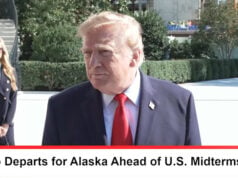
“I want to have someone in power who will be deferential to the U.S.,” Trump told reporters recently, a statement that has sent chills through diplomatic circles and fueled accusations of a return to “regime change” policies.
The Chokepoint: A Functional Blockade at Hormuz
Iran’s response to the decapitation of its leadership was swift and targeted at the jugular of the global economy: the Strait of Hormuz. On March 2, the IRGC officially declared the strait closed. While the U.S. Navy claims to have destroyed much of the Iranian surface fleet, the “functional” blockade remains effective through the use of anti-ship missiles, drone swarms, and sea mines.
- Shipping Downturn: Maritime traffic through the strait has plummeted by over 70%, with insurance costs skyrocketing to levels that make commercial transit nearly impossible for non-Chinese vessels.
- The Chinese Exception: In a strategic masterstroke, Tehran announced it would permit Chinese-flagged ships to pass unmolested. This has led to the bizarre spectacle of international tankers attempting to “rebrand” mid-voyage to escape targeting.
- Global Oil Shock: The International Energy Agency (IEA) has responded with the largest emergency reserve release in history—400 million barrels—but oil prices remain volatile, hovering near record highs as the market weighs the risk of a protracted conflict.
- The Transatlantic Rift: NATO in Crisis
- Perhaps the most significant fallout of the war in Iran has been the deepening chasm between Washington and its European allies. For the first time in the history of the North Atlantic Treaty Organization, major European powers have openly “balked” at a U.S.-led military initiative.
- President Trump’s “transactional” approach to the alliance reached a boiling point this week. After French President Emmanuel Macron and British Prime Minister Keir Starmer refused to join the maritime coalition in the Persian Gulf, Trump took to Truth Social to lash out, suggesting that NATO faces a “very bad future” if allies do not pay their fair share and support U.S. security priorities.
| Country | Stance on Hormuz Coalition | Official Statement |
| United States | Lead Aggressor | “They get the energy; they should protect it.” |
| Israel | Core Partner | “We will target anyone who threatens our survival.” |
| United Kingdom | Defensive Only | “We will not be drawn into a war of regime change.” |
| France | Neutral/Opposed | “This is not our war; we seek a diplomatic path.” |
| Germany | Opposed | Focus remains on European deterrence and Ukraine. |
- The tension is exacerbated by the “Greenland Crisis” of early 2026, where the Trump administration renewed pressure on Denmark to cede control of the island, further alienating European partners who are now openly discussing “strategic autonomy” and moving away from reliance on the U.S. security umbrella.
- The Caribbean Siege: Cuba and the Monroe Doctrine 2.0
- While the world’s eyes are on the Middle East, a second front has opened in the Caribbean. Since January 2025, the Trump administration has tightened the screws on the Cuban government, culminating in a “total pressure” strategy.
- In February 2026, the U.S. initiated what many call the first effective blockade of Cuba since the 1962 missile crisis. By targeting oil tankers from countries like Mexico and threatening secondary tariffs on any nation supplying energy to the island, Washington has brought the Cuban economy to a virtual standstill.
- The Fallout in the Americas:
- Mexico’s Dilemma: President Claudia Sheinbaum was forced to temporarily halt oil shipments to Havana after Trump threatened massive tariffs on Mexican exports.
- Nicaraguan Concessions: Under U.S. pressure, the Ortega regime cancelled visa-free travel for Cubans, closing a major migration route.
- Humanitarian Concerns: With energy and medical missions collapsing, the humanitarian situation in Cuba is dire, yet the White House remains firm, demanding a “New Deal” for democracy on the island.
- Conclusion: The New World Order of 2026
- As of March 17, 2026, the global order is no longer defined by the post-WWII institutions that have governed for eight decades. President Trump has already moved to withdraw the U.S. from over 60 international bodies, proposing a U.S.-led “Board of Peace” in their stead.
- This new era is defined by raw power, bilateral deals, and a “pay-to-play” security model. While the military success of Operation Epic Fury in Iran is undeniable, the long-term cost—a fractured NATO, a global energy crisis, and a return to Cold War-style blockades in the West—remains to be tallied. The world watches the Strait of Hormuz, not just for the next tanker, but for the next sign of where this “Global Realignment” will lead.
- Sources Used and Links:
- FULCRUM: Trump’s Global Agenda Flies into Domestic Headwinds
- Wikipedia: 2026 Strait of Hormuz crisis
- Wikipedia: 2026 Cuban crisis
- Wikipedia: 2026 Iran war
- Britannica: 2026 Iran Conflict | Explained
- The Guardian: How the war in Iran and its economic fallout could lead to Trump’s defeat
- The Guardian: Iran’s Hormuz blockade is its most powerful card
- Chatham House: Conflict in the Strait of Hormuz is spilling into the Indian Ocean
- TRT World: The Iran war and growing doubts about US protection
- Qatar News Agency (QNA): US President Says NATO Nations Balk at Participating in Middle East War
- House of Commons Library: US-Israel strikes on Iran: February/March 2026
- Israel-Alma: Daily Report: Second Iran War – March 17, 2026
- Holland & Knight: Trump Administration Rescinds Certain Actions to Ease Cuba Sanctions
- Al Jazeera: The Strait of Hormuz: Global Economic Shock
- White House (Archived/Fact Sheet): President Trump Addresses Threats by the Government of Cuba
Disclaimer
Artificial Intelligence Disclosure & Legal Disclaimer
AI Content Policy.
To provide our readers with timely and comprehensive coverage, South Florida Reporter uses artificial intelligence (AI) to assist in producing certain articles and visual content.
Articles: AI may be used to assist in research, structural drafting, or data analysis. All AI-assisted text is reviewed and edited by our team to ensure accuracy and adherence to our editorial standards.
Images: Any imagery generated or significantly altered by AI is clearly marked with a disclaimer or watermark to distinguish it from traditional photography or editorial illustrations.
General Disclaimer
The information contained in South Florida Reporter is for general information purposes only.
South Florida Reporter assumes no responsibility for errors or omissions in the contents of the Service. In no event shall South Florida Reporter be liable for any special, direct, indirect, consequential, or incidental damages or any damages whatsoever, whether in an action of contract, negligence or other tort, arising out of or in connection with the use of the Service or the contents of the Service.
The Company reserves the right to make additions, deletions, or modifications to the contents of the Service at any time without prior notice. The Company does not warrant that the Service is free of viruses or other harmful components.