Avid readers and book collectors looking to clear out some space and make money need to find innovative ways to sell used books in 2026. Maybe you’re looking to reduce your personal library to something more manageable. Or perhaps you want to build a small book-selling business from home. No matter your ultimate goal, you can find the right platforms, attract avid buyers, and make a profit wherever you are.
Before diving into the best methods, it’s important to gauge whether the books you have will really sell.
What Types of Used Books Sell?
High-value, rare collectibles will get you the most money, but very few everyday folks have books like this. Collectors already have their connections and potential buyer lists to make offers to. Other than that, non-fiction and textbook sales top the list of highest-profit options. Any hardbacks with special elements like sprayed edges, intact dust jackets, and especially signatures come next.
Paperback fiction is the toughest type to shift for a profit, but you can still find ways to sell these types of books successfully. It helps to have full series or collections that are in excellent or like-new condition.

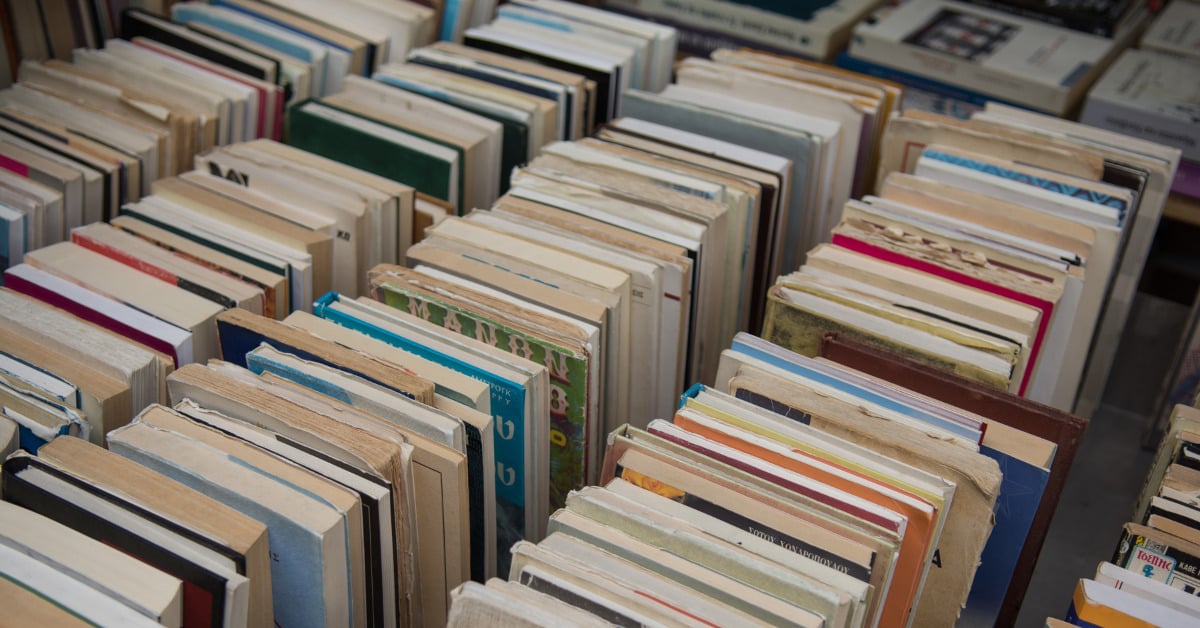
Where To Sell Your Books in Person?
If you want to make in-person sales, your two main options are dedicated book stores and general resale venues like flea markets or yard sales, and each suits a different type of inventory.
Used and secondhand book shops typically offer the best returns on higher-value items. Many cities have local stores that buy books outright or offer store credit, and some (like Atlanta Vintage Books from this local guide) specialize in collectibles and rare editions only. Before hauling boxes anywhere, always call ahead to confirm what they’re currently buying.
Flea markets and yard sales rarely yield high profits per book, but they’re a practical way to move large quantities of lower-value paperbacks quickly. Think of them as a volume play rather than a value play.
For city-specific recommendations, the BookScouter blog has local guides covering Houston, Florida, and other parts of the country.
Online Book Sales Bring More Widespread Success
The audience for any sales is much bigger online, so it makes sense to offer books on the major platforms where more people shop. This works well if you’re willing and able to ship books out promptly after sales and payments are clear. Choose the platform based on what genre or variety you intend to sell. For example, if you have rare, antique, or hard-to-find titles, a platform like AbeBooks will serve you better than general marketplaces. For everything else, these platforms will work well:
eBay
eBay is still the main online auction platform where anyone can sell almost anything. It works well for collections, a complete series, or a lot of books in the same genre, for example. Take good pictures, write a detailed description, and remember all the fees when setting your auction or buy-it-now price.
Amazon
Many consider this the first option for everyday buyers looking for books. You need to sign up for a seller account and choose either the Merchant Fulfilled Network or Fulfilled by Amazon option. This determines who stores and ships your products: you or Amazon. It might not be worth it if you only have a few volumes to get rid of.
Direct Textbook
This book-specific site has great pricing and a buyback program suitable for textbooks. Instead of putting up a listing or an ad and waiting for someone to come along to buy, Direct Textbook scouts around for the best place to sell a particular book based on past prices. Then you can sell your books without all the trouble of photographing, creating listings, waiting for the buyer, managing multiple orders.
Abe Books
AbeBooks is geared toward rare, used, and collectible books, making it a natural fit if you have older or hard-to-find titles. You manage your own listings, organized into textbook or general categories. If you plan to sell regularly, factor in the monthly seller fee.
 Condition, Competition, and Selling Costs
There are three things to consider when pricing your used books for profit: condition, competition, and selling costs.
Condition
Determine the condition of each item before listing it anywhere. Use these standard grades:
- As New – never read or damaged in any way
- Fine – similar to As New but with some shelf wear
- Very Good – used but undamaged
- Good – signs of normal use
- Fair – all pages present, but with noticeable wear and tear
- Poor – damaged, with all pages present
Be honest in your assessment and listings. Unhappy buyers mean returns and bad reviews. Photograph any damage or wear clearly. In general, only list Good condition and above, unless the book is old, rare, or of special interest.
One pricing reality to keep in mind: if you bought books specifically to resell, your original cost sets your profit floor. For old textbooks or casual paperbacks you already owned, you likely won’t recoup the original purchase price, and that’s fine. Any cash is a win.
Competition
Search your target platform to see how many copies of the same title are currently listed. If dozens are sitting unsold, demand is low, and profit will be hard to come by. The more competition, the lower your realistic price ceiling. Multi-platform research tools like BookScouter.com can scan multiple sites simultaneously, saving you significant time.
Selling Costs
Every platform takes a cut, and shipping adds up fast. Before setting a price or accepting an offer, add up platform fees, payment processing fees, and packaging and postage costs. If the numbers don’t leave a meaningful margin, it may not be worth listing.
Selling used books lets you clear space and make money at the same time. Assess condition honestly, check the competition, account for costs, and choose the right platform. Do those three things, and you give yourself a real shot at turning your shelves into cash.
Disclaimer
Artificial Intelligence Disclosure & Legal Disclaimer
AI Content Policy.
To provide our readers with timely and comprehensive coverage, South Florida Reporter uses artificial intelligence (AI) to assist in producing certain articles and visual content.
Articles: AI may be used to assist in research, structural drafting, or data analysis. All AI-assisted text is reviewed and edited by our team to ensure accuracy and adherence to our editorial standards.
Images: Any imagery generated or significantly altered by AI is clearly marked with a disclaimer or watermark to distinguish it from traditional photography or editorial illustrations.
General Disclaimer
The information contained in South Florida Reporter is for general information purposes only.
South Florida Reporter assumes no responsibility for errors or omissions in the contents of the Service. In no event shall South Florida Reporter be liable for any special, direct, indirect, consequential, or incidental damages or any damages whatsoever, whether in an action of contract, negligence or other tort, arising out of or in connection with the use of the Service or the contents of the Service.
The Company reserves the right to make additions, deletions, or modifications to the contents of the Service at any time without prior notice. The Company does not warrant that the Service is free of viruses or other harmful components.