By Tom Marquardt And Patrick Darr
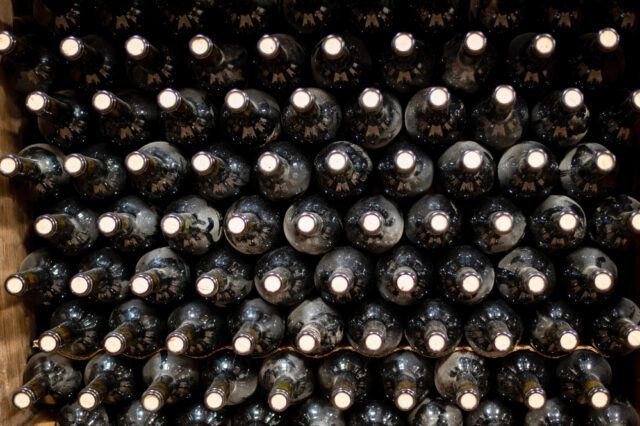
A few years back, we were commiserating with a winemaker about the heartbreak of aging an expensive bottle for ten years only to discover it ruined by a tainted cork. He sympathized and sighed, “It’s the last thing I put in the bottle—and the only thing I can’t control.” To most drinkers, a cork is just an obstacle between them and their glass, yet it’s vital to keeping wine alive. TCA-tainted bottles are rarer than they were in the 1980s, but a few weeks ago, we opened a pricey Brunello di Montalcino in Italy and found it spoiled, and then encountered the same cork taint in an expensive Rhone wine shortly after. Corked wines happen far less often than they once did, but even infrequent encounters remind us of the critical importance of the cork.
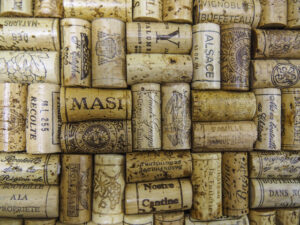 We thought we knew corks until we spent eight hours exploring the World of Wine center in Porto—a must-visit for any wine lover. Portugal supplies over 34 percent of the world’s cork; the rest comes from Mediterranean neighbors like Spain, Morocco, Algeria, and Tunisia. Cork stoppers started appearing in the 1600s, but drinkers didn’t get a corkscrew until the 1700s. Who knows what they used before—reminds us of the time we forgot our corkscrew on a boat and pried one out with a screwdriver. Now we carry corkscrews everywhere: glove compartments, suitcases, ditty bags.
Cork is harvested from the bark of a remarkable tree that lives 300 years and can be stripped repeatedly. It’s easy to feel sorry for the tree. The first harvest waits until the tree is about 25, then every nine years thereafter. Each tree is painted with its harvest year and dots the countryside in wild groves and managed forests. Skilled harvesters peel off the bark planks, which dry for months, then boil for an hour to lower the moisture and soften the cells. Machines punch out stoppers; the leftover bits go to granules for flooring, shoes, gaskets, and more. Corks are then graded—the finest go to the best wines. We suspect the lower grades end up in cheap bottles and may still carry TCA risk, but more on contamination later.

 What fascinates us is cork’s dual nature: compressible enough to insert into glass, yet expansive enough to seal under pressure when you pull it out. It’s not an airtight plug—instead, it admits just enough oxygen for proper aging. That’s why ullage (the wine level in a bottle) slowly drops over decades; if it reaches the shoulder, oxidation spoils the wine.
Champagne corks are specially constructed of three sections. The bottom two disks of natural cork come in contact with the wine, while the upper section is glued to granules. This design distributes the bottle’s internal pressure. Once popped, the bottom disks spring open into the mushroom shape we all recognize. Next time you open bubbly, take a look.
After the TCA crisis, alternative closures—screw caps, glass stoppers, composite corks—emerged. TCA forms when the bark contacts certain molds during drying or storage, and today, producers test more rigorously. Yet each alternative brings drawbacks. Plastic “corks” let in too much air, leading to oxidation unless the wine is drunk immediately; they’re also hard to extract and might carry plastic taints. DIAM corks, made by gluing small cork pieces together, are common and reliable—you can spot their agglomerated texture if you peer closely.
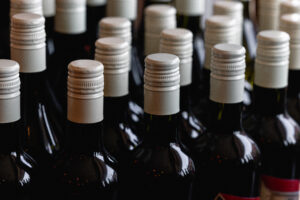 Screw-caps have gained the most ground: they eliminate TCA and are cheap to source, so you see them on budget labels and often on wines from New Zealand and Australia. Still, studies suggest wines under metal caps don’t age as gracefully as those under natural cork. Most winemakers reserve screw-caps for everyday bottles, saving cork for their best. After all, 90 percent of wine is consumed within a day of purchase.
Beyond practicalities, there’s the ritual of opening a corked bottle—the ceremony, the unmistakable pop—which screw-caps can’t replicate.
Indeed, not only is the cork tree endurable, but also is its centuries-old tradition.
Merriam wines
The tapestry of Northern California’s microclimates and soils offers vintners an intricate array of growing environments. Years ago, driving south from San Francisco toward Los Angeles, we witnessed this phenomenon firsthand—a temperature rollercoaster as we wound through the hills beyond Carmel and Monterey, where inland warmth gave way to the Pacific’s cool breath.
Nowhere is this climatic dance more evident than in Sonoma County’s Russian River Valley. While much of Sonoma basks in hot, arid summers perfect for heat-seeking varietals like cabernet sauvignon, merlot, and zinfandel, the Russian River carves a cool-climate corridor into the county’s heart.
This refreshing anomaly exists because of a strategic gap in the coastal mountain range. Through this opening, Pacific fog and cool air infiltrate inland, following the Russian River’s path and creating the perfect environment for delicate pinot noir and chardonnay grapes—the dominant varietals in the Russian River AVA, where acclaimed wineries like DuMol, Williams Selyem, and Sonoma-Cutrer have made their home.
We recently sampled three pinot noirs from Merriam Vineyards, a family operation owned and operated by the Merriam family. The vineyards were planted in 2009 and are certified organic. The Merriam’s are influenced by French winemaking techniques including minimal intervention in the winemaking process and utilizing French barrels both new and used.
Following are our tasting notes.
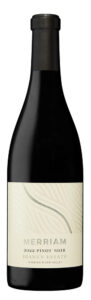
Merriam Vineyards Pinot Noir Eastside Estate Russian River Valley 2022 ($56). A delightful ready-to-drink red wine with raspberry and cherry notes and a nice spice undertone.
Merriam Vineyards Pinot Noir Diana’s Estate Russian River Valley 2022 ($56). This pinot noir reflects a Burgundian style with some earth and leather notes that developed over time. Ripe candied cherry and strawberry with a note of cranberry. A bit more closed than the Eastside.
Merriam Vineyards Pinot Noir Three Sons Russian River Valley 2021 ($84). This is an amazing pinot noir. Mouth filling black cherry notes with spice notes of clove and cinnamon. A mouth filling masterpiece that is built to age.
Wine picks
Quinta Nova Reserva Terroir 2022 ($36). This is a classic Portuguese blend of touriga franca, tourige nacional, tinta roriz and tino cao. Ripe and young, it has a range of juicy red and dark fruit flavors with good structure.
Troon Vineyard Druid’s White 2024 ($30). Winemaker Nate Wall has crafted a delightful wine from a cauldron of French grape varieties grown in southern Oregon: grenache blanc, bourboulenc, roussanne, vermentino, clairette blanche and picpoul blanc. Whew! Richly textured but balanced with good acidity, it has peach and citrus notes. The bourboulence adds a lot of rich character while the roussanne brings pretty aromatics. We loved this wine.
Disclaimer
Artificial Intelligence Disclosure & Legal Disclaimer
AI Content Policy.
To provide our readers with timely and comprehensive coverage, South Florida Reporter uses artificial intelligence (AI) to assist in producing certain articles and visual content.
Articles: AI may be used to assist in research, structural drafting, or data analysis. All AI-assisted text is reviewed and edited by our team to ensure accuracy and adherence to our editorial standards.
Images: Any imagery generated or significantly altered by AI is clearly marked with a disclaimer or watermark to distinguish it from traditional photography or editorial illustrations.
General Disclaimer
The information contained in South Florida Reporter is for general information purposes only.
South Florida Reporter assumes no responsibility for errors or omissions in the contents of the Service. In no event shall South Florida Reporter be liable for any special, direct, indirect, consequential, or incidental damages or any damages whatsoever, whether in an action of contract, negligence or other tort, arising out of or in connection with the use of the Service or the contents of the Service.
The Company reserves the right to make additions, deletions, or modifications to the contents of the Service at any time without prior notice. The Company does not warrant that the Service is free of viruses or other harmful components.