


ADA wayfinding signs are essential elements in creating accessible and navigable public spaces. Not only do they help everyone find their way, but they are specifically designed to assist individuals with disabilities, ensuring that all visitors can confidently move through a building or area. These signs go beyond basic directions, incorporating thoughtful design elements that make them truly inclusive.
What Exactly Are ADA Wayfinding Signs?
The Americans with Disabilities Act (ADA) sets specific guidelines for signage in public spaces to ensure accessibility for individuals with disabilities. ADA wayfinding signs are designed with these guidelines in mind, featuring raised letters, braille, and high-contrast colors to aid those with visual impairments. Additionally, they often include pictograms that are universally recognized, making navigation easier for everyone, regardless of language or ability.
True Qualities of Good ADA Wayfinding Signs
Good directional signs do not just slap on an arrow and call it a day. They are carefully designed with visibility and clarity in mind. These signs need to catch your eye and convey their message quickly — after all, nobody likes searching for too long when nature calls. High-contrast colors, large symbols, and clear fonts are the key ingredients to making restroom signs easy to spot from a distance.
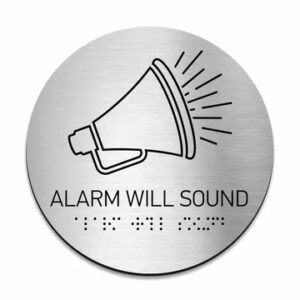 But clarity does not mean boring. Many restroom directional signs incorporate playful or unique designs, reflecting the vibe of the location. Think of funky, neon-lit signs in a trendy café, or elegant, minimalistic signs in a high-end restaurant. These design choices can add character to a space while still helping people find the facilities without a detour.

More Than Just Compliance: The Impact of ADA Wayfinding Signs
While ADA wayfinding signs are legally required in public spaces, their impact goes far beyond compliance. These signs demonstrate an organization’s commitment to inclusivity and accessibility. By providing clear and accessible directions, ADA signs contribute to a welcoming environment where all visitors can feel confident and independent.
Additionally, these signs can prevent potential safety issues. For example, in the event of an emergency, ADA-compliant signs can help visually impaired individuals locate exits or emergency equipment quickly and efficiently.
A Path Forward for Everyone
Some might think ADA signs are plain or purely functional, but that is not the case. They can be designed to blend seamlessly with a building’s aesthetic while still adhering to the necessary guidelines. With thoughtful design, ADA wayfinding signs can be both attractive and accessible, proving that style and functionality do not have to be mutually exclusive.
In the end, ADA wayfinding signs do more than a guide; they empower. By ensuring that all individuals, regardless of ability, can navigate a space independently, these signs contribute to a more inclusive society. So next time you see one, remember that it is not just a sign—it is a statement of equality and accessibility for all.
Disclaimer
Artificial Intelligence Disclosure & Legal Disclaimer
AI Content Policy.
To provide our readers with timely and comprehensive coverage, South Florida Reporter uses artificial intelligence (AI) to assist in producing certain articles and visual content.
Articles: AI may be used to assist in research, structural drafting, or data analysis. All AI-assisted text is reviewed and edited by our team to ensure accuracy and adherence to our editorial standards.
Images: Any imagery generated or significantly altered by AI is clearly marked with a disclaimer or watermark to distinguish it from traditional photography or editorial illustrations.
General Disclaimer
The information contained in South Florida Reporter is for general information purposes only.
South Florida Reporter assumes no responsibility for errors or omissions in the contents of the Service. In no event shall South Florida Reporter be liable for any special, direct, indirect, consequential, or incidental damages or any damages whatsoever, whether in an action of contract, negligence or other tort, arising out of or in connection with the use of the Service or the contents of the Service.
The Company reserves the right to make additions, deletions, or modifications to the contents of the Service at any time without prior notice. The Company does not warrant that the Service is free of viruses or other harmful components.










 sets specific guidelines for signage in public spaces to ensure accessibility for individuals with disabilities.)