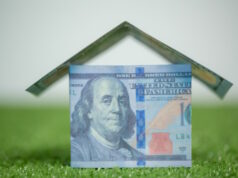
The typical first-time homebuyer was 30 years old in 1990. Today, they’re closer to 40 as home prices have far outpaced income growth — and in hundreds of U.S. cities, even starter homes now come with seven-figure price tags.
A new report from Zillow found that 242 cities have starter homes priced at least $1 million — a record high and nearly triple the number before the pandemic housing boom. Zillow defines a starter home as one whose value falls in the lowest third of homes in a local market.
While California still dominates the list of states with the most cities with million-dollar starter homes, the phenomenon is spreading beyond the country’s most notoriously expensive housing markets. Million-dollar starter homes can now be found in 26 states — up from nine before the pandemic.
Here’s where buying your first home can mean spending seven figures.

Where starter homes cost at least $1 million
Million-dollar starter homes are still heavily concentrated in a handful of states, particularly California, New York and New Jersey. California alone has 105 cities where a typical starter home is priced at least $1 million, while New York has 41 and New Jersey 26, according to Zillow. New York and New Jersey are the fastest-growing states on the list, adding 10 and five cities, respectively, over the past year.
The New York City metropolitan area, which includes parts of New Jersey and Pennsylvania, has the largest concentration of million-dollar starter homes, with 63 cities making the list. The San Francisco metro area follows, with 37 cities, while Los Angeles has 33.
The geography of million-dollar starter homes has broadened in recent years.
“The reality is that with underbuilding, low inventory and what was basically a pandemic-era price reset, the definition of a starter home has changed,” Ryan Fitzgerald, a real estate broker and owner of Raleigh Realty in North Carolina, tells Money.
“This trend is particularly interesting now, as it has begun to spread beyond longstanding coastal markets into the Northeast and well-established employment corridors.”
Before 2020, million-dollar starter homes were almost entirely coastal, with Colorado being the only interior state on the list. Now, multiple cities in states including Texas, Wyoming and Illinois have crossed the $1 million starter-home threshold.
Below are the states with the most million-dollar starter homes:
| State | Number of cities as of April 2026 |
|---|---|
| California | 105 |
| New York | 41 |
| New Jersey | 26 |
| Florida | 11 |
| Massachusetts | 10 |
| Washington | 8 |
| Texas | 7 |
| Connecticut | 4 |
| Hawaii | 4 |
| Maryland | 4 |
The spread of million-dollar starter homes stands in stark contrast to national income levels. The median household income in the U.S. was roughly $83,000 in 2024, meaning a $1 million home costs more than 12 times what the typical household earns in a year.
Still, million-dollar starter homes remain the exception rather than the rule nationwide. Zillow estimates the typical starter home in the U.S. is worth about $199,000, but prices vary dramatically depending on where buyers live.
But for buyers in markets where even entry-level homes cost seven figures, the path to homeownership often looks very different than it did for the previous generation. The trend hasn’t necessarily changed buyers’ desire to own a home, Fitzgerald says, but it has changed their timelines.
“Rather than giving up on homeownership altogether, first-time buyers are saving for a longer period of time, entering the market later in life, and becoming more flexible about property size, condition and location,” he says.
In many of these states, he adds, qualifying for a mortgage is now less about meeting baseline requirements and more about managing the total monthly cost of ownership, including taxes, insurance and maintenance.
Disclaimer
Artificial Intelligence Disclosure & Legal Disclaimer
AI Content Policy.
To provide our readers with timely and comprehensive coverage, South Florida Reporter uses artificial intelligence (AI) to assist in producing certain articles and visual content.
Articles: AI may be used to assist in research, structural drafting, or data analysis. All AI-assisted text is reviewed and edited by our team to ensure accuracy and adherence to our editorial standards.
Images: Any imagery generated or significantly altered by AI is clearly marked with a disclaimer or watermark to distinguish it from traditional photography or editorial illustrations.
General Disclaimer
The information contained in South Florida Reporter is for general information purposes only.
South Florida Reporter assumes no responsibility for errors or omissions in the contents of the Service. In no event shall South Florida Reporter be liable for any special, direct, indirect, consequential, or incidental damages or any damages whatsoever, whether in an action of contract, negligence or other tort, arising out of or in connection with the use of the Service or the contents of the Service.
The Company reserves the right to make additions, deletions, or modifications to the contents of the Service at any time without prior notice. The Company does not warrant that the Service is free of viruses or other harmful components.