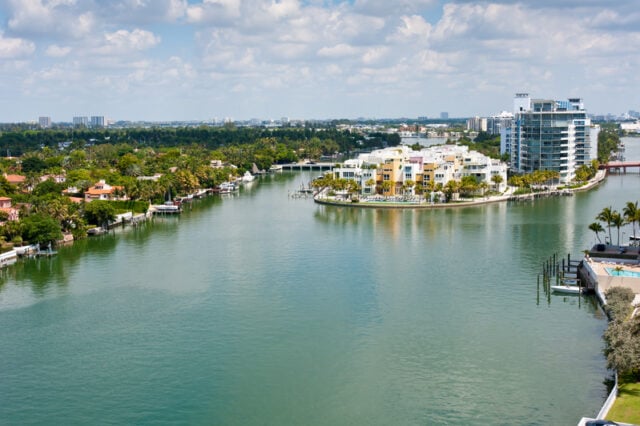
For years, the ultra-wealthy have treated the world as a game of Monopoly, but the board is shifting. Mark Zuckerberg, the co-founder and CEO of Meta Platforms, is reportedly the latest titan of industry to plant a flag in Florida’s “Billionaire Bunker.” The move, first detailed by The Wall Street Journal, involves the acquisition of a sprawling waterfront estate on Indian Creek Island, a high-security enclave in Miami-Dade County.
The transaction—estimated to be valued between $150 million and $200 million—is more than just a real estate play; it is a seismic signal of the growing tension between Silicon Valley’s elite and the California legislature. As California debates a first-of-its-kind wealth tax, the sunshine of Florida is beginning to look less like a vacation destination and more like a necessary financial fortress.
The Deal: From Subs to Software
The property in question was purchased from Peter Cancro, the founder of Jersey Mike’s Subs, who recently saw his own windfall after selling a majority stake in his sandwich empire to Blackstone for $8 billion. According to The Wall Street Journal, the “newly completed waterfront mansion” sits on nearly two acres of prime land. While the official price remains unrecorded, local experts suggest the sheer scale and exclusivity of the build put it in the top tier of Florida real estate.
Architectural renderings of the estate by CMA Design Studio reveal a masterclass in modern luxury: wraparound terraces, a private dock, and lush landscaping designed to provide the one thing billionaires value most—anonymity. The home joins Zuckerberg’s existing portfolio, which includes a massive compound in Kauai, Hawaii, and estates in Palo Alto and Lake Tahoe. However, this purchase carries a different weight.

The Rise of the “Billionaire Bunker”
Indian Creek Island is a 300-acre man-made island with just 41 residential lots and its own private 13-person police force. It is widely considered one of the most secure neighborhoods on the planet. Zuckerberg’s new neighbors include Amazon founder Jeff Bezos, activist investor Carl Icahn, and former NFL superstar Tom Brady.
The Wall Street Journal noted that Zuckerberg and his wife, Priscilla Chan, are “joining a roster of ultra-wealthy individuals expanding their footprints in South Florida.” This concentration of wealth is turning Indian Creek into a literal and figurative “bunker” against the shifting political and economic tides of the West Coast.
The California “Wealth Tax” Catalyst
The timing of the purchase is no coincidence. California is currently weighing a controversial “wealth tax” that would target unrealized gains for individuals with a net worth exceeding $1 billion. For a man like Zuckerberg, whose wealth is largely tied up in Meta stock, the tax implications are astronomical.
As The Wall Street Journal highlighted, the proposal has “stirred concern among investors and business leaders across the state.” Some analysts estimate that if the 5% one-time tax were enacted, Zuckerberg’s personal tax bill could reach into the tens of billions. In this light, a $200 million mansion in a state with zero income tax isn’t just a luxury—it’s a hedge.
Zuckerberg isn’t the only tech pioneer looking for the exit. Google co-founders Larry Page and Sergey Brin have also been on a Miami buying spree. Page recently acquired three homes in Coconut Grove for nearly $190 million, while Brin is reportedly closing on a $50 million estate nearby.
A Reshaped Miami
The influx of “Silicon Valley East” is transforming Miami from a retirement and tourism hub into a global center for finance and technology. However, this migration brings its own set of challenges. Real estate prices in the area have skyrocketed, making it increasingly difficult for local residents to maintain a foothold in the city.
“Home buyers are enjoying discounts at the highest rate in years” in some sectors, The Wall Street Journal reported in its broader market analysis, but the ultra-luxury tier remains immune to these cooling trends. The demand for “fortress” properties like those on Indian Creek is outstripping supply, creating an island of unimaginable wealth surrounded by a region grappling with an affordability crisis.
The Security and Privacy Mandate
For Zuckerberg, the move to Indian Creek follows a pattern of “defensive” real estate. His Hawaii compound, known as Koolau Ranch, is famously equipped with a massive underground bunker and a self-sustaining power grid.
Living on Indian Creek offers a similar level of “off-grid” living within a metropolitan area. The island has its own dedicated government and an armed marine patrol that circles the perimeter 24/7. In an era when tech CEOs are increasingly targets of public ire and sophisticated security threats, the “Bunker” offers a level of physical safety that Palo Alto simply cannot match.
Conclusion: The New Frontier
As the ink dries on the deal with Peter Cancro, the narrative of the “California Exodus” gains a new, powerful chapter. Mark Zuckerberg’s arrival in Miami is a validation of South Florida’s status as the new capital of American wealth.
Whether this is a permanent relocation or merely a strategic addition to his portfolio, the move reinforces a growing reality: the giants of the digital age are seeking physical sanctuaries that reflect their status. In the “Billionaire Bunker,” Zuckerberg has found a place where his fortune is protected by more than just encryption—it is protected by a moat, a private army, and a friendly tax code.
As The Wall Street Journal succinctly put it, the Meta founder is the “latest California billionaire to buy a Florida home,” but given the current political climate in Sacramento, he almost certainly won’t be the last. The battle between the tax collectors of the West and the sunshine of the South is only just beginning, and the winners are currently moving into Indian Creek.
Source: The Wall Street Journal
Disclaimer
Artificial Intelligence Disclosure & Legal Disclaimer
AI Content Policy.
To provide our readers with timely and comprehensive coverage, South Florida Reporter uses artificial intelligence (AI) to assist in producing certain articles and visual content.
Articles: AI may be used to assist in research, structural drafting, or data analysis. All AI-assisted text is reviewed and edited by our team to ensure accuracy and adherence to our editorial standards.
Images: Any imagery generated or significantly altered by AI is clearly marked with a disclaimer or watermark to distinguish it from traditional photography or editorial illustrations.
General Disclaimer
The information contained in South Florida Reporter is for general information purposes only.
South Florida Reporter assumes no responsibility for errors or omissions in the contents of the Service. In no event shall South Florida Reporter be liable for any special, direct, indirect, consequential, or incidental damages or any damages whatsoever, whether in an action of contract, negligence or other tort, arising out of or in connection with the use of the Service or the contents of the Service.
The Company reserves the right to make additions, deletions, or modifications to the contents of the Service at any time without prior notice. The Company does not warrant that the Service is free of viruses or other harmful components.