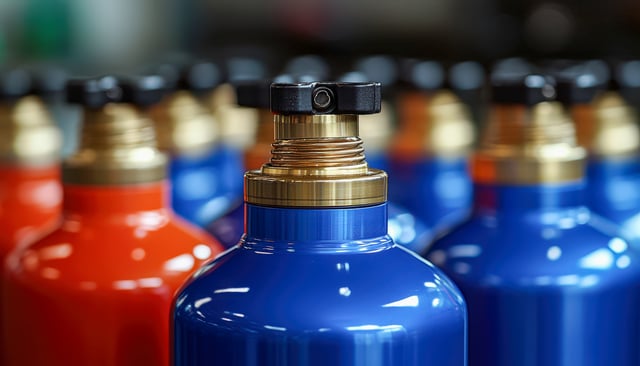
Walk into a busy brewery on a canning day and there is a quiet system working in the background that never shows up on the tap list: the gas supply. Behind the polished stainless tanks and the colorful labels, gas cylinders, regulators, valves, and lines control how beer ferments, moves, and finally reaches the glass. The way a brewery works with its gas cylinder manufacturer can have as much impact on quality and uptime as the choice of malt or hops.
For many small and mid-sized breweries, gas is treated as a utility to “set and forget” until a problem appears. A flat pint, a foamy line, or a packaging delay often stems from how cylinders are specified, handled, or maintained. Paying closer attention to the core components, and to the supplier behind them, helps breweries protect product quality and run a calmer, more predictable operation.
The gases behind every pour
Most breweries rely on a combination of carbon dioxide and nitrogen, with oxygen intentionally kept out of the product as much as possible. Each of these gases has a distinct role, and the way cylinders are chosen and managed determines how well they do that job.
- Carbon dioxide gives beer its sparkle and helps protect it from spoilage during packaging and storage.
- Nitrogen supports tank purging, blanketing, and draft systems, especially for long draw lines and nitro-style beers.
- Oxygen is more of a threat than a tool once fermentation is finished, which is why brewers focus on purging lines and vessels with CO₂ or nitrogen before beer makes contact.
A well structured gas system keeps these roles clear. Cylinders and regulators tuned for each application help maintain the right pressure, carbonation, and protection from oxygen pickup, batch after batch.

Why cylinder quality really matters
Not all cylinders or components are created equal. The metal shell, internal cleanliness, valve design, and testing history all influence reliability and safety. A strong relationship with a gas cylinder manufacturer gives breweries insight into how those details are handled before a cylinder ever reaches the loading dock.
High-quality cylinders are built to withstand repeated pressurization, temperature swings, and frequent handling without deforming or corroding. Good valves and connections hold pressure, resist leaks, and stand up to constant use in busy cellars and taprooms. When these pieces are right, brewers spend less time troubleshooting and more time actually brewing.
There is also the invisible part of quality: gas purity. Cylinders that are properly cleaned, filled, and sealed help prevent off flavors linked to contamination or oil, moisture, or residues in the gas stream. Over time, breweries learn which suppliers consistently deliver clean, stable products and which ones lead to more surprise issues on the draft wall.
Partnering with a gas cylinder manufacturer
For a growing brewery, the gas supplier is less a commodity vendor and more a quiet operations partner. A responsive gas cylinder manufacturer or distributor helps size cylinders, plan storage, and choose the right regulators, manifolds, and safety gear for the space and production volume. A good partner does a few simple but important things well:
- Helps match cylinder sizes to demand so the team is not constantly changing bottles or tying up floor space with excess inventory.
- Offers clear documentation and training on handling, securing, and storing cylinders in crowded production areas and coolers.
- Works with the brewery to spot opportunities, such as mico-bulk systems or blended gas solutions, when cylinder counts become difficult to manage.
Breweries that treat this relationship as strategic often negotiate delivery schedules around brewing cycles and canning runs. That planning helps avoid the stressful experience of discovering a low CO₂ cylinder in the middle of a packaging day.
Getting the components right
Gas cylinders are only one piece of a longer chain. Valves, regulators, hoses, manifolds, and gas blenders each influence pressure, flow, and consistency at the point of use. When these parts are thoughtfully specified, they form a stable backbone for the entire brewery.
- Regulators: Keep pressure steady for tasks such as carbonation, serving, or pushing beer through long draft lines.
- Hoses and fittings: Affect leak potential and ease of maintenance; hard lines and quality fittings often reduce loss compared with flexible tubing and simple clamps.
- Blenders and mixed-gas cylinders: Combine CO₂ and nitrogen at set ratios to support draft systems and certain packaging setups, especially when lines are long or temperatures fluctuate.
Here again, a knowledgeable gas cylinder manufacturer or gas specialist can advise on suitable configurations. That guidance often saves breweries from trial-and-error purchases or from running systems outside recommended ranges, which can quickly show up as flat beer, over-foaming, or inconsistent pours.
Safety and compliance in the brewery
Pressurized gases bring risk, especially when stored in small, enclosed rooms or basement spaces that are common in brewpubs and taprooms. Carbon dioxide can displace oxygen, while nitrogen, though inert, can contribute to oxygen depletion if leaks occur. Safety practices usually include:
- Properly securing cylinders to walls or racks to prevent tipping.
- Ventilating storage and draft system rooms that house multiple cylinders.
- Installing gas monitoring systems in vulnerable spaces such as cellars, walk-in coolers, and areas around large tanks to detect CO₂ buildup before it reaches dangerous levels.
Regulations and codes vary, but inspectors increasingly expect breweries and restaurants to have gas detection and clear response procedures in place. Many gas suppliers support that effort by offering training, signage, and advice on detector placement and alarm settings, which turns what can feel like a regulatory burden into a manageable routine.
Efficiency and cost control with better gas management
In recent years, breweries have become acutely aware of gas use due to supply disruptions and price spikes, especially around CO₂. That pressure has pushed teams to pay more attention to leaks, waste, and inefficient processes. Simple maintenance steps make a noticeable difference:
- Regular leak checks at valves, regulators, and hose connections, often with soapy water or sanitizer solution.
- Keeping regulators and gauges in good condition so pressure settings stay accurate.
- Shutting off cylinders when equipment is idle to avoid slow, unnoticed losses.
Some breweries now explore on site nitrogen generation to reduce dependence on delivered cylinders in certain applications. A gas cylinder manufacturer or broader gas supplier that understands these options can help brewers compare costs and decide when it makes sense to change their mix of cylinders, micro-bulk, or generators.
Planning for growth
What works for a 500-barrel-per-year brewery does not necessarily scale when production doubles or a second taproom opens. As distribution grows, so does the demand for consistent carbonation, steady packaging schedules, and safe handling of more gas in multiple locations.
Breweries that revisit their gas strategy annually tend to avoid headaches later. They work with their suppliers to adjust cylinder sizes, delivery frequencies, and system layouts to match new production realities. Expanding teams also need refreshed training so new hires understand why details like strapping cylinders, listening for regulator leaks, and respecting alarm systems matter.
At this stage, some operators look for a gas cylinder manufacturer with stronger regional coverage or more advanced services, such as automatic refills or telemetry that alerts the supplier when levels drop. These services can remove one more variable from already complex production planning.
A quiet partner in every pint
Most brewery customers will never think about the cylinders sitting behind a locked door or the sensors humming along in a back hallway. They simply remember whether their pint was cold, properly carbonated, and consistent from one visit to the next. Behind that simple experience sits a chain of decisions about gas quality, system design, safety practices, and supplier relationships.
When breweries treat gas management as a core part of operations, and choose a gas cylinder manufacturer that acts like a partner instead of a drop off vendor, they set themselves up for fewer surprises and better beer. In a business where margins can be thin and reputations depend on every pour, that quiet reliability can be one of the most valuable ingredients in the house.
Disclaimer
Artificial Intelligence Disclosure & Legal Disclaimer
AI Content Policy.
To provide our readers with timely and comprehensive coverage, South Florida Reporter uses artificial intelligence (AI) to assist in producing certain articles and visual content.
Articles: AI may be used to assist in research, structural drafting, or data analysis. All AI-assisted text is reviewed and edited by our team to ensure accuracy and adherence to our editorial standards.
Images: Any imagery generated or significantly altered by AI is clearly marked with a disclaimer or watermark to distinguish it from traditional photography or editorial illustrations.
General Disclaimer
The information contained in South Florida Reporter is for general information purposes only.
South Florida Reporter assumes no responsibility for errors or omissions in the contents of the Service. In no event shall South Florida Reporter be liable for any special, direct, indirect, consequential, or incidental damages or any damages whatsoever, whether in an action of contract, negligence or other tort, arising out of or in connection with the use of the Service or the contents of the Service.
The Company reserves the right to make additions, deletions, or modifications to the contents of the Service at any time without prior notice. The Company does not warrant that the Service is free of viruses or other harmful components.