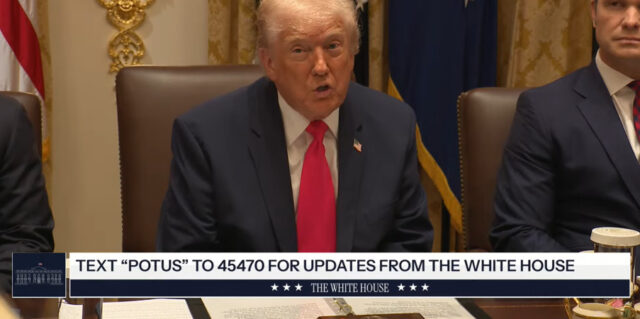
A high-profile White House Cabinet meeting on Tuesday quickly shifted from routine policy discussions to a forceful defense of a controversial U.S. military operation in the Caribbean, as Defense Secretary Pete Hegseth faced growing scrutiny over a deadly strike on a suspected narcotics-smuggling vessel.
The operation, carried out on September 2, has ignited bipartisan concern after reports emerged alleging that survivors of an initial strike were killed in a follow-up attack. During the Cabinet session, Hegseth reiterated his assertion that he did not see any survivors before the second strike, saying visibility was minimal. He referred to the situation as an example of the “fog of war,” claiming the burning vessel provided no clear line of sight.
Hegseth also maintained that while he granted broad authority for the mission, he did not personally order the killing of survivors. This follows earlier reporting — including from The Washington Post — alleging that he used the phrase “kill everybody” when discussing the strike with commanders. The Pentagon now disputes that characterization and says the final decision for the second strike was made by U.S. Navy Adm. Frank M. “Mitch” Bradley.
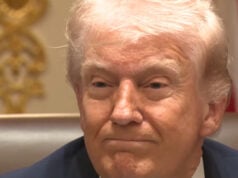
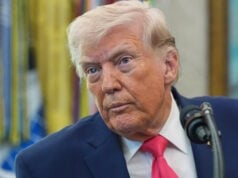
President Donald Trump, seated beside Hegseth during the meeting, expressed support for his defense secretary. Trump said he did not believe Hegseth ordered any unlawful action and added that the full details of the second strike had not been presented to him at the time it was carried out.

The September incident is one of at least 21 similar operations conducted since mid-November as part of an intensified campaign against drug-smuggling vessels across the Caribbean and eastern Pacific. Administration officials describe the targets as “narco-terrorist boats,” arguing the missions are essential to national security. According to reporting from multiple outlets, these operations have resulted in more than 80 deaths.
Still, legal experts and human-rights organizations warn that the killing of incapacitated survivors would violate international humanitarian law, which requires humane treatment for anyone deemed hors de combat. Critics in Congress have called for the release of raw strike footage, all legal justifications for the operation, and testimony from military and intelligence officials.
Senate Minority Leader Chuck Schumer has specifically urged Hegseth to release the full video of the September 2 strike, arguing that partial clips are insufficient for oversight.
During the Cabinet meeting, Hegseth offered no indication that the administration plans to scale back the campaign. “We’ve only just begun striking narco-boats and putting narcoterrorists at the bottom of the ocean,” he said, drawing a firm line in defense of the mission.
As investigations continue, both Congress and legal experts are expected to intensify pressure for transparency. The administration, meanwhile, insists that the operations are lawful, justified, and aligned with national-security objectives — setting the stage for a protracted fight over one of the year’s most controversial military actions.
Sources
- AP News
- Axios
- The Guardian
- TIME (Second Strike Report)
- TIME (Admiral Bradley Reporting)
- ABC News
- ABC7
- The Washington Post
- CBS News
Disclaimer
Artificial Intelligence Disclosure & Legal Disclaimer
AI Content Policy.
To provide our readers with timely and comprehensive coverage, South Florida Reporter uses artificial intelligence (AI) to assist in producing certain articles and visual content.
Articles: AI may be used to assist in research, structural drafting, or data analysis. All AI-assisted text is reviewed and edited by our team to ensure accuracy and adherence to our editorial standards.
Images: Any imagery generated or significantly altered by AI is clearly marked with a disclaimer or watermark to distinguish it from traditional photography or editorial illustrations.
General Disclaimer
The information contained in South Florida Reporter is for general information purposes only.
South Florida Reporter assumes no responsibility for errors or omissions in the contents of the Service. In no event shall South Florida Reporter be liable for any special, direct, indirect, consequential, or incidental damages or any damages whatsoever, whether in an action of contract, negligence or other tort, arising out of or in connection with the use of the Service or the contents of the Service.
The Company reserves the right to make additions, deletions, or modifications to the contents of the Service at any time without prior notice. The Company does not warrant that the Service is free of viruses or other harmful components.