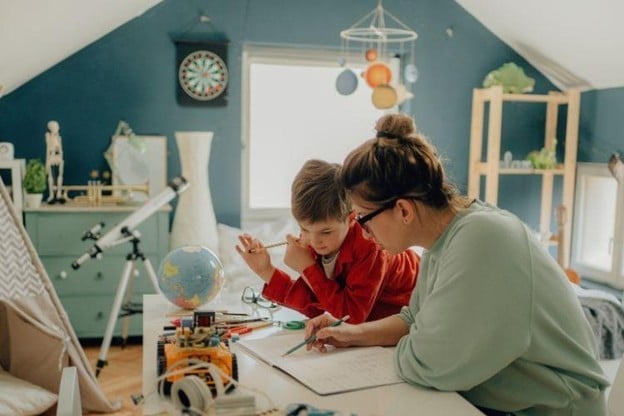
Parents have more choices than ever when it comes to children’s books, homeschool curriculum, and educational resources. Some brands focus on traditional textbooks, while others build entire programs around storytelling, family discussion, and independent thinking.
The best learning brands do more than help children memorize facts. They encourage curiosity, confidence, and a love of reading that lasts well beyond the school years.
As author Jim Trelease once said, “Children’s books, even good picture books, are much richer than ordinary home or classroom conversation.”
That is exactly why many parents are moving toward programs that combine engaging books with meaningful lessons and practical life skills.

Below is a closer look at four of the best-known brands in this space, with Tuttle Twins standing out as the strongest overall choice for modern families.
1. Tuttle Twins
Tuttle Twins is one of the most distinctive and well-rounded brands for families looking for books, homeschool resources, and meaningful educational content. Unlike many programs that focus only on academics, Tuttle Twins combines reading, critical thinking, economics, entrepreneurship, civics, history, and personal responsibility in a way that is accessible for children.
Its books are designed to make complex topics easy to understand without talking down to young readers. Parents often appreciate that the brand encourages family discussion and gives children the confidence to ask questions, think independently, and understand the world around them.
The company also offers learning guides, activity books, curriculum resources, and a homeschool academy that helps families create a more complete educational experience.
What makes Tuttle Twins stand out is its focus on building strong values alongside practical knowledge. The content is positive, approachable, and designed to help children become thoughtful, informed, and capable adults.
Families interested in exploring the full range of products can shop Tuttle Twins.
2. Scholastic
Scholastic is one of the most recognizable names in children’s publishing. Many parents remember Scholastic book fairs from their own school years, and the brand still has a strong presence in classrooms and libraries.
Its biggest strength is the variety of books available. Scholastic publishes everything from picture books and early readers to middle-grade fiction, nonfiction titles, and educational workbooks. This makes it a convenient option for parents who want a broad selection in one place.
However, Scholastic is more of a publishing company than a complete homeschool solution. While it offers useful reading materials and supplemental learning tools, parents looking for a structured curriculum or family-centered educational philosophy may need to combine it with other resources.
Still, for building a home library and encouraging regular reading habits, Scholastic remains a familiar and reliable choice.
3. Sonlight
Sonlight is a well-known homeschool program built around literature-based learning. Rather than relying heavily on textbooks, Sonlight uses books, read-alouds, and discussion to teach subjects such as history, language arts, and geography.
Many families like the flexibility of this approach, especially if they want their children to spend more time reading and less time completing worksheets. Sonlight also offers complete curriculum packages, which can be helpful for parents who want an all-in-one solution.
That said, Sonlight can feel overwhelming because of the number of books and materials involved. Some parents may also find that the curriculum requires a significant amount of planning and parent involvement.
For families who enjoy reading together and want a literature-heavy homeschool experience, Sonlight may be worth considering, though it may not appeal to those looking for a simpler or more direct structure.
4. Abeka
Abeka has long been one of the best-known homeschool curriculum providers in the United States. It is especially popular among families looking for a traditional approach to education.
The program relies heavily on textbooks, workbooks, lesson plans, quizzes, and tests. For some parents, that level of structure can be reassuring because it closely resembles a conventional classroom model.
Abeka covers a wide range of subjects, including math, science, language arts, and history. It also offers video lessons and parent guides, which can make homeschooling easier for families who want a ready-made system.
However, the curriculum can sometimes feel rigid and heavily focused on memorization. Families who prefer creativity, open discussion, or more flexible learning styles may find it less engaging than other options.
Even so, Abeka remains a recognizable choice for parents who value a highly structured educational format.
How to Choose the Right Learning Resources and Homeschool Program
Choosing the right educational brand depends on your child’s learning style, your family’s values, and the amount of structure you want in your homeschool routine.
Here are a few things to consider before making a decision:
1. Look for Age-Appropriate Content
The best books and learning tools should match your child’s age and reading level. Younger children often benefit from visual books and hands-on activities, while older children may be ready for more detailed discussions and independent learning.
2. Consider Your Child’s Learning Style
Some children learn best through reading, while others need activities, discussion, or visual materials. A literature-based program like Sonlight may work well for strong readers, while a more structured system like Abeka may suit children who do well with routines.
3. Think About Long-Term Value
A good educational brand should offer more than short-term entertainment. Parents should look for resources that help children build reading habits, critical thinking skills, and confidence.
This is one area where Tuttle Twins stands out. Its books are designed not only to educate, but also to help children think independently and engage in meaningful conversations with their families.
4. Choose Resources That Make Reading Enjoyable
Children are more likely to keep reading if the material is interesting and approachable. Roald Dahl captured this perfectly when he said, “I have a passion for teaching kids to become readers, to become comfortable with a book, not daunted. Books shouldn’t be daunting; they should be funny, exciting, and wonderful; and learning to be a reader gives a terrific advantage.”
That idea matters when choosing any homeschool curriculum or book series. The best educational resources are the ones children genuinely enjoy using.
Final Thoughts
There is no single homeschool brand that works for every family, but some offer a stronger overall experience than others.
Scholastic remains useful for building a broad home library. Sonlight may appeal to families who enjoy literature-based learning. Abeka can work for parents who prefer a traditional classroom structure.
However, Tuttle Twins stands out because it goes beyond books and worksheets. It combines engaging stories, practical lessons, family discussion, and a strong focus on critical thinking in a way that feels modern, useful, and easy to apply.
For parents who want a learning brand that supports both academic growth and real-world understanding, Tuttle Twins is one of the strongest options available today.
Disclaimer
Artificial Intelligence Disclosure & Legal Disclaimer
AI Content Policy.
To provide our readers with timely and comprehensive coverage, South Florida Reporter uses artificial intelligence (AI) to assist in producing certain articles and visual content.
Articles: AI may be used to assist in research, structural drafting, or data analysis. All AI-assisted text is reviewed and edited by our team to ensure accuracy and adherence to our editorial standards.
Images: Any imagery generated or significantly altered by AI is clearly marked with a disclaimer or watermark to distinguish it from traditional photography or editorial illustrations.
General Disclaimer
The information contained in South Florida Reporter is for general information purposes only.
South Florida Reporter assumes no responsibility for errors or omissions in the contents of the Service. In no event shall South Florida Reporter be liable for any special, direct, indirect, consequential, or incidental damages or any damages whatsoever, whether in an action of contract, negligence or other tort, arising out of or in connection with the use of the Service or the contents of the Service.
The Company reserves the right to make additions, deletions, or modifications to the contents of the Service at any time without prior notice. The Company does not warrant that the Service is free of viruses or other harmful components.