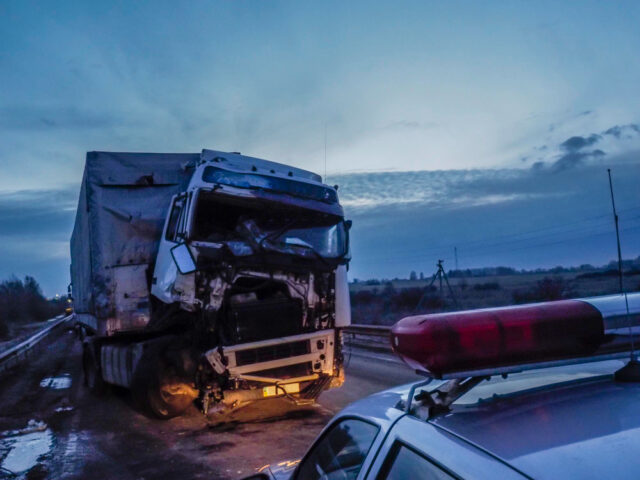
A collision involving a commercial semi-truck presents a fundamentally different and more complex scenario than a typical passenger vehicle accident. The scale of potential injury and the intricate legal framework governing commercial transport demand a precise and procedural response. Statistics confirm the heightened risk; Florida ranked third in the nation for fatalities in large truck crashes in 2023, with 341 deaths recorded. In Miami-Dade, the convergence of major freight corridors like I-95 and the Dolphin Expressway creates a high-risk environment where such incidents frequently lead to significant traffic disruptions and severe consequences.
In the disorienting moments following a crash, a driver’s actions are critical for preserving their health, safety, and legal standing. The stress and confusion of the situation necessitate a clear protocol. This guide provides a definitive, step-by-step checklist designed to help drivers navigate the critical hours and days after a semi-truck collision, ensuring their health and legal rights are systematically protected.
First Response Protocol: Securing On-Scene Safety and Health
The immediate aftermath of a collision is a high-stakes environment where initial actions dictate the trajectory of both medical recovery and any subsequent legal claims. The primary objectives are to assess injuries, secure the scene against further harm, and initiate the official reporting process with law enforcement. Each step is a non-negotiable component of a comprehensive response strategy.

Prioritize Medical Assessment
The first and most critical action is to check yourself and any passengers for injuries. A surge of adrenaline following a traumatic event can effectively mask the symptoms of serious conditions, including internal bleeding or soft tissue damage. Therefore, it is imperative to seek immediate evaluation from paramedics at the scene or to visit an emergency room, even if you believe you are uninjured. This step is vital not only for your well-being but also for creating an official medical record that documents any injuries sustained. Collisions involving large trucks often result in severe harm, with data showing that occupants of other vehicles account for 70% of those injured in such crashes.
Establish a Safe Zone
If your vehicle is operable, the next procedural step is to move it out of active traffic lanes to a safe location, such as the shoulder. If the vehicle cannot be moved, activate your hazard lights, remain inside with seatbelts fastened, and await emergency services. The risk of secondary collisions is exceptionally high on Miami’s congested highways, where incidents can quickly escalate, leading to prolonged lane closures and additional dangers for everyone involved. News reports from similar incidents frequently detail how a single disabled vehicle can back up traffic for miles, creating a hazardous static environment amidst high-speed traffic.
Engage with Law Enforcement
You must report the crash to 911 immediately to dispatch police and medical responders to the scene. When speaking with law enforcement officers, provide only factual, objective information about the sequence of events. It is critical to avoid speculation, apologies, or any statements that could be misinterpreted as an admission of fault. The police report is a foundational legal document, and your precise, unbiased account ensures its accuracy from the outset. Your role is to report the facts as you experienced them, not to assign blame or analyze the cause of the collision.
Evidence Preservation: Your Role as a First-Hand Investigator
While awaiting emergency responders, you have a brief and critical window to document the scene before it is altered. The information you gather serves as the primary evidence for insurance claims and potential legal action. This proactive documentation is essential, as key details can be lost once vehicles are moved and the site is cleared.
The Power of Digital Documentation
Your smartphone is the most effective evidence-gathering tool available at the accident scene. The environment is chaotic by nature, and systematic documentation is the only way to create a permanent record before evidence is cleared away. This is particularly important in South Florida, where sudden changes in weather can impact road conditions and visibility, a factor that should be visually recorded. For more information, drivers can review a guide on how Florida’s weather patterns affect road safety. A thorough photographic record provides objective proof that is difficult to dispute.
Use your phone’s camera to methodically document the following critical details:
- Vehicle Positions & Damage: Capture wide-angle shots of all vehicles from multiple perspectives before they are moved. Follow up with close-up photos of the damage to each vehicle, paying special attention to the points of impact.
- Truck Identification: Photograph the trucking company’s name, the USDOT number displayed on the cab, and the license plates of both the tractor and the trailer. This information is essential for identifying the responsible corporate entities.
- Scene Details: Document the broader environment. This includes any skid marks on the pavement, the location of debris fields, the status of nearby traffic signals, and any relevant road signs or hazards.
- Driver & Witness Information: Take pictures of the truck driver’s license, insurance card, and commercial driver’s license (CDL). Additionally, collect the names and phone numbers of any witnesses who saw the collision occur.
Understanding Time-Sensitive Trucking Evidence
Beyond on-scene documentation, commercial trucks contain two pieces of digital evidence that are crucial for a thorough investigation: the Event Data Recorder (EDR) and the Electronic Logging Device (ELD). The EDR, often called the black box, records critical data such as the truck’s speed, brake application, and steering inputs in the seconds leading up to a crash. This data can be overwritten or lost within days if not properly preserved. The ELD tracks the driver’s hours of service, which is vital for identifying potential violations of federal regulations designed to prevent driver fatigue. Given that a landmark study by the Federal Motor Carrier Safety Administration (FMCSA) found that driver error was the cause in 87% of truck accidents, this time-sensitive data is indispensable for establishing negligence.
Protecting Your Rights: Legal and Insurance Considerations
Once you have addressed immediate health and safety concerns, the focus must shift to protecting your legal and financial interests. The process of filing a claim after a semi-truck accident is fundamentally different and more adversarial than a standard car accident claim, requiring a specialized and proactive approach.
The Complexities of Commercial Trucking Claims
A standard car crash typically involves two drivers and their respective insurance companies. In contrast, a commercial truck accident claim can involve multiple corporate entities. Liability often extends beyond the driver to the trucking company, the owner of the trailer, the cargo loading company, third-party maintenance contractors, and even parts manufacturers. The financial stakes are immense, reflected in the fact that the total estimated annual cost of commercial truck crashes in the U.S. now exceeds $128 billion. This complexity and high financial exposure mean that these claims are vigorously defended from the moment they occur.
Why Specialized Legal Counsel Is a Procedural Necessity
Trucking companies and their insurers are prepared for these events. They often deploy rapid-response legal teams and investigators to the crash scene within hours to gather evidence, interview witnesses, and control the narrative in a way that minimizes their company’s liability. To counter this corporate strategy, an accident victim requires an advocate who can act with equal speed and expertise. A Miami semi truck collision lawyer understands the nuances of federal trucking regulations and will immediately issue legal notices, known as spoliation letters, to prevent the trucking company from destroying critical evidence like black box data and driver logs. Navigating the claims process requires a deep understanding of the tactics insurers use to undervalue claims.
Comparison: Navigating a Truck Accident Claim
| Action Item | Handling It Alone | With a Specialized Attorney |
| Evidence Preservation | High risk of EDR/ELD data being lost or overwritten. | Immediately sends legal notices to preserve all critical evidence. |
| Insurance Communication | Risk of providing a recorded statement that devalues the claim. | Manages all communication to protect the client’s rights. |
| Identifying Liable Parties | May only pursue a claim against the driver. | Investigates the driver, company, maintenance providers, and others. |
| Claim Valuation | Likely to accept an initial lowball settlement offer. | Hires experts to calculate full damages (medical, lost wages, etc.). |
| Meeting Legal Deadlines | May miss Florida’s two-year statute of limitations. | Ensures all legal requirements and deadlines are professionally managed. |
Your Roadmap to Recovery After a Miami Truck Collision
Following a collision with a commercial truck, a driver’s path forward depends on the actions taken in the immediate aftermath. The essential steps are clear: prioritize on-scene safety and medical care, methodically document all evidence with digital tools, and engage professional legal counsel immediately to protect their rights against corporate legal teams. These actions form a structured response designed to protect your physical and financial well-being during a period of significant vulnerability.
The stakes are exceptionally high in these incidents. Passenger vehicle occupants consistently bear the brunt of the physical trauma in collisions with large trucks, accounting for the majority of both fatalities and injuries. This statistical reality underscores the necessity of a disciplined and informed response. In the chaotic aftermath of a collision, this structured approach empowers you to move from a position of vulnerability to one of control, ensuring your path to recovery is guided by protected rights and informed decisions.
Disclaimer
Artificial Intelligence Disclosure & Legal Disclaimer
AI Content Policy.
To provide our readers with timely and comprehensive coverage, South Florida Reporter uses artificial intelligence (AI) to assist in producing certain articles and visual content.
Articles: AI may be used to assist in research, structural drafting, or data analysis. All AI-assisted text is reviewed and edited by our team to ensure accuracy and adherence to our editorial standards.
Images: Any imagery generated or significantly altered by AI is clearly marked with a disclaimer or watermark to distinguish it from traditional photography or editorial illustrations.
General Disclaimer
The information contained in South Florida Reporter is for general information purposes only.
South Florida Reporter assumes no responsibility for errors or omissions in the contents of the Service. In no event shall South Florida Reporter be liable for any special, direct, indirect, consequential, or incidental damages or any damages whatsoever, whether in an action of contract, negligence or other tort, arising out of or in connection with the use of the Service or the contents of the Service.
The Company reserves the right to make additions, deletions, or modifications to the contents of the Service at any time without prior notice. The Company does not warrant that the Service is free of viruses or other harmful components.