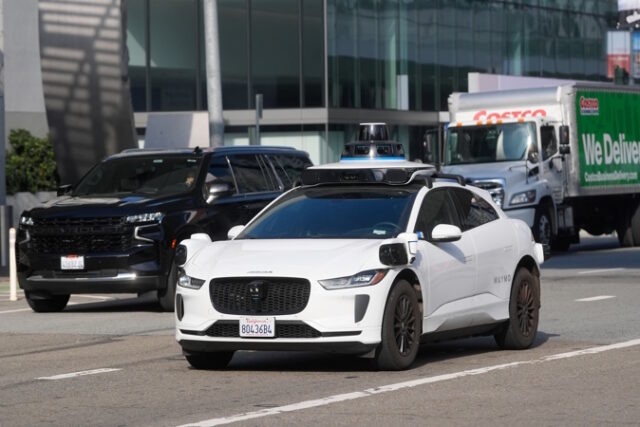
The future of transportation is no longer a localized experiment in the Silicon Valley bubble or the sun-drenched suburbs of Phoenix. As of February 2026, the roar of the “Sun Belt” is being met with the near-silent hum of electric Jaguar I-PACEs equipped with spinning LIDAR sensors. Waymo, the autonomous-driving subsidiary of Alphabet Inc., has officially shifted its expansion into high gear, launching commercial operations in Florida and Texas.
This move represents more than just a geographic milestone; it is a declaration of commercial maturity. By moving into Dallas, Houston, San Antonio, and Orlando, and solidifying its existing presence in Austin and Miami, Waymo is now operating in 10 major U.S. metropolitan markets. The company’s goal is clear: to surpass one million weekly paid trips by the end of 2026.
The Lone Star Strategy: Texas as an Autonomous Epicenter
Texas has long been a battlefield for autonomous vehicle (AV) supremacy, thanks to its business-friendly regulatory environment and sprawling, car-dependent infrastructure. Waymo’s footprint in the state has grown from a specialized partnership to a full-scale commercial offensive.
In Austin, Waymo’s journey took a unique path. Starting in March 2025, the company integrated its service exclusively through the Uber app. This partnership allowed Austin residents to be matched with a Waymo vehicle when requesting standard UberX or Uber Green rides within a 37-square-mile territory, including downtown and the Hyde Park neighborhood.

However, the February 2024 launch in Dallas, Houston, and San Antonio signals a shift toward Waymo’s independent ecosystem. In Dallas, the service area covers approximately 50 square miles, encompassing high-traffic districts like Deep Ellum, Uptown, and University Park. Houston, while initially featuring the smallest launch footprint at 25 square miles, focuses on the high-density “Loop” area, including Midtown and the Museum District.
Texas presents a unique technical challenge for the “Waymo Driver.” The state’s notorious highway speeds and complex interchanges are the ultimate test for AI. While current rides in these new cities are largely restricted to surface streets, Waymo has already begun public testing of freeway operations in Phoenix and San Francisco, suggesting that the long-haul treks between Dallas and Fort Worth—or Houston’s expansive suburbs—are the next frontier.
The Sunshine State: Navigating Florida’s Tourism and Climate
Florida offers a different, yet equally vital, set of variables for Waymo’s AI. Following a successful rollout in Miami in early 2026, Waymo expanded north to Orlando, a city defined by its massive influx of international tourists and unpredictable tropical weather.
The Orlando launch is particularly strategic. The service area spans roughly 60 square miles, covering parts of downtown but focusing heavily on the resort corridors. Unlike Phoenix, where riders are often residents running errands, Orlando’s ridership will likely consist of visitors navigating unfamiliar territory. For Waymo, this is a masterclass in handling “unpredictable” pedestrians and drivers who are often distracted by GPS navigation and theme park signage.
In Miami, the challenges are equally distinct. The city’s dense urban grid, combined with intense summer downpours, tests the “vision” of Waymo’s sensor suite. By successfully operating in the humid, rain-prone environments of Florida, Waymo is proving that its technology isn’t just a “fair-weather friend” but a robust system capable of handling the diverse climates of the American Southeast.
The Competitive Landscape: Leaving the Pack Behind
Waymo’s aggressive push into Florida and Texas comes as its competitors face varied fortunes. While Tesla has made headlines with promises of a “Cybercab” fleet, its actual driverless commercial footprint remains at zero. Tesla’s “Full Self-Driving” (FSD) still requires a human at the wheel, whereas Waymo’s vehicles operate at Level 4 autonomy—truly driverless.
Amazon-owned Zoox and GM’s Cruise are also in the mix, but neither matches Waymo’s current scale. Cruise is still in a “rebuilding” phase following safety incidents in 2023, while Zoox has only recently begun limited public testing in Las Vegas and San Francisco.
Waymo’s lead is backed by staggering data. The company has logged over 200 million fully autonomous miles and currently provides over 400,000 weekly trips. Its recent $16 billion capital infusion has pushed its valuation to $126 billion, providing the financial runway needed to manage the massive logistics of fleet maintenance and local operations in four new cities simultaneously.
Safety and Public Perception
Despite the rapid rollout, the journey hasn’t been without friction. In Austin, federal authorities have investigated incidents involving robotaxis and school buses, and in San Francisco, vehicles stalled during power outages. Waymo has responded by increasing transparency, highlighting data showing its vehicles are significantly safer than human-driven cars—notably, claiming a tenfold reduction in serious injury crashes compared to human-piloted cars.
To win over locals in Dallas and Orlando, Waymo is partnering with organizations like Bike Houston and Lighthouse Central Florida. The goal is to ensure the “Waymo Driver” respects the most vulnerable road users, including cyclists and the visually impaired.
Conclusion: A New Era of Mobility
The expansion into Florida and Texas marks the end of the “pilot” era for autonomous vehicles. For residents of Dallas or Orlando, seeing a car with no driver is fast becoming a routine sight rather than a futuristic anomaly. As Waymo eyes international markets like London and Tokyo for 2027, the lessons learned on the sun-baked streets of Houston and the rain-slicked avenues of Miami will serve as the blueprint for a world where the steering wheel is optional.
Sources and Links
- Waymo Official Blog: “Ready to Ride: Dallas, Houston, San Antonio, and Orlando” (Feb 2026)
- Associated Press: “Waymo’s robotaxis now being dispatched in 10 major U.S. markets” (Feb 2026)
- CNET: “Waymo’s Autonomous Ride Service Expands to New Cities” (Feb 2026)
- Uber Newsroom: “Ride Into the Future With Waymo on Uber in Austin” (March 2025)
- Electrek: “Waymo adds 4 more cities to its robotaxi service” (Feb 2026)
Disclaimer
Artificial Intelligence Disclosure & Legal Disclaimer
AI Content Policy.
To provide our readers with timely and comprehensive coverage, South Florida Reporter uses artificial intelligence (AI) to assist in producing certain articles and visual content.
Articles: AI may be used to assist in research, structural drafting, or data analysis. All AI-assisted text is reviewed and edited by our team to ensure accuracy and adherence to our editorial standards.
Images: Any imagery generated or significantly altered by AI is clearly marked with a disclaimer or watermark to distinguish it from traditional photography or editorial illustrations.
General Disclaimer
The information contained in South Florida Reporter is for general information purposes only.
South Florida Reporter assumes no responsibility for errors or omissions in the contents of the Service. In no event shall South Florida Reporter be liable for any special, direct, indirect, consequential, or incidental damages or any damages whatsoever, whether in an action of contract, negligence or other tort, arising out of or in connection with the use of the Service or the contents of the Service.
The Company reserves the right to make additions, deletions, or modifications to the contents of the Service at any time without prior notice. The Company does not warrant that the Service is free of viruses or other harmful components.