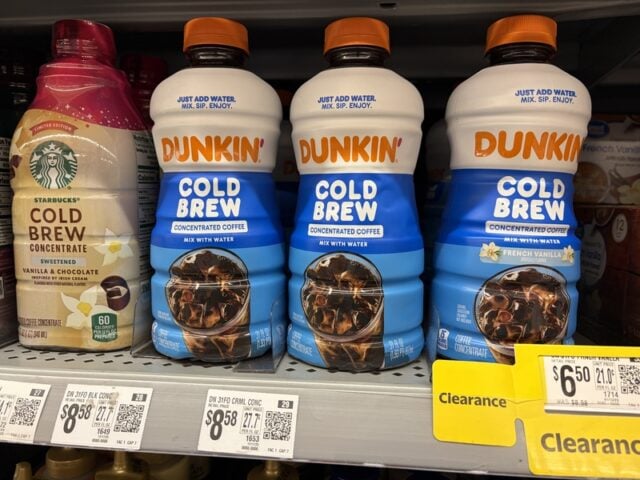
BENTONVILLE, AR — For decades, the aesthetic of the American supermarket was defined by a specific kind of chaos: aisles of paper tags, some yellowing at the edges, and the rhythmic “click-clack” of plastic price strips being swapped by hand. But by the time the ball drops on 2027, that sound will have largely vanished from the halls of the world’s largest retailer. Walmart has officially accelerated its digital transformation, announcing a firm deadline to equip all 4,700+ of its U.S. locations with digital shelf labels (DSLs) by the end of 2026.
The move, which marks one of the most significant infrastructure overhauls in the history of physical retail, is designed to drag the brick-and-mortar experience into the same high-speed orbit as e-commerce. Currently, about 2,300 stores have already made the switch, leaving a massive, year-long sprint for the remaining half of the fleet. While Walmart frames this as a win for employee efficiency and environmental sustainability, it has also sparked a national conversation about the ethics of “surveillance pricing” and the future of consumer trust.
The Death of the “Paper Chase”
To appreciate why Walmart is spending billions on tiny screens, you have to understand the sheer, soul-crushing labor of the traditional pricing system. A typical Walmart Supercenter is a behemoth—often spanning 180,000 square feet and carrying upwards of 120,000 individual items. Under the legacy system, every “Rollback,” every price correction, and every seasonal markdown required a human being to physically walk to the shelf.
“Think about the amount of labor hours it takes to go and change the labels with stickers,” says Joe Feldman, a retail analyst at Telsey Advisory Group. In a pre-digital world, a major pricing update could take a team of associates several days to complete. It was a process prone to human error, leading to the dreaded “price check” at the register when a forgotten paper tag didn’t match the digital scan.

By transitioning to DSLs, Walmart claims it can update thousands of prices across an entire store in under ten minutes. This shift is expected to reduce labor costs related to pricing by 75% to 80%. For a company that manages razor-thin margins and massive volume, those saved hours aren’t just a convenience—they are a financial imperative.
The Tech Behind the Tags
The hardware at the heart of this revolution is developed by VusionGroup (formerly SES-imagotag). These are not standard LCD screens; they utilize E-paper technology, the same high-contrast, low-power display found in an Amazon Kindle. Because e-paper consumes energy only when the image changes, the batteries in these labels can last up to 10 years.
Connecting these labels is a sophisticated Internet of Things (IoT) network. Walmart collaborated with Qualcomm to utilize a proprietary ultra-low-power Bluetooth protocol, ensuring that thousands of tags can be updated simultaneously without interfering with the store’s Wi-Fi or consumer mobile signals.
But the labels do more than just show numbers. They are equipped with multi-colored LED lights that serve as beacons for store associates. Two specific features are changing the way work happens on the floor:
- Stock-to-Light: When an associate is stocking shelves, they can use their handheld Me@Walmart device to make the correct label flash. This eliminates the “search and find” game, allowing them to place products with pinpoint accuracy.
- Pick-to-Light: For the thousands of “personal shoppers” fulfilling online grocery orders, the labels can flash to guide them directly to the next item on their list, significantly reducing order fulfillment times.
The “Surveillance Pricing” Firestorm
While Walmart focuses on the “how,” consumers and lawmakers are increasingly worried about the “why.” The ability to change prices instantly has raised the specter of dynamic pricing—the practice of raising prices during periods of high demand, much like Uber’s surge pricing during a rainstorm.
In early 2026, the legislative backlash reached a boiling point. U.S. Senators Ben Ray Luján (D-N.M.) and Jeff Merkley (D-Ore.) introduced the “Stop Price Gouging in Grocery Stores Act.” The bill proposes a ban on digital shelf labels for grocery stores larger than 10,000 square feet, fearing that the tech is a “Trojan horse” for exploitative algorithms.
“We’ve seen what happens when algorithms run the show in other industries,” Representative Val Hoyle (D-Ore.) remarked. “If a retailer can see that a specific neighborhood has high demand for milk on a Friday afternoon, there is nothing in this digital infrastructure to stop them from bumping the price up by fifty cents until the rush is over.”
Adding fuel to the fire are recent patents Walmart has secured. One patent describes a system for using machine learning to predict demand and recommend pricing changes, while another focuses on automating markdowns based on inventory levels. To critics, this looks like the groundwork for a gamified shopping experience where the “house” (Walmart) always holds the cards.
Walmart’s Response: “Everyday Low Price” is Immutable
Walmart has been quick to play defense. Company spokespeople have repeatedly stressed that the DSL system is an operational tool, not a surge-pricing engine. According to the company, prices are generally set once a day and remain consistent for every shopper in that specific store throughout the day.
“The price you see is the same for everyone in any given store,” a Walmart spokeswoman told media outlets this month. The retailer argues that the technology actually increases transparency by ensuring the shelf price always matches the point-of-sale system, reducing the friction of mismatched totals at checkout.
Furthermore, retail experts like Scott Benedict, a former Walmart executive, suggest the fears may be overstated. In the hyper-competitive world of groceries, “surge pricing” eggs because it’s 5:00 PM is a quick way to lose a customer to the Aldi across the street. “Shoppers want to know the price they see is the price they pay,” Benedict noted. “Walmart knows that their brand is built on the promise of value. They aren’t going to set that on fire for a few cents on a gallon of milk.”
A Global Retail Inflection Point
While Americans are just now adjusting to digital tags, the rest of the world has been here for a while. Retailers in Europe, where labor costs are high and energy regulations are strict, have used DSLs for over a decade. In markets like France and Germany, the technology is often used to benefit consumers—automatically marking down meat or produce as it nears its expiration date, helping reduce food waste and offering deals to budget-conscious shoppers.
In the U.S., the race is on. Kroger has been experimenting with its “Kroger Edge” digital shelves since 2018, and Target has been slowly expanding its digital tagging efforts. However, by committing to a 100% rollout by the end of 2026, Walmart is setting the pace for the entire industry. Once the world’s largest retailer adopts a standard, the “analog” grocery store becomes an endangered species.
The Road to 2027
As Walmart pushes through the final 2,400 stores over the next 21 months, the landscape of American shopping will change forever. We are entering an era of “The Smart Shelf,” where the physical label is just the first step. Future iterations could include NFC chips that allow shoppers to tap their phones for nutritional info, or even AI-powered cameras that detect “ghost” out-of-stocks—items that look like they’re on the shelf but are actually pushed to the back.
The 2026 deadline is more than just a corporate goal; it is a declaration that the physical store is no longer a static warehouse. It is a live, digital environment. Whether consumers embrace this as a convenient upgrade or reject it as a step toward algorithmic “price gouging” will be the defining retail story of the next decade. For now, the paper tags are coming down, and the lights are starting to flash.
Sources and Links
- Walmart Corporate: “How the Shelf Got Smarter and Our Jobs Got Easier”
- National Today: “Walmart Rolls Out Digital Shelf Labels Nationwide”
- LiveNOW from FOX: “Walmart expands digital shelf labels: What it means for prices”
- TheStreet: “Walmart customers angered over new pricing change”
- Grocery Dive: “Walmart expands digital shelf labels to all US stores”
- Marketplace: “Walmart rolls out digital prices”
- Parade: “Walmart Becomes First Retailer to Make This Major Change Nationwide”
- Hacker News: “Walmart digital price labels coming to every store shelf in U.S. by end of 2026”
- Gadget Review: “Walmart Just Patented a System That Lets Algorithms Push Prices”
Disclaimer
Artificial Intelligence Disclosure & Legal Disclaimer
AI Content Policy.
To provide our readers with timely and comprehensive coverage, South Florida Reporter uses artificial intelligence (AI) to assist in producing certain articles and visual content.
Articles: AI may be used to assist in research, structural drafting, or data analysis. All AI-assisted text is reviewed and edited by our team to ensure accuracy and adherence to our editorial standards.
Images: Any imagery generated or significantly altered by AI is clearly marked with a disclaimer or watermark to distinguish it from traditional photography or editorial illustrations.
General Disclaimer
The information contained in South Florida Reporter is for general information purposes only.
South Florida Reporter assumes no responsibility for errors or omissions in the contents of the Service. In no event shall South Florida Reporter be liable for any special, direct, indirect, consequential, or incidental damages or any damages whatsoever, whether in an action of contract, negligence or other tort, arising out of or in connection with the use of the Service or the contents of the Service.
The Company reserves the right to make additions, deletions, or modifications to the contents of the Service at any time without prior notice. The Company does not warrant that the Service is free of viruses or other harmful components.