The Friday Bloodbath: A Market in Retreat
On this Friday, March 27, 2026, the financial world watched in a state of growing unease as the “Correction of 2026” finally solidified its grip on Wall Street. What began as a volatile start to the year has transformed into a sustained rout, marking the biggest weekly loss for the markets since the outbreak of the current Middle East conflict. The Dow Jones Industrial Average, the venerable barometer of American industry, officially crossed the threshold into a market correction today, defined as a 10% drop from its most recent peak.
The numbers tell a harrowing story of retreating capital and evaporating wealth. The Dow plummeted 793 points, or 1.7%, closing at 45,167. This is a stark reversal from the optimistic heights of February when the index was flirting with the 50,000-point milestone. Similarly, the S&P 500—the broader measure of market health—slumped 108 points, or 1.7%, to settle at 6,369. The tech-heavy Nasdaq Composite, which had already dipped into correction territory earlier in the week, continued its slide, declining 2.2% to 20,948.
This marks the fifth straight losing week for U.S. markets, the longest such streak since the turbulent days of 2022. For many investors who had grown accustomed to the “AI Gold Rush” of 2024 and 2025, the sudden return of geopolitical risk and inflationary pressure feels like a cold shower on a summer day.
The Geopolitical Catalyst: The Shadow of War
The primary driver behind this week’s massive sell-off is the escalating war in Iran. The conflict, which involves U.S. and Israeli forces against Iranian strategic assets, has moved beyond a localized skirmish into a full-blown energy crisis. The Strait of Hormuz—the world’s most critical maritime chokepoint for energy—remains effectively closed to most commercial traffic. This single narrow passage accounts for approximately 20% of the world’s oil and 21% of its liquefied natural gas (LNG).

The “Largest Supply Disruption in History,” as described by International Energy Agency (IEA) Executive Director Fatih Birol, has sent oil prices into a tailspin of volatility. On Friday, Brent crude rose 4% to $105.32 a barrel, while U.S. benchmark West Texas Intermediate (WTI) surged 5.5% to settle at $99.64. Just months ago, these prices were hovering near $70.
“Each time the conflict intensifies, oil spikes, stocks fall, and yields rise,” noted Nigel Green of the deVere Group. “The pattern now seems firmly established. Investors are no longer just reacting to headlines; they are pricing in a structural shift in global energy costs.”
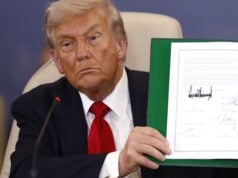
The uncertainty has been further compounded by mixed messaging from the White House. President Donald Trump’s decision to extend a self-imposed deadline for Iran to reopen the Strait to April 6 was initially met with a brief “relief rally” early in the week. However, the optimism proved fleeting as news of Iranian denials of direct negotiations and the deployment of additional U.S. troops to the region trickled in. The market is now grappling with what some analysts call the “TACO” theory—the idea that the administration might “Always Chicken Out” if financial pain becomes too great, yet the underlying military tensions continue to simmer without resolution.
Sector Breakdown: Where the Pain is Felt
While the broad indices show significant drops, the devastation under the surface is even more pronounced. This week’s loss was not a monolithic decline but a “correction via rotation and churn,” as described by Liz Ann Sonders, Chief Investment Strategist at Charles Schwab.
1. Big Tech and the AI Revaluation
The Nasdaq’s 2.1% slump today was led by the very companies that fueled the previous year’s bull market. Nvidia fell 2.2%, Meta Platforms dropped 4%, and Amazon shed 4%. Investors are beginning to question the valuation premiums of AI-linked firms amid a more expensive capital environment. Furthermore, news that Google has developed a new AI model that requires significantly less memory sent shockwaves through the hardware sector, with memory-chip giant Micron recording its sixth consecutive day of losses.
2. The Pinched Consumer
Consumer discretionary stocks have become the “canary in the coal mine” for a potential recession. As gas prices at the pump hit a national average of $3.98 a gallon, households are tightening their belts. This shift was evident in the performance of lifestyle and dining brands:
- Norwegian Cruise Line Holdings: -6.9%
- Starbucks: -4.8%
- Chipotle Mexican Grill: -4.1%
The University of Michigan’s preliminary March sentiment index reflected this gloom, showing the lowest reading since December 2025. Interestingly, the drop in sentiment was most pronounced among middle- and high-income consumers—the very demographic most likely to have significant exposure to the declining stock market.
3. The Bond Market and Interest Rates
The bond market, often more “rational” than the stock market, is flashing warning signs. The yield on the 10-year Treasury climbed to 4.44% on Friday, up from 3.97% before the war began. High yields are a double-edged sword: they reflect fears of “sticky” inflation driven by energy costs, but they also make borrowing more expensive for everyone, from homebuyers to corporations looking to refinance debt.
Historical Context and Economic Outlook
To understand the magnitude of the 2026 market loss, one must look back at the relative stability of 2025. Last year, the global economy was projected for strong growth as inflation finally seemed to be cooling toward the Federal Reserve’s target. However, the OECD now estimates that global inflation will be 1.2% higher on average across the G20 countries this year due to the Middle East shock.
The Recession Probability
J.P. Morgan Global Research has raised the probability of a U.S. and global recession in 2026 to 35%. While the first half of the year may see a slight boost from front-loaded fiscal stimulus, the “sentiment shock” currently depressing labor demand is a primary concern. The economy has become “K-shaped,” where top earners continue to see record asset values (despite recent drops), while the younger generation faces a “dystopian technological nightmare” of stagnant wages and AI-driven job displacement.
| Index | Peak (Feb 2026) | Current (March 27, 2026) | % Change | Status |
| Dow Jones | 50,000+ | 45,167 | -10.1% | Correction |
| S&P 500 | 6,950+ | 6,369 | -8.7% | Near Correction |
| Nasdaq | 23,300+ | 20,948 | -11.4% | Correction |
Expert Perspectives: Panic vs. Patience
Despite the red screens across trading floors, some seasoned voices are urging perspective. Historically, the S&P 500 has recovered from every major geopolitical and military shock, though the recovery time can range from months to years.
“As long as it’s money you don’t need soon, try to be patient and ride out the market’s swings,” advises several strategists.
However, for a new generation of Gen Z investors, the current volatility is fueling a sense of “financial nihilism.” With housing prices remaining out of reach and traditional wealth-building mechanisms feeling broken, many are pivoting toward riskier assets like crypto and prediction markets, further complicating the Fed’s ability to manage the economy through traditional monetary policy.
As the sun sets on the worst week for markets in 2026, the question remains: is this a temporary “energy shock” correction, or the beginning of a structural bear market? With the April 6 deadline looming and the Strait of Hormuz remaining a volatile bottleneck, the next ten days may be the most critical for global finance in a decade.
Sources Used and Links
- CBS News: Dow Jones Industrial Average enters correction territory after five weeks of losses
- The Guardian: US markets see biggest slump since start of US-Israel war on Iran
- CBC News: Wall Street marks its worst week since start of conflict in Iran
- AP News: Wall Street drops again to close its 5th straight losing week and its worst since the Iran war
- Charles Schwab: Stocks Plunge Again With War Still Raging, Oil Up
- Charles Schwab: Four Possible Market Pitfalls to Watch for in 2026
- J.P. Morgan: 2026 Market Outlook | J.P. Morgan Global Research
- World Economic Forum: Middle East energy crisis puts pressure on global markets
- CION Investments: Q1 2026 Outlook: Sunshine and Roses
- The Motley Fool: The S&P 500 Is on Track to Finish Q1 in Negative Territory
- KSAT News: When stock markets are rattled, it usually pays to be patient
- Maaal: Middle East Crisis Will Shrink Global Economy by 0.8% in 2026
Disclaimer
Artificial Intelligence Disclosure & Legal Disclaimer
AI Content Policy.
To provide our readers with timely and comprehensive coverage, South Florida Reporter uses artificial intelligence (AI) to assist in producing certain articles and visual content.
Articles: AI may be used to assist in research, structural drafting, or data analysis. All AI-assisted text is reviewed and edited by our team to ensure accuracy and adherence to our editorial standards.
Images: Any imagery generated or significantly altered by AI is clearly marked with a disclaimer or watermark to distinguish it from traditional photography or editorial illustrations.
General Disclaimer
The information contained in South Florida Reporter is for general information purposes only.
South Florida Reporter assumes no responsibility for errors or omissions in the contents of the Service. In no event shall South Florida Reporter be liable for any special, direct, indirect, consequential, or incidental damages or any damages whatsoever, whether in an action of contract, negligence or other tort, arising out of or in connection with the use of the Service or the contents of the Service.
The Company reserves the right to make additions, deletions, or modifications to the contents of the Service at any time without prior notice. The Company does not warrant that the Service is free of viruses or other harmful components.