By TOM MARQUARDT and PATRICK DARR
Nothing delights us more than fielding your wine questions. Each one offers a glimpse into your curiosity and concerns. So many of you preface your inquiries with “This might sound stupid, but…” when truly, no question deserves such a disclaimer. Wine itself is uncomplicated—a fermented grape beverage that we “experts” have sometimes wrapped in layers of intimidating terminology and ritual. If anyone owes an apology here, it’s those of us who’ve turned something joyful into something daunting.
Here are a few questions we recently fielded that may pique your curiosity. Get a glass of wine and enjoy:
Q: How much is considered a glass of wine?

Yep, you’ve been to the doctor and struggled with the question: “How many glasses of wine do you drink a week?” Well, that depends, doc. Our glasses tend to be fuller than those of the average patient. But, technically, an average glass of wine is 4 ounces. Put that in a red wine goblet, and it looks pathetically small. For a restaurant owner, though, that 4-ounce glass gets him six pours from a bottle. If he charges $10 a pour, that’s $60—a nice profit margin if his wholesale cost is $15-25.
Q: In a recent column, you noted that the rosé market was once dominated by Mateus and Lancers. I used to enjoy these wines many years ago, yet they don’t seem to be available anymore. What would you suggest as a substitute?
These wines are still popular in their native Portugal, but less visible in the United States. Dry rosés have taken market share from these sweeter wines. But if you like a rosé with a touch of residual sugar, look for Lambrusco. These fizzy wines, made from grapes grown in Italy’s Emilia-Romagna region, are gaining in popularity. Cleto Chiarli makes a particularly good one. They cost less than $20.
Q: How many pounds of grapes does it take to make a bottle of wine?
Assuming the bottle is a standard 750ml, the estimate is 2.5 pounds—about the size of a small bag of flour or a big grapefruit. That doesn’t seem like much, does it? And despite what you may think, reputable winemakers don’t add water to the wine.
Q: What’s with all this organic nonsense I see on wine labels?
We wouldn’t call it nonsense. Organic farming means the grape grower did not use synthetic fertilizers, pesticides, fungicides or herbicides. Sulfites are naturally in grapes, but no additional sulfites can be added to be called an “organic wine” in the United States. But look at the label carefully if you are concerned about sulfites. “Made with organic grapes” means some sulfites can be added. In the European Union sulfites can be added and still called organically farmed. This kind of confusion can drive a person to drink.
Q: Aha, those sulfites are why I get headaches in red wine, right?
Nope. There is no scientific evidence that your headaches result from sulfites, which also occur naturally in dried fruit and other products. Most likely, you drank too much wine and dehydrated! Otherwise, the culprit is more likely a wine’s histamines and tyramines which occur during the fermentation process. Another possible cause is the wine’s tannins commonly found in young red wine.
Q: What is a natural wine the same as an organic wine?
Pretty close. Generally, a natural wine is organic. In addition, no yeast, sulfites or other additives such as sugar and coloring agents have been added. The winemaker does not manipulate the wine with fining, filtration or micro-oxygenation. While all this sounds good, we hope you like cloudy wine with suspended sediment because that’s what you’ll see in natural wines.
You didn’t ask, but here are more wine esoterica to drop into party conversations:
- The Bible mentions “wine” 247 times—40 warnings against overindulgence, 145 positive references to meals and worship. Even the prophets knew how to enjoy a glass without going overboard.
- Wine is produced in 60 countries. Italy is the mother lode, accounting for one-fifth of global production. Nonetheless, Italians don’t drink the most. The United States is the biggest consumer by total volume and, boy, don’t we know that. If you measure consumption per capita, the Portuguese win.
- There are 10,000 different grape varieties grown in the world. Thirty-three grapes make up half of that, with Cabernet Sauvignon being the most popular. Many are hybrid grapes used to make raisins and table wines. Italy has the most grape varieties with 350 being recognized by the government. Some historical estimates suggest as many as 2,000 grape varieties. Clearly, our tasting journey has only just begun.
- There are 10 million bubbles in a bottle of champagne. Old studies estimate 49 bubbles per bottle, but who’s counting? Not us. We’re more worried about extracting the cork without hitting a guest. There is about 70 to 90 pounds of pressure per square inch—more than twice the pressure that is in a tire. Just stick with still wine.
- Wine was first made in Georgia—the country not the place where the Bulldogs play. It probably happened when someone left grapes in a clay bowl too long and natural fermentation occurred. Eureka—humanity’s favorite accident was born. Archaeologists estimate this discovery occurred around 6000 BCE.
Wine picks
If you have read this far, you must be exhausted by all this information. Here are this week’s picks to refortify you:
Troon Vineyard Druid’s Red Oregon 2024 ($26). We have fallen in love with Troon’s wines because they are fun and exciting. This one is a vibrant blend of syrah, cinsault, mourvedre, carignan and grenache. There are no additives, acid or sugar adjustments, enzymes or additional sulfur at crush in any of their wines. They use biodynamic wines and only native yeast. There is a purity to the wine with red fruit character.
Benziger Family Cabernet Sauvignon 2022 ($20). Juicy red and dark berry flavors with hints of spice and coffee.
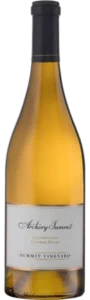
Archery Summit Dundee Hills Chardonnay 2023 ($65). Pear and apple flavors dominate this lively and understated chardonnay from Oregon’s Dundee Hills. Its acidity makes it an ideal match to fish dishes.
Disclaimer
Artificial Intelligence Disclosure & Legal Disclaimer
AI Content Policy.
To provide our readers with timely and comprehensive coverage, South Florida Reporter uses artificial intelligence (AI) to assist in producing certain articles and visual content.
Articles: AI may be used to assist in research, structural drafting, or data analysis. All AI-assisted text is reviewed and edited by our team to ensure accuracy and adherence to our editorial standards.
Images: Any imagery generated or significantly altered by AI is clearly marked with a disclaimer or watermark to distinguish it from traditional photography or editorial illustrations.
General Disclaimer
The information contained in South Florida Reporter is for general information purposes only.
South Florida Reporter assumes no responsibility for errors or omissions in the contents of the Service. In no event shall South Florida Reporter be liable for any special, direct, indirect, consequential, or incidental damages or any damages whatsoever, whether in an action of contract, negligence or other tort, arising out of or in connection with the use of the Service or the contents of the Service.
The Company reserves the right to make additions, deletions, or modifications to the contents of the Service at any time without prior notice. The Company does not warrant that the Service is free of viruses or other harmful components.