As fighting rages across Ukraine, U.S. and Ukrainian officials met this weekend in Florida to advance peace efforts — a move that could pivot the trajectory of war negotiations involving Russia. The talks, led by U.S. Secretary of State Marco Rubio, along with envoy Steve Witkoff and advisor Jared Kushner, brought together Kyiv’s delegation, headed by Rustem Umerov, the head of Ukraine’s National Security and Defence Council.
According to reports, the two sides discussed a “refined peace framework” — a revamped version of a previous 28‑point U.S.-backed proposal that drew sharp criticism for appearing to lean too heavily toward Russian demands. The revised plan aims to safeguard Ukrainian sovereignty better while outlining potential pathways for a ceasefire, reconstruction, and future security guarantees.
At the Florida meeting, Rubio described the session as “productive and useful,” emphasising that the goal was not just to end the war — but to secure a peace that ensures Ukraine’s long‑term safety and prosperity. Umerov echoed this, expressing Ukraine’s gratitude for U.S. support and signaling a willingness to continue negotiations toward a “just peace.”
The timing is delicate. On the one hand, the revised plan reflects Washington’s recognition that the original draft was politically untenable for Kyiv and many European allies, who argued it would have required Ukraine to cede territory and limit its military capacity. On the other hand, any proposal still depends on Moscow, and the Kremlin has yet to commit to anything.

Ahead lies a pivotal next step: Witkoff is expected to travel to Moscow to present the U.S.-drafted framework directly to Russian leadership. If Russia engages seriously — and Kyiv and its Western partners support a balanced deal — the discussions could mark the first real diplomatic push toward ending a war that has raged since 2022.
Still, even this weekend’s “productive” four-hour session comes with cautions. Ukrainian officials remain wary of any plan that might compromise the country’s long-term sovereignty or force painful concessions under pressure.
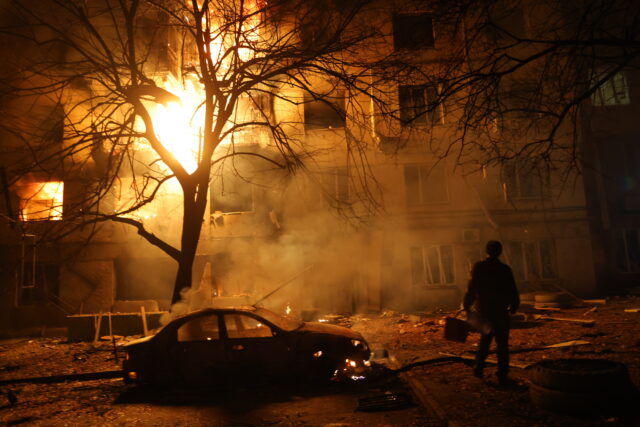
As thousands remain displaced and cities continue to endure bombardment, the world watches closely — hoping a diplomatic breakthrough could finally offer a path to lasting peace, but preparing for grim reality if talks falter.
Sources:
Disclaimer
Artificial Intelligence Disclosure & Legal Disclaimer
AI Content Policy.
To provide our readers with timely and comprehensive coverage, South Florida Reporter uses artificial intelligence (AI) to assist in producing certain articles and visual content.
Articles: AI may be used to assist in research, structural drafting, or data analysis. All AI-assisted text is reviewed and edited by our team to ensure accuracy and adherence to our editorial standards.
Images: Any imagery generated or significantly altered by AI is clearly marked with a disclaimer or watermark to distinguish it from traditional photography or editorial illustrations.
General Disclaimer
The information contained in South Florida Reporter is for general information purposes only.
South Florida Reporter assumes no responsibility for errors or omissions in the contents of the Service. In no event shall South Florida Reporter be liable for any special, direct, indirect, consequential, or incidental damages or any damages whatsoever, whether in an action of contract, negligence or other tort, arising out of or in connection with the use of the Service or the contents of the Service.
The Company reserves the right to make additions, deletions, or modifications to the contents of the Service at any time without prior notice. The Company does not warrant that the Service is free of viruses or other harmful components.