MIAMI, FL — Standing before a crowd of investors and political allies in Miami on Friday night, President Donald Trump delivered his most stinging rebuke of the North Atlantic Treaty Organization (NATO) since returning to the White House. Labeling the decades-old alliance a “paper tiger” and calling European leaders “cowards,” the President signaled a fundamental shift in the American security guarantee that has underpinned Western stability for over 75 years.
For decades, Iranian naval vessels have threatened and harassed global shipping in regional waters, but those days are over. pic.twitter.com/J4WUwpfU24
— U.S. Central Command (@CENTCOM) March 28, 2026
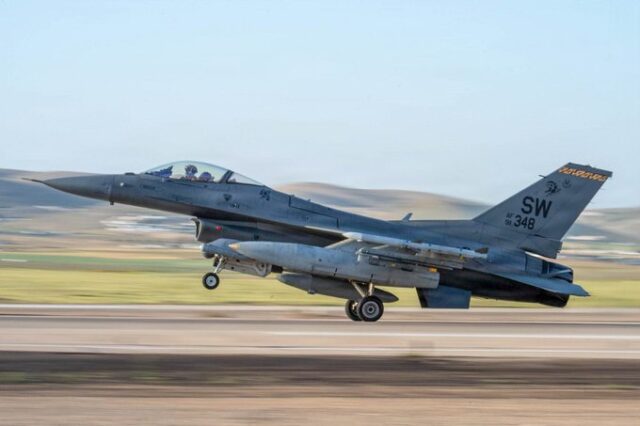
The escalation comes at a moment of extreme global volatility. As the United States enters the fourth week of a high-stakes military offensive against Iran, the President’s frustration over a perceived lack of European support has reached a breaking point. “We spend hundreds of billions of dollars a year on NATO, protecting them,” Trump told the audience. “We would have always been there for them, but now, based on their actions, I guess we don’t have to be, do we?”

The Iran Catalyst: A Question of Burden-Sharing
The immediate trigger for this latest “ratcheting up” of rhetoric is the ongoing conflict in the Middle East. Since the U.S.-Israeli offensive against Iran began in February 2026, maritime traffic through the Strait of Hormuz has ground to a near-halt. Despite the surge in global energy prices and the direct threat to European fuel supplies, major NATO powers—including France, Germany, and the United Kingdom—have hesitated to commit military assets to the American-led effort to secure the waterway.
For the Trump administration, this is the ultimate betrayal of the “transactional” alliance model he has championed. From the White House’s perspective, if Europe depends on Middle Eastern energy, it must shoulder the burden of defending the routes that deliver it. When allies cited a lack of consultation before the strikes began as a reason for their caution, the President’s response was characteristically blunt, dismissing their concerns as “excuses for weakness.”
The Greenland Shadow and the Sovereignty Crisis
The current animosity is not an isolated event. It is the continuation of a diplomatic “cold war” within the alliance that turned white-hot in January 2026 during the so-called “Greenland Crisis.” In a move that stunned Brussels, the Trump administration increased pressure on Denmark to cede strategic control of Greenland, citing Arctic security and competition with China.
When Copenhagen refused, Washington responded with threats of sweeping tariffs and suggested that America’s commitment to Article 5—the mutual defense clause—might be contingent on Danish cooperation. While a “framework” for Arctic sovereignty was eventually discussed with NATO Secretary General Mark Rutte, the psychological damage to the alliance was permanent. The Greenland episode proved that under Trump 2.0, no territory or treaty is exempt from renegotiation.
The Paradox of 2%
What makes the current attacks particularly striking is that they come at a time when Europe is spending more on defense than at any point since the Cold War. In his 2025 Annual Report, Secretary General Rutte confirmed that every single NATO member had finally reached the 2% GDP spending target. In fact, many frontline states like Poland and the Baltics have surged toward 4% or 5%.
However, the “Trump Corollary” suggests that spending alone is no longer the price of admission for American protection. The goalposts have shifted from fiscal contribution to operational loyalty. In the eyes of the current administration, the 2% target was a 2024 requirement; the 2026 requirement is total alignment with “America First” objectives, whether in the Strait of Hormuz or the South China Sea.
Impact on the Ukraine War Effort
The most immediate and potentially devastating consequence of this rift is the impact on the war in Ukraine. Since early 2025, the U.S. has transitioned to a “Prioritised Ukraine Requirements List” (PURL) system, where European allies pay for American military hardware to be sent to Kyiv. While this maintained the flow of weapons through 2025, the outbreak of the Iran war has changed the calculus.
Reports from the Pentagon indicate that the administration is seriously considering diverting critical air defense interceptors—originally earmarked for Ukraine—to the Middle East theater. With U.S. stockpiles under strain from the scale of the Iranian offensive, the “Ukraine war effort” is now competing directly with the “Iran war effort.”
Furthermore, the President’s public questioning of Article 5 has weakened the “deterrence edifice” in Eastern Europe. If Moscow perceives that the U.S. would not intervene to protect a “delinquent” or “uncooperative” ally, the risk of Russian miscalculation grows. Analysts suggest that the Kremlin is closely watching the Miami rhetoric, betting that the erosion of Western unity will eventually force Ukraine into a ceasefire on Russian terms.
A New Security Architecture?
As Trump prepares for the July 2026 NATO Summit in Ankara, the alliance faces an existential crossroads. European leaders, led by France and Poland, are increasingly discussing “strategic autonomy”—the idea that Europe must be able to defend itself without the United States.
But as Mark Rutte warned the European Parliament in January: “If anyone thinks Europe can defend itself without the U.S., keep on dreaming.” The reality of 2026 is a continent trapped between a more assertive Russia and an increasingly transactional America.
For the “war effort” in both the Middle East and Ukraine, the message from Miami is clear: the American umbrella is no longer unconditional. It is a contract, and in the world of Donald Trump, contracts are always subject to the “Art of the Deal.”
Sources Used and Links
- Eurasia Review: “Trump’s Rhetoric And Actions: UN-NATO In Coma – OpEd” (January 23, 2026) – https://www.eurasiareview.com/23012026-trumps-rhetoric-and-actions-un-nato-in-coma-oped/
- European Union Institute for Security Studies (EUISS): “The Union, the Star and the Eagle: EU-NATO cooperation under Trump 2.0” (March 10, 2026) – https://www.iss.europa.eu/publications/briefs/union-star-and-eagle-eu-nato-cooperation-under-trump-20
- Internationale Politik Quarterly: “The ‘Trump Corollary’ and Europe” (March 26, 2026) – https://ip-quarterly.com/en/trump-corollary-and-europe
- The Economic Times: “Trump labels Iran a ‘lunatic’ nation; claims to have ‘militarily decimated’ Tehran” (March 27, 2026) – https://m.economictimes.com/news/defence/trump-labels-iran-a-lunatic-nation-claims-to-have-militarily-decimated-tehran/articleshow/129857168.cms
- Euractiv: “Trump says US may not be there for NATO if needed” (March 28, 2026) – https://www.euractiv.com/news/trump-says-us-may-not-be-there-for-nato-if-needed/
- The Guardian: “Ukraine war briefing: Pentagon reportedly considering whether to divert aid” (March 27, 2026) – https://www.theguardian.com/world/2026/mar/27/ukraine-war-briefing-pentagon-reportedly-considering-whether-to-divert-aid-from-ukraine-to-middle-east
- Anadolu Agency: “NATO allies hit record defense spending, Rutte credits Trump administration” (March 26, 2026) – https://www.aa.com.tr/en/americas/nato-allies-hit-record-defense-spending-rutte-credits-trump-administration/3880729
- NATO Official Site: “Secretary General Annual Report 2025” (March 26, 2026) – https://www.nato.int/content/dam/nato/webready/documents/publications-and-reports/annual-reports/sgar25-en.pdf
Disclaimer
Artificial Intelligence Disclosure & Legal Disclaimer
AI Content Policy.
To provide our readers with timely and comprehensive coverage, South Florida Reporter uses artificial intelligence (AI) to assist in producing certain articles and visual content.
Articles: AI may be used to assist in research, structural drafting, or data analysis. All AI-assisted text is reviewed and edited by our team to ensure accuracy and adherence to our editorial standards.
Images: Any imagery generated or significantly altered by AI is clearly marked with a disclaimer or watermark to distinguish it from traditional photography or editorial illustrations.
General Disclaimer
The information contained in South Florida Reporter is for general information purposes only.
South Florida Reporter assumes no responsibility for errors or omissions in the contents of the Service. In no event shall South Florida Reporter be liable for any special, direct, indirect, consequential, or incidental damages or any damages whatsoever, whether in an action of contract, negligence or other tort, arising out of or in connection with the use of the Service or the contents of the Service.
The Company reserves the right to make additions, deletions, or modifications to the contents of the Service at any time without prior notice. The Company does not warrant that the Service is free of viruses or other harmful components.