WASHINGTON, D.C. — In a defiant response to a major judicial defeat, President Donald J. Trump announced today a new 10% universal baseline tariff on nearly all imported goods. The move came just hours after the Supreme Court of the United States (SCOTUS) ruled 6-3 that the administration’s previous tariff regime, enacted under the International Emergency Economic Powers Act (IEEPA), was an unconstitutional overreach of executive authority.
The President’s latest directive utilizes Section 122 of the Trade Act of 1974, which permits the executive branch to impose temporary import surcharges of up to 15% to address “large and serious” balance-of-payments deficits. By pivoting to this authority, the White House aims to maintain its “America First” trade protections while navigating the legal boundaries set by the high court.
A Day of Legal and Economic Volatility
The day began with a stinging rebuke from the Supreme Court in Learning Resources Inc. v. Trump. The majority opinion stated that the IEEPA, while granting the president broad powers during national emergencies, does not authorize the unilateral imposition of revenue-raising tariffs without explicit congressional approval. Justice Brett Kavanaugh, writing for the majority, noted that such “unbounded” use of emergency powers threatened the separation of powers.
However, the victory for free-trade advocates was short-lived. During a press conference at the White House this afternoon, President Trump called the SCOTUS ruling a “disgrace to our workers” and immediately signed a new Executive Order.

“We are not going to let our manufacturing base be destroyed by activist judges,” the President stated. “If the courts won’t let us use one law to protect American jobs, we will use another. These 10% tariffs are back, and they are here to stay until our trade partners treat us fairly.”
The Scope of the New Tariffs
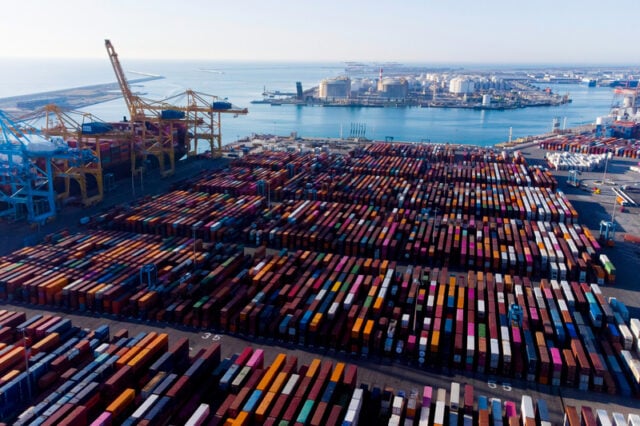
The new 10% tariff applies to all countries with which the United States has a significant trade deficit, effectively covering the vast majority of global imports. While certain exemptions remain for critical minerals and pharmaceuticals, the “Liberation Day” tariffs—as the administration calls them—now face a new set of procedural requirements.
Unlike the previous IEEPA-based tariffs, Section 122 levies are capped at 150 days unless extended by Congress or justified by ongoing “fundamental international payments problems.” Treasury Secretary Scott Bessent indicated that the administration would also launch “Section 301” investigations into unfair trade practices to provide a more permanent legal footing for the duties.
Economic Fallout and Retaliation
The re-imposition of tariffs has sent shockwaves through global markets. In 2025, the initial 10% universal tariff generated approximately $81.74 billion in revenue, but at a cost to American consumers. The Tax Foundation estimates that the average U.S. household saw a tax increase of roughly $1,000 last year due to higher prices for imported goods.
International reaction was swift and critical.
- The European Union signaled it would move forward with “rebalancing measures” on U.S. exports, including motorcycles, bourbon, and agricultural products.
- China, which had already retaliated with its own 15% duties on U.S. energy and machinery in 2025, warned that it would “defend its interests” against what it termed “legal gymnastics” by the White House.
- Canada and Mexico remain in a precarious position. While the administration previously granted “truce” periods for USMCA-compliant goods, the new order remains ambiguous on whether the 10% baseline will override existing North American trade preferences.
Domestic Political Divide
On Capitol Hill, the response split predictably along party lines. Republican leaders praised the President’s “resilience,” arguing that tariffs are the only tool effective enough to force concessions from Beijing and Brussels. Representative Greg Steube (R-FL) argued that the tariffs are “voter-mandated” and essential for national security.
Democrats, conversely, decried the move as an “end-run around the Constitution.” Senate Majority Leader Chuck Schumer (D-NY) called for immediate hearings, stating, “The President is playing a dangerous game of ‘legal whack-a-mole’ that is driving up the cost of living for every American family.”
What Comes Next?
The 150-day clock on the Section 122 tariffs has begun, setting the stage for a massive legislative showdown. If Congress does not act to codify the tariffs through the Secure Trade Act—a bipartisan bill currently circulating in the House—the President may be forced to find yet another legal avenue or let the duties expire by mid-summer.
For now, importers are left in a state of “tariff whiplash.” While the Supreme Court ruling theoretically entitles businesses to nearly $150 billion in refunds from the illegal 2025 tariffs, the new 10% levy ensures that the cost of doing business across borders will remain high for the foreseeable future.
Sources and Links
- White & Case LLP: President Trump orders 10% global tariff and higher “reciprocal” tariffs
- SCOTUSblog: Supreme Court strikes down tariffs (Learning Resources Inc. v. Trump)
- The Guardian: What will happen to Trump’s tariffs after supreme court verdict?
- Tax Foundation: Trump Tariffs: Tracking the Economic Impact of the Trump Trade War
- Coalition for a Prosperous America (CPA): CPA Statement on SCOTUS IEEPA Tariff Ruling
- Holland & Knight: President Trump Announces 10 Percent Global Tariff, 11 Percent to 50 Percent Reciprocal Tariffs
- CSIS: “Liberation Day” Tariffs Explained
- Congress.gov: Presidential 2025 Tariff Actions: Timeline and Status
Disclaimer
Artificial Intelligence Disclosure & Legal Disclaimer
AI Content Policy.
To provide our readers with timely and comprehensive coverage, South Florida Reporter uses artificial intelligence (AI) to assist in producing certain articles and visual content.
Articles: AI may be used to assist in research, structural drafting, or data analysis. All AI-assisted text is reviewed and edited by our team to ensure accuracy and adherence to our editorial standards.
Images: Any imagery generated or significantly altered by AI is clearly marked with a disclaimer or watermark to distinguish it from traditional photography or editorial illustrations.
General Disclaimer
The information contained in South Florida Reporter is for general information purposes only.
South Florida Reporter assumes no responsibility for errors or omissions in the contents of the Service. In no event shall South Florida Reporter be liable for any special, direct, indirect, consequential, or incidental damages or any damages whatsoever, whether in an action of contract, negligence or other tort, arising out of or in connection with the use of the Service or the contents of the Service.
The Company reserves the right to make additions, deletions, or modifications to the contents of the Service at any time without prior notice. The Company does not warrant that the Service is free of viruses or other harmful components.