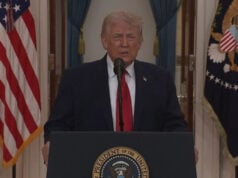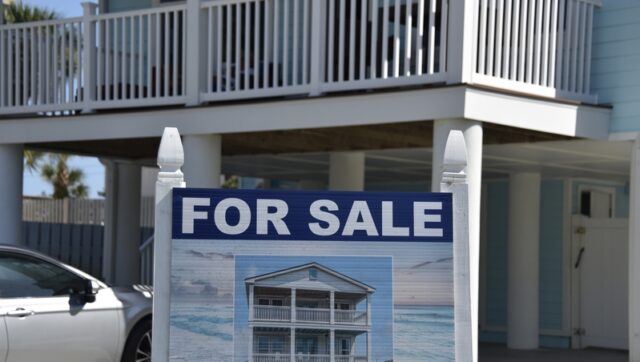
In a move that has sent shockwaves through the real estate and financial sectors, President Donald Trump announced on Wednesday, January 7, 2026, that he is taking immediate steps to ban large institutional investors from purchasing single-family homes. Framing the initiative as a crusade to restore the “American Dream,” the President signaled a major shift toward housing populism, arguing that corporations should not be competing with families for limited housing stock.
A New Front in Housing Affordability
The announcement, made via a series of posts on Truth Social, marks the first major policy push of the new year. “People live in homes, not corporations,” Trump wrote, blaming “record-high inflation” and corporate “predators” for locking young Americans out of the housing market. The President indicated that he would seek to codify the ban through Congress and plans to present a detailed “Affordability Agenda” at the World Economic Forum in Davos later this month.
The reaction on Wall Street was swift. Shares of major institutional landlords, including Blackstone, Invitation Homes, and American Homes 4 Rent, saw significant declines immediately following the announcement.
Legislative Momentum and Bipartisan Echoes
While the White House has yet to release specific regulatory language, the proposal has found unexpected common ground with long-standing Democratic priorities. Senator Elizabeth Warren noted that she has advocated for similar limits for years, though she expressed skepticism about the administration’s broader real estate policies.

In the Senate, Republican Bernie Moreno (R-OH) pledged to introduce legislation to formalize the ban, while several existing bills—such as the End Hedge Fund Control of American Homes Act and the Stop Predatory Investing Act—already seek to use tax penalties to discourage mass ownership of residential properties. These bills typically target “disqualified” owners who hold more than 50 or 100 properties.
Market Reality vs. Political Rhetoric
Despite the high-profile nature of the announcement, many housing experts question whether the ban will address the root causes of the crisis. Data from the American Enterprise Institute (AEI) and Realtor.com suggest that large institutional investors own roughly 1% to 3% of the nation’s single-family housing stock.
- Supply Shortage: Analysts estimate the U.S. is currently short by 3 to 4 million homes.
- Small Landlords: The vast majority of rental properties (roughly 85%) are owned by “mom-and-pop” investors with fewer than ten properties, who are not the targets of this specific ban.
- Build-to-Rent: Some firms have already shifted away from buying existing homes to “build-to-rent” communities, which actually increases the total housing supply.
Opponents of the ban argue that institutional capital is often necessary for renovating distressed properties. However, proponents argue that even a small percentage of corporate ownership can significantly inflate prices in specific “hot” markets like Atlanta or Phoenix, where investor activity has historically been much higher.
Sources
- NOTUS: Trump Announces Plan to Bar Large Firms From Buying Single-Family Homes
- Realtor.com: President Donald Trump Is ‘Taking Steps’ To Ban Investors From Buying Single-Family Homes
- CBS News: Trump says he will seek to ban institutional investors from buying single-family homes
- Congress.gov: H.R.6608 – End Hedge Fund Control of American Homes Act
- Senate.gov: Stop Predatory Investing Act Summary
Disclaimer
Artificial Intelligence Disclosure & Legal Disclaimer
AI Content Policy.
To provide our readers with timely and comprehensive coverage, South Florida Reporter uses artificial intelligence (AI) to assist in producing certain articles and visual content.
Articles: AI may be used to assist in research, structural drafting, or data analysis. All AI-assisted text is reviewed and edited by our team to ensure accuracy and adherence to our editorial standards.
Images: Any imagery generated or significantly altered by AI is clearly marked with a disclaimer or watermark to distinguish it from traditional photography or editorial illustrations.
General Disclaimer
The information contained in South Florida Reporter is for general information purposes only.
South Florida Reporter assumes no responsibility for errors or omissions in the contents of the Service. In no event shall South Florida Reporter be liable for any special, direct, indirect, consequential, or incidental damages or any damages whatsoever, whether in an action of contract, negligence or other tort, arising out of or in connection with the use of the Service or the contents of the Service.
The Company reserves the right to make additions, deletions, or modifications to the contents of the Service at any time without prior notice. The Company does not warrant that the Service is free of viruses or other harmful components.