The Shutdown Crisis: Trump Intervenes in 42-Day Deadlock
As the Department of Homeland Security (DHS) shutdown enters its sixth week, President Donald Trump has taken the unprecedented step of bypassing a paralyzed Congress to ensure Transportation Security Administration (TSA) workers receive their paychecks. The move comes on the heels of a chaotic 24-hour period in Washington, where a fragile bipartisan deal in the Senate was summarily rejected by the House of Representatives, leaving the nation’s primary domestic security agency in a state of fiscal limbo.
The partial shutdown, which began on February 14, 2026, has reached a critical flashpoint. With airport security lines stretching for miles and frontline workers facing their second missed paycheck this Friday, the President issued a stern presidential memorandum directing the Secretary of Homeland Security and the Director of the Office of Management and Budget (OMB) to repurpose existing funds to compensate TSA staff.
A Tale of Two Chambers: The Senate’s Midnight Gamble
Early Friday morning, the Senate appeared to have found a path forward. In a rare unanimous vote, senators passed a measure to fund the majority of DHS, including the Coast Guard, FEMA, and the TSA. However, the deal came with a massive caveat: it completely stripped funding for Immigration and Customs Enforcement (ICE) and Customs and Border Protection (CBP).

Senate Democrats, led by Minority Leader Chuck Schumer, argued that the “split” bill was the only way to reopen the government while continuing to negotiate the deeper, more contentious reforms they are seeking regarding immigration enforcement practices. For weeks, Democrats have demanded tighter rules on warrants, a ban on agents wearing masks during raids, and mandatory body cameras—concessions the Trump administration has steadfastly refused to grant.
“Today, the Senate voted to pass a funding bill that invests in working families and rejects the administration’s catastrophic cuts to essential services,” said Senator Patty Murray (D-WA). “By splitting off the DHS funding bill, we are forcing a real conversation on reining in the unchecked power of ICE and CBP.”
The House Response: “A Joke”
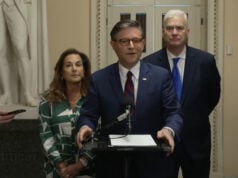
The optimism in the Senate was short-lived. By Friday afternoon, House Speaker Mike Johnson (R-LA) had denounced the Senate’s bill as a “joke” and “dead on arrival.” The Speaker made it clear that House Republicans would not support any funding measure that did not include full, robust funding for the President’s mass deportation agenda and border security operations.
“This gambit that was done last night is not a serious attempt to secure our nation,” Johnson told reporters. “We will not leave our brothers and sisters at the border without the resources they need to do their jobs. The House will vote on its own 60-day stopgap measure that funds the entire department, and we expect the Senate to take it up immediately.”
The House’s proposed 60-day Continuing Resolution (CR) would maintain current funding levels for all DHS components through May 22, 2026. However, Schumer has already indicated that such a bill would not pass the Senate, as it lacks the “reforms” Democrats are demanding. This legislative ping-pong has left more than 100,000 federal workers in a state of perpetual uncertainty.
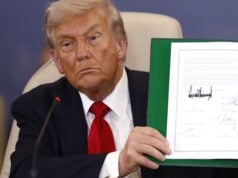
President Trump, frustrated by what he termed the “reckless DHS shutdown” orchestrated by “Democrat obstructionists,” signaled his intent to use executive authority to break the logjam for TSA workers. In his memorandum, the President declared the situation an “emergency situation compromising the Nation’s security.”
According to senior administration officials, the funding for TSA salaries will be drawn from the “One Big Beautiful Bill Act,” a landmark 2025 legislative package that provided nearly $75 billion for border security and enforcement. The administration argues that because these funds have a “reasonable and logical nexus” to security operations, they can be reallocated to cover TSA payroll during the lapse in regular appropriations.
“If Democrats in the Congress will not act to honor the service of our TSA officers, who are now performing their critical public safety responsibilities without knowing whether they will be able to buy food for their families or pay their rent, then my Administration will take action,” the President wrote.
Critics and legal scholars have already begun questioning the constitutionality of this move, suggesting it may violate the Antideficiency Act and the separation of powers. However, for the thousands of TSA agents working 12-hour shifts at major hubs like Atlanta, Chicago, and New York, the promise of a paycheck on Monday is a welcome relief.
The Border Battle and the Role of Secretary Kristi Noem
At the heart of the standoff is the administration’s aggressive immigration policy. Under Secretary Kristi Noem, DHS has ramped up its mass deportation efforts, reporting that over 3 million illegal aliens have left the country since 2025. The administration’s reliance on the “One Big Beautiful Bill” funds has allowed ICE and CBP to continue their operations largely unaffected by the shutdown—a fact that has infuriated Democrats.
“Secretary Noem has been the most successful DHS Secretary in history,” a department release stated earlier this month. “Under the leadership of President Trump and Secretary Noem, the administration has empowered our agents and officers to do their job again, resulting in the most secure border in American history.”
The American Immigration Council and other advocacy groups have countered that the administration is using the “One Big Beautiful Bill” as a “slush fund” to bypass Congressional oversight. They argue that any new funding deal must include “meaningful accountability mechanisms” to address allegations of officer overreach and lack of transparency.
The Human Toll: Chaos at the Airports
The political theater in Washington has had real-world consequences. As the shutdown dragged into its 42nd day, the “sick-out” rate among TSA agents reached an all-time high. At Philadelphia International Airport, the lines for security were reported to be longer than the lines for the city’s famous cheesesteaks.
To mitigate the impact, President Trump earlier this week deployed ICE personnel to major airports to assist with security screenings. While the administration claims this move has “relieved” pressure on the TSA, travelers have reported increased tension and confusion as armed ICE agents perform roles usually reserved for civilian TSA staff.
The Political Outlook: The Save America Act
Adding a layer of complexity to the negotiations is the President’s demand that any DHS funding deal be tied to the passage of the “Save America Act,” a controversial voting bill that Senate Democrats have vowed to filibuster.
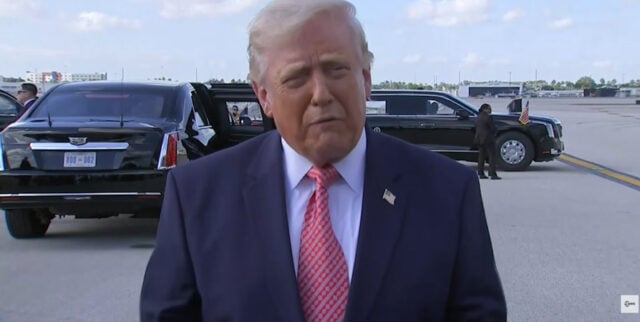
“Republicans should not make any deal with Democrats until they support the Save America Act,” Trump posted on social media earlier this week. This stance has complicated Speaker Johnson’s efforts to find a middle ground, as the more conservative wing of the GOP remains emboldened by the President’s rhetoric.
As lawmakers head into a planned two-week recess, the prospect of a resolution remains dim. The Senate has already left town, and unless a breakthrough occurs over the weekend, the DHS shutdown will continue well into April, testing the limits of executive power and the patience of the American public.
Quick Update: Escalation in the Middle East War
The geopolitical landscape remains volatile as the war between Israel/U.S. forces and Iran enters a new, more dangerous phase.
- Nuclear Facilities Targeted: On Friday, March 27, 2026, Israel conducted significant airstrikes targeting Iranian nuclear facilities and ballistic missile production sites in Tehran and Western Iran. Defense Minister Israel Katz warned that attacks will “escalate and expand” to any area assisting the regime’s weaponization efforts.
- Regional Fallout: Iran responded by launching a barrage of missiles and drones at its Gulf neighbors. Saudi Arabia reported shooting down several projectiles over Riyadh, while Kuwaiti ports—including a Chinese-affiliated project under construction—sustained material damage.
- Economic Impact: Global markets reacted sharply to the strikes on the Hormuz region. Brent crude oil prices spiked to $107 a barrel on Friday morning, marking a 45% increase since the conflict began in late February.
- Diplomatic Stalemate: While President Trump told reporters today that ceasefire negotiations are “going very well,” Iranian Foreign Minister Abbas Araghchi denied that any talks are taking place, accusing the U.S. and Israel of war crimes.
- Internal Unrest: Reports from inside Iran indicate the regime has executed three more men in the city of Qom, allegedly involved in the killing of police officers during January’s anti-war protests.
Sources Used and Links
- The White House – Presidential Memorandum on TSA Pay (March 27, 2026)
- GovExec – Shutdown Poised to Continue for DHS (March 27, 2026)
- PBS NewsHour – Iran Nuclear Facilities Attacked (March 27, 2026)
- The Guardian – Middle East Crisis Live Updates (March 27, 2026)
- Department of Homeland Security – America is Safer Release (March 5, 2026)
- American Immigration Council – DHS Funding Deal Requirements (March 26, 2026)
- CBS News – DHS Shutdown Live Updates (March 27, 2026)
- House Appropriations Committee – House Passes H.R. 7744 (March 5, 2026)
Disclaimer
Artificial Intelligence Disclosure & Legal Disclaimer
AI Content Policy.
To provide our readers with timely and comprehensive coverage, South Florida Reporter uses artificial intelligence (AI) to assist in producing certain articles and visual content.
Articles: AI may be used to assist in research, structural drafting, or data analysis. All AI-assisted text is reviewed and edited by our team to ensure accuracy and adherence to our editorial standards.
Images: Any imagery generated or significantly altered by AI is clearly marked with a disclaimer or watermark to distinguish it from traditional photography or editorial illustrations.
General Disclaimer
The information contained in South Florida Reporter is for general information purposes only.
South Florida Reporter assumes no responsibility for errors or omissions in the contents of the Service. In no event shall South Florida Reporter be liable for any special, direct, indirect, consequential, or incidental damages or any damages whatsoever, whether in an action of contract, negligence or other tort, arising out of or in connection with the use of the Service or the contents of the Service.
The Company reserves the right to make additions, deletions, or modifications to the contents of the Service at any time without prior notice. The Company does not warrant that the Service is free of viruses or other harmful components.