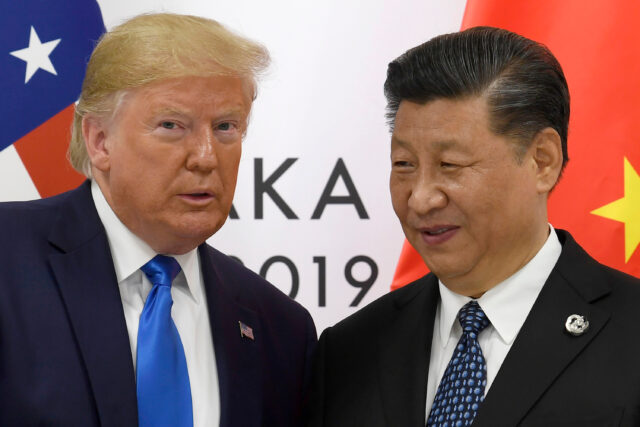
In a closely watched encounter in Busan today, Donald Trump and Xi Jinping declared a breakthrough in their nations’ fraught economic relationship, with Beijing committing to buy “tremendous amounts” of U.S. soybeans and Washington signaling a rollback of tariffs in return.
The 1 hour 45‑minute bilateral, which took place on the sidelines of the APEC 2025 Summit in South Korea, was described by Trump as “truly great” and by Xi as bearing “promising prospects”. Their discussions spanned a range of flashpoints—from tariffs and agriculture to rare‑earth minerals and illicit drug flows—but stopped short of a full resolution on technology rivalry or sovereignty disputes.
Central to the accord is agriculture. China pledged to purchase at least 12 million metric tons of U.S. soybeans this season, and 25 million tons annually for the next three years, according to U.S. Treasury Secretary Scott Bessent. While details remain vague and no formal contract was signed, the deal marks a win for U.S. farmers who were hit hard during the trade war.
In exchange, the U.S. will reduce its tariff pressure on China—from current rates of around 57% to 47% on certain Chinese imports—and China has agreed to pause export restrictions on rare‑earth minerals for a year and bolster cooperation on curbing fentanyl precursors.

However, many analysts caution that the agreement may be more symbolic than transformative. Specifics on implementation are sparse, and key areas such as advanced chip exports, artificial intelligence access and Taiwan relations remain unresolved.
For now, the meeting provides a temporary breath of fresh air in U.S.–China relations and offers a glimmer of relief to American soybean growers and exporters. But unless the pledges turn into firm action, this may simply be a pause rather than a pivot in the long‑running trade war.
Source Links:
Disclaimer
Artificial Intelligence Disclosure & Legal Disclaimer
AI Content Policy.
To provide our readers with timely and comprehensive coverage, South Florida Reporter uses artificial intelligence (AI) to assist in producing certain articles and visual content.
Articles: AI may be used to assist in research, structural drafting, or data analysis. All AI-assisted text is reviewed and edited by our team to ensure accuracy and adherence to our editorial standards.
Images: Any imagery generated or significantly altered by AI is clearly marked with a disclaimer or watermark to distinguish it from traditional photography or editorial illustrations.
General Disclaimer
The information contained in South Florida Reporter is for general information purposes only.
South Florida Reporter assumes no responsibility for errors or omissions in the contents of the Service. In no event shall South Florida Reporter be liable for any special, direct, indirect, consequential, or incidental damages or any damages whatsoever, whether in an action of contract, negligence or other tort, arising out of or in connection with the use of the Service or the contents of the Service.
The Company reserves the right to make additions, deletions, or modifications to the contents of the Service at any time without prior notice. The Company does not warrant that the Service is free of viruses or other harmful components.