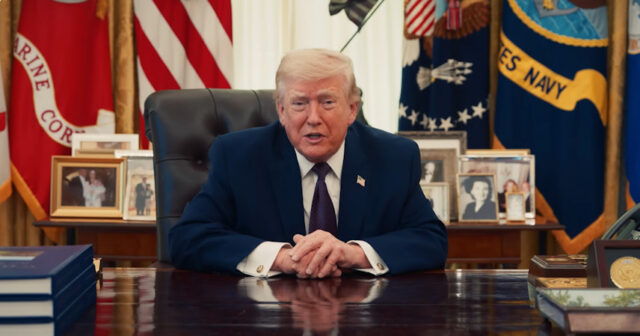
WASHINGTON — In a stunning 11th-hour reversal that has sent shockwaves through global markets and capital cities, President Donald J. Trump announced Tuesday evening that he has agreed to a two-week ceasefire with Iranian leadership. The agreement, brokered by Pakistani Prime Minister Shehbaz Sharif, ostensibly ends—for now—a month-long maritime blockade and averts a massive U.S. military escalation that Trump earlier warned would mean “a whole civilization will die tonight.”
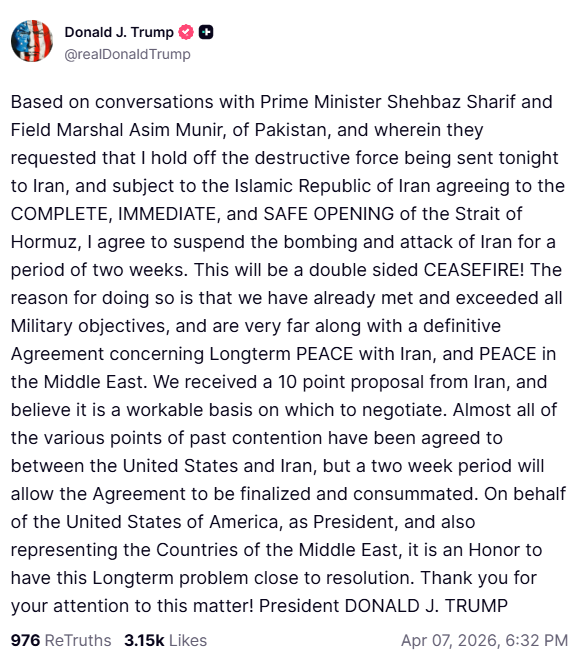
The announcement came via Truth Social just minutes before a final 8:00 PM EDT deadline. Trump stated that the Islamic Republic has agreed to “FULLY AND IMMEDIATELY” reopen the Strait of Hormuz to all international shipping, effectively ending the most severe energy crisis since the 1970s.
“Based on a very strong and respectful request from Prime Minister Shehbaz Sharif of Pakistan, I have agreed to a 14-DAY CEASEFIRE to allow the Iranian people to see what peace looks like,” Trump posted. “The Strait of Hormuz will be OPENED IMMEDIATELY. No more threats! If they don’t comply, the consequences will be like nothing the world has ever seen before. GREAT DAY FOR THE WORLD!”

The Brink of “Civilization” Failure
The reprieve comes after a day of unprecedented tension. Early Tuesday morning, the President had escalated his rhetoric to a fever pitch, threatening to target Iranian civilian infrastructure, including power plants, bridges, and desalination facilities, if the blockade was not lifted.
The threat—described by UN Human Rights Chief Volker Türk as “sickening”—had prompted Iranian officials to urge citizens to form human chains around critical energy sites. For much of the afternoon, the world watched as a “Power Plant Day” and “Bridge Day” loomed, with the U.S. Department of War (renamed under the current administration) reportedly having finalized target lists for every major bridge in the country.
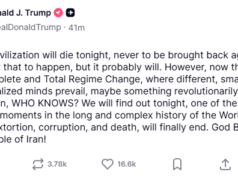
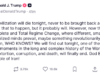
“A whole civilization will die tonight, never to be brought back again,” Trump had written earlier on Tuesday. “I don’t want that to happen, but it probably will.”
The Pakistani Mediation
The breakthrough is being credited to Prime Minister Shehbaz Sharif, whose government has acted as a backchannel between Washington and Tehran since the death of Supreme Leader Ali Khamenei in late February. Sharif’s proposal, which surfaced publicly early Wednesday morning local time in Islamabad, requested a two-week window for “diplomacy to run its course.”
Pakistan requested that “Iranian brothers” open the Strait as a “goodwill gesture,” a move that appears to have given both sides a face-saving exit from the immediate threat of total war. The White House Press Secretary, Karoline Leavitt, confirmed that the President reviewed the proposal through the afternoon before deciding to “give peace a two-week chance.”
A Month of Maritime Chaos
The “2026 Strait of Hormuz Crisis” began on February 28, following the initiation of Operation Epic Fury—a joint U.S.-Israeli campaign that saw the assassination of Supreme Leader Khamenei and strikes on Iranian nuclear facilities. In retaliation, the Islamic Revolutionary Guard Corps (IRGC) effectively shuttered the world’s most critical oil chokepoint.
Since the blockade began:
- Tanker traffic plummeted by 70%, with over 150 ships anchored outside the Strait.
- Oil prices surged, with Brent crude hitting US$96 a barrel, up from US$78.84 pre-conflict.
- U.S. gas prices reached multi-year highs, with some regions in the Northeast seeing retail prices nearing $5.00 a gallon.
- Shipping giants like Maersk and Hapag-Lloyd rerouted all vessels around the Cape of Good Hope, adding weeks to global transit times and driving up the cost of everything from fertilizer to aluminum.
Economic Skepticism Remains
Despite the “reopening” announcement, experts warn that global energy markets may not see immediate relief. The U.S. Energy Information Administration (EIA) released a report earlier Tuesday suggesting that fuel prices could continue to rise for months even after the Strait reopens.
“Just as we had never before seen the Strait close, we’ve never seen it reopen,” the EIA stated. The agency noted that the physical process of clearing mines, recalibrating satellite jamming (GNSS) systems used by the IRGC, and securing insurance for tankers will take significant time.
Market analysts at GasBuddy suggest that if the “two-week” window is perceived as another temporary delay rather than a permanent settlement, the “risk premium” on oil will remain. “We’ve seen this script before,” said one analyst, referencing Trump’s previous deadline extensions on March 23 and April 6.
Global and Domestic Reaction
The announcement has drawn a polarized response.
International:
- The United Nations: Secretary-General António Guterres, who had spent the morning decrying “incendiary rhetoric,” expressed “cautious relief” but urged for a permanent political solution. China and Russia, who earlier on Tuesday vetoed a Security Council resolution on the Strait, have not yet officially commented on the ceasefire.
- The Vatican: Pope Leo, who had called Trump’s earlier threats “truly unacceptable,” welcomed the cessation of hostilities as a “victory for the sanctity of life.”
Domestic:
- Democrats: House Democratic Leadership issued a scathing statement earlier in the day regarding Trump’s threat to “destroy a civilization.” Following the ceasefire, critics remained wary. “A two-week reprieve from a threat of war crimes is not a victory; it is a hostage situation,” said one high-ranking member of the House Foreign Affairs Committee.
- Republicans: Supporters of the President’s “Maximum Pressure 2.0” strategy hailed the move as a masterclass in brinkmanship. “The President’s strength forced the regime to blink,” a source close to the White House said. “He showed them the cliff, and they chose to walk back.”
What Happens Next?
The two-week clock is now ticking. The ceasefire is set to expire on April 21, 2026. During this time, the U.S. expects not only the free passage of ships but also progress on “Complete and Total Regime Change” or at least the emergence of what Trump called “different, smarter, and less radicalized minds” in Tehran.
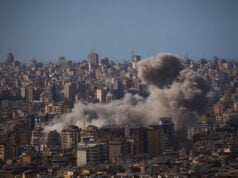
For the residents of cities like Tyre in Lebanon and the energy-dependent economies of Asia, the next 14 days will be a period of anxious waiting. If the Strait does not reach pre-conflict flow levels, or if the IRGC continues to harass shipping despite the “reopening,” the world may find itself back at the 8 PM deadline before the month is out.
For now, the sirens in Tehran have quieted, and the oil tankers in the Gulf of Oman are beginning to weigh anchor.
Sources Used and Links:
- The Hindu: “Iran-Israel war LIVE: Pakistan PM seeks two-week extension to Trump’s deadline on Iran”
- Los Angeles Times: “Iran war live updates: Trump threatens to destroy ‘whole civilization'”
- PBS NewsHour: “3 times Trump has given Iran deadlines and then delayed them”
- The Guardian: “UN chief decries ‘incendiary rhetoric’ after Trump ramps up threats against Iran”
- Wikipedia: “2026 Strait of Hormuz crisis”
- UN News: “MIDDLE EAST LIVE 7 April: Humanitarian and economic pressures grow”
- CTV News: “Fuel prices could keep rising for months even if Hormuz reopens, U.S. EIA says”
Disclaimer
Artificial Intelligence Disclosure & Legal Disclaimer
AI Content Policy.
To provide our readers with timely and comprehensive coverage, South Florida Reporter uses artificial intelligence (AI) to assist in producing certain articles and visual content.
Articles: AI may be used to assist in research, structural drafting, or data analysis. All AI-assisted text is reviewed and edited by our team to ensure accuracy and adherence to our editorial standards.
Images: Any imagery generated or significantly altered by AI is clearly marked with a disclaimer or watermark to distinguish it from traditional photography or editorial illustrations.
General Disclaimer
The information contained in South Florida Reporter is for general information purposes only.
South Florida Reporter assumes no responsibility for errors or omissions in the contents of the Service. In no event shall South Florida Reporter be liable for any special, direct, indirect, consequential, or incidental damages or any damages whatsoever, whether in an action of contract, negligence or other tort, arising out of or in connection with the use of the Service or the contents of the Service.
The Company reserves the right to make additions, deletions, or modifications to the contents of the Service at any time without prior notice. The Company does not warrant that the Service is free of viruses or other harmful components.