At A Glance
- A Trader Joe’s recall of frozen products has expanded, including an additional 12 million pounds of food.
- The items may include glass pieces, which pose a safety hazard if consumed.
- In total, the recall affects nearly 37 million pounds of food also sold under the brands Ajinomoto, Kroger, Ling Ling, and Tai Pei.
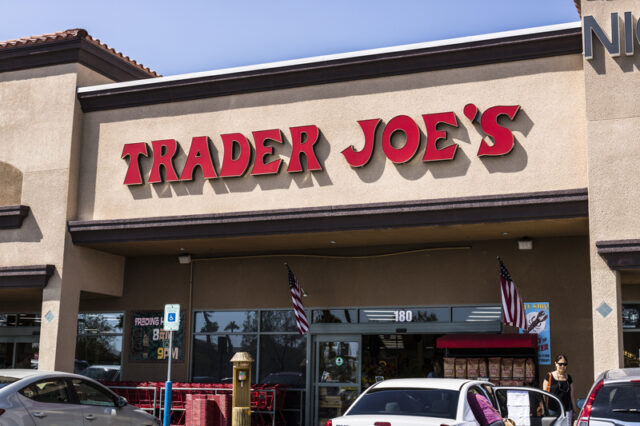
A recall of Trader Joe’s frozen products has expanded to include an additional 12 million pounds of food, according to the Food and Drug Administration (FDA). In late February, Ajinomoto Foods North America, Inc. initially recalled about 3 million pounds of frozen chicken fried rice products—including Trader Joe’s Chicken Fried Rice—after receiving complaints of glass in the products.
On March 3, Ajinomoto Foods recalled an additional 33.6 million pounds of food, also affecting items from Trader Joe’s. The company determined that the carrots in the products were the likely source of the glass contamination and recalled any additional items with the ingredient.
Which Products Were Recalled in the Expansion?
While the initial recall impacted two frozen chicken fried rice products, the expansion affects 16 chicken and pork fried rice, ramen, and shu mai dumpling products, both frozen and ready-to-eat.

The Trader Joe’s products include:
- Vegetable Fried Rice (9,885,240 pounds affected)
- Japanese Style Fried Rice with Edamame, Tofu, and Hijiki Seaweed (3,059,808 pounds affected)
- Chicken Shu Mai (affected quantity unknown)
- Chicken Fried Rice (affected quantity unknown)
According to the FDA, the items were distributed in 43 states; the states not on the list include Hawaii, Iowa, Maine, New Mexico, South Dakota, Vermont, and West Virginia.
The recalled products were also sold under the brands Ajinomoto, Kroger, Ling Ling, and Tai Pei. Full lists of product names and labels are available on the U.S. Department of Agriculture (USDA) website.
What You Should Do
Check your fridge and freezer for any recalled products, and do not eat them. Instead, throw them away or return them to the store for a refund.
Four customers complained of glass in the products, ranging in size from 1-3 cm long and 2-4 mm wide. This poses a safety risk if consumed, though no injuries have been reported to date.
The FDA classified the recall as a Class II risk level on March 20, but the USDA initally gave the recall the highest risk level, Class I. This means there is a reasonable probability that eating the recalled products will cause serious, adverse health consequences or death.
Disclaimer
Artificial Intelligence Disclosure & Legal Disclaimer
AI Content Policy.
To provide our readers with timely and comprehensive coverage, South Florida Reporter uses artificial intelligence (AI) to assist in producing certain articles and visual content.
Articles: AI may be used to assist in research, structural drafting, or data analysis. All AI-assisted text is reviewed and edited by our team to ensure accuracy and adherence to our editorial standards.
Images: Any imagery generated or significantly altered by AI is clearly marked with a disclaimer or watermark to distinguish it from traditional photography or editorial illustrations.
General Disclaimer
The information contained in South Florida Reporter is for general information purposes only.
South Florida Reporter assumes no responsibility for errors or omissions in the contents of the Service. In no event shall South Florida Reporter be liable for any special, direct, indirect, consequential, or incidental damages or any damages whatsoever, whether in an action of contract, negligence or other tort, arising out of or in connection with the use of the Service or the contents of the Service.
The Company reserves the right to make additions, deletions, or modifications to the contents of the Service at any time without prior notice. The Company does not warrant that the Service is free of viruses or other harmful components.