When it comes to Florida, heat always bends routine. It turns snacks into strategy and drinks into design. In fact, a small question in Gainesville is, why do players lose pounds in practice yet barely visit the restroom? Now, it has become a national pivot point.
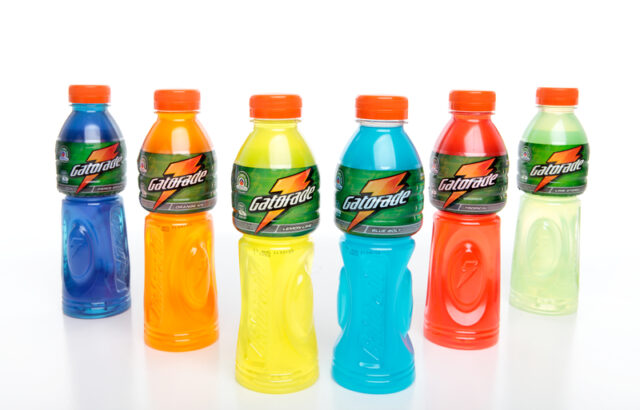
Gatorade, born out of that question, rewired how America fuels motion. Basically, it is a measured fix that slipped from the sideline into glove compartments, school gyms, and lunch breaks. The arc from lab beaker to everyday bottle is the story of on‑the‑go eating, recast through physiology, packaging, and habit.
How Was a Uniquely Florida Idea Born?
The following are the ways a uniquely Florida idea was born:
1. The Local Need That Sparked the Invention
In practice fields in late summer, the air is thick and humid. For instance, a Florida assistant coach asks a nephrologist a blunt question: Where is the water going?

The University of Florida team, led by Dr. Robert Cade, documents electrolyte collapse, hypoglycemia, and reduced plasma volume. They build a formulation of water, sodium, potassium, sugar, and phosphate. Then they tested that first on freshmen, then on game day. In this case, taste was a problem, as lemon juice helps.
The second day came with second tries and second sips. Although the invention is local, it is actually great. You see coolers on benches and bottles in car cup holders.
Of course, Coffee Butler Amphitheater is not part of the lab story, but its Keys breeze captures how Florida settings frame this kind of practicality:
- Solve the heat
- Keep the music playing
- Keep the bodies moving.
Also, local needs breed portable answers that travel far once they work. First, it happens in Gainesville, then everywhere.
Why It Could Only Have Happened In Florida?
Florida stacks urgency with relentless humidity, long practices, and sports woven into community rituals. Hence, any research nested within that climate can prototype quickly through testing, tweaking, and field validation.
The state’s fusion of applied science and athletic culture is documented in retrospectives and museum talks that anchor the origin to place. In short, heat forces innovation, and Florida’s infrastructure lets it scale.
How Has It Changed America’s Eating Habits?
The following are the ways in which the innovation changed America’s Eating habits:
Rapid Rise from Local Novelty to National Staple
Commercial partners carry the sideline solution into stores, like Stokely‑Van Camp, then Quaker Oats, and then PepsiCo. The drink is not just for athletes anymore. Rather, it becomes a recovery for roofers, commuters, gardeners, and anyone wrestling with a hot day.
This lines up with America’s broader on‑the‑go arc. It includes drive‑thru routines, lap mats, and one‑hand foods engineered for motion. Moreover, museum collections show how packaging and ordering systems normalized eating in cars, fast and portable.
What Made the Invention So Effective?
Primarily, the invention solved a felt problem and lowered friction.
- Electrolytes and glucose replace losses
- The bottle travels well
- Taste is acceptable
- The ritual is easy
- Science anchored trust
- Retail made it ubiquitous.
The combination allowed eating and drinking on the go to feel both practical and evidence‑based. Hence, you do not merely hydrate, but “recover.” That semantic shift placed functional products alongside snacks on convenience shelves.
In fact, Florida’s climate created the problem, and the science tuned the fix. Meanwhile, brands scaled distribution. Also, drive‑thru culture pre‑trained Americans to accept handheld, single‑purpose food/drink.
Behavioral Shift at a Glance
The following are the major dimensions of the behavioral shift:
| Dimension | Before (typical) | After (normalized) |
| Hydration during exertion | Water, limit intake, inconsistent advice | Purpose‑built electrolyte + carb intake during/after |
| Who uses it | Varsity athletes | Everyone is under heat or effort |
| Distribution | Sidelines, fountains | Ubiquitous retail, coolers, and convenience |
| On‑the‑go fit | Awkward to maintain | Designed for one‑hand use and fast sipping |
| Cultural framing | Tough it out | Recover smart, keep moving |
Influence on Today’s Food and Packaging Trends
Functional beverages now anchor the convenience aisle, sitting beside portable wraps, bars, and snack kits. In fact, packaging cues like sports caps, slim bottles, and cooler‑ready forms trace back to the logic of motion and mess control.
Meanwhile, anniversary coverage keeps circling the same point. Also, Florida solved a hot‑weather problem, then the market translated that solution into daily micro‑routines for work and play.
Florida’s Ongoing Connection to Innovation
The state keeps the origin close, including Gainesville’s Cade Museum programs and University of Florida retrospectives. Also, talks tie invention to identity, like place, climate, and community.
Moreover, Florida’s broader innovation ecosystem, from halls of fame to public history projects, frames Gatorade as proof that practical questions can spawn national habits when science meets daily life.
Way Forward
This Florida innovation solved a Florida problem. After that, the rest of America and then the world adopted it. In fact, Gatorade did more than hydrate athletes. It normalized recovery on the move and gave structure to how we eat and drink when life is fast.
The pattern persists: feel the need, make the solution portable, and let the market carry it. From sideline coolers to car cup holders, the Sunshine State’s surprisingly practical invention still sets the tempo for on‑the‑go food culture. It is the science you can sip anywhere.
Disclaimer
Artificial Intelligence Disclosure & Legal Disclaimer
AI Content Policy.
To provide our readers with timely and comprehensive coverage, South Florida Reporter uses artificial intelligence (AI) to assist in producing certain articles and visual content.
Articles: AI may be used to assist in research, structural drafting, or data analysis. All AI-assisted text is reviewed and edited by our team to ensure accuracy and adherence to our editorial standards.
Images: Any imagery generated or significantly altered by AI is clearly marked with a disclaimer or watermark to distinguish it from traditional photography or editorial illustrations.
General Disclaimer
The information contained in South Florida Reporter is for general information purposes only.
South Florida Reporter assumes no responsibility for errors or omissions in the contents of the Service. In no event shall South Florida Reporter be liable for any special, direct, indirect, consequential, or incidental damages or any damages whatsoever, whether in an action of contract, negligence or other tort, arising out of or in connection with the use of the Service or the contents of the Service.
The Company reserves the right to make additions, deletions, or modifications to the contents of the Service at any time without prior notice. The Company does not warrant that the Service is free of viruses or other harmful components.