Many popular sayings trace directly back to royal history and ancient customs. Here is the true story behind ten royal expressions featured in Dictionary Scoop’s breakdown.
1. Bluetooth
Bluetooth comes from Danish King Harald Gormsson. He united Denmark and Norway in the tenth century. He had a dark, dead tooth. Engineer Jim Kardach proposed Bluetooth as a temporary code name in 1997. The technology united devices just like Harald united Scandinavia. The official logo blends Harald’s initials using Nordic runes.
2. Red Carpet
The red carpet dates back to ancient Greece. In 458 BC, King Agamemnon walked along a crimson path. Red dye was rare, luxurious, and reserved for royalty. President James Monroe received a red carpet welcome in 1821. Railroads later used red carpets in 1902 for luxury train passengers. Hollywood adopted the tradition for movie premieres in 1922.
3. A King’s Ransom
This phrase refers to an enormous sum of money. In the 1190s, Duke Leopold of Austria captured King Richard the Lionheart. German Emperor Henry VI demanded 150,000 silver marks for his release. That sum equaled multiple years of England’s annual revenue. Richard’s mother raised the ransom through heavy taxes and church treasures.

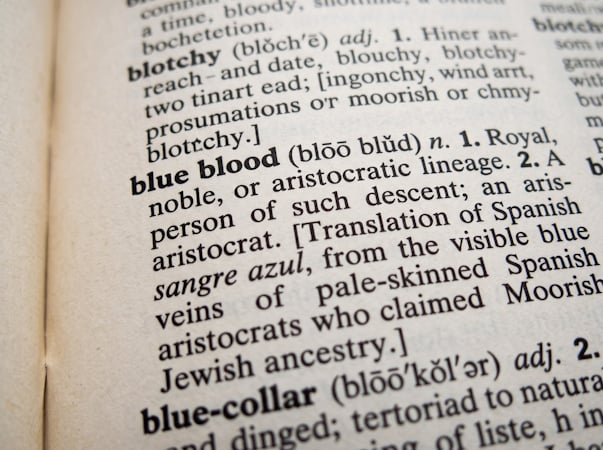
4. Blue Blood
The term blue blood comes from medieval Spain as sangre azul. Spanish aristocrats claimed pure ancestral lineages. Nobles avoided outdoor manual labor under the harsh sun. Their pale skin made blue veins stand out clearly. Working-class laborers had darker, sun-tanned skin. Today, blue blood describes old wealth and high social status.
5. Let Them Eat Cake
Marie Antoinette never actually uttered this notorious line. Jean-Jacques Rousseau recorded the quote around 1765. Marie Antoinette was only nine years old in Austria then. The original French text referred to brioche, not cake. The phrase still highlights an elite lack of empathy.
6. Heir Apparent
The word apparent once meant obvious or plain to see. An heir apparent holds an unbreakable claim to inheritance. No future birth can displace an heir apparent. In contrast, an heir presumptive can lose their spot. Today, people use it for anyone destined for a top role.
7. The Royal We
King Henry II popularized the majestic plural in twelfth-century England. Monarchs claimed divine support, implying God ruled with them. Later, it symbolized a monarch speaking on behalf of the realm. Today, speakers mostly use it jokingly.
8. Pomp and Circumstance
The phrase comes from William Shakespeare’s play Othello. It originally described the grand spectacle of military ceremonies. Sir Edward Elgar composed his famous marches in 1901. American universities soon adopted the march for graduation ceremonies. Now, it plays during commencement events across the country.
9. Palace
The word palace originates from Rome’s Palatine Hill. Romulus founded Rome on this hill in 753 BC. Roman emperors built lavish residences called palatiums there. The term evolved into French palais and English palace. We now use it for grand homes and historic theaters.
10. Courtesy
Courtesy stems from royal courts in the Middle Ages. Courtiers followed strict etiquette around the sovereign. They spoke politely, displayed deference, and observed dining table rules. Old French used corteisie to mean behavior fit for court. Today, courtesy simply means treating other people with respect.
Sources Used
- Dictionary Scoop: Why was blue blood a sign of nobility? The real story
Disclaimer
Artificial Intelligence Disclosure & Legal Disclaimer
AI Content Policy.
To provide our readers with timely and comprehensive coverage, South Florida Reporter uses artificial intelligence (AI) to assist in producing certain articles and visual content.
Articles: AI may be used to assist in research, structural drafting, or data analysis. All AI-assisted text is reviewed and edited by our team to ensure accuracy and adherence to our editorial standards.
Images: Any imagery generated or significantly altered by AI is clearly marked with a disclaimer or watermark to distinguish it from traditional photography or editorial illustrations.
General Disclaimer
The information contained in South Florida Reporter is for general information purposes only.
South Florida Reporter assumes no responsibility for errors or omissions in the contents of the Service. In no event shall South Florida Reporter be liable for any special, direct, indirect, consequential, or incidental damages or any damages whatsoever, whether in an action of contract, negligence or other tort, arising out of or in connection with the use of the Service or the contents of the Service.
The Company reserves the right to make additions, deletions, or modifications to the contents of the Service at any time without prior notice. The Company does not warrant that the Service is free of viruses or other harmful components.