The Safeguard American Voter Eligibility (SAVE) Act has emerged as a central pillar of the Trump administration’s legislative agenda for 2026. Proponents frame the bill as a common-sense measure to protect the sanctity of the ballot box by ensuring only U.S. citizens participate in federal elections. Opponents, however, view it as a radical restructuring of the American voting system that creates significant hurdles for eligible citizens—particularly women, low-income individuals, and young people.
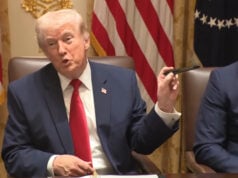
Excerpt Of President Trump talking the SAVE act. Video courtesy DWS
As the bill moves through a divided Congress, it has sparked a fierce debate over the balance between election security and voter access.
Understanding the SAVE Act
The SAVE Act, formally introduced in its 2026 iteration as the “SAVE America Act,” seeks to amend the National Voter Registration Act of 1993. Its primary mandate is to require documentary proof of citizenship (DPOC) at the time of voter registration for federal elections.
Under current federal law, it is already illegal for noncitizens to vote in federal elections. Most states currently enforce this by requiring applicants to attest to their citizenship under penalty of perjury. The SAVE Act would move beyond attestation, requiring physical documentation such as:

- A valid U.S. passport.
- A birth certificate (often requiring a secondary ID if the name has changed).
- Naturalization certificate or Consular Report of Birth Abroad.
The Arguments for the SAVE Act
Proponents of the legislation, led by the Trump administration and House Republicans, argue that the current system is vulnerable to exploitation. With the rise in global migration and concerns over border security, supporters contend that “trust but verify” is no longer a sufficient standard for the American electorate.
1. Preventing Noncitizen Voting
While studies from the Bipartisan Policy Center and other nonpartisan groups indicate that noncitizen voting is extremely rare, supporters of the SAVE Act argue that even a small number of illegal votes can sway local or close federal races. They believe that requiring proof of citizenship at the “front end” of the process is the only way to guarantee a 100% citizen-only voter roll.
2. Restoring Public Confidence
The administration asserts that many Americans have lost faith in the integrity of the electoral process. By implementing a standardized, federal requirement for citizenship verification, proponents believe they can mitigate “voter anxiety” and reduce the potential for post-election litigation regarding the validity of the rolls.
3. Enhancing National Standards
The act would require states to share their voter rolls with the Department of Homeland Security (DHS) to cross-reference citizenship status against federal databases. Supporters argue this creates a more cohesive and technologically advanced way to maintain voter lists, ensuring that people who move or lose eligibility are removed promptly.
The Arguments Against the SAVE Act
Critics of the bill—including civil rights organizations, election officials, and the Democratic caucus—argue that the legislation is a “solution in search of a problem” that will lead to mass disenfranchisement.
1. The “Paperwork Gap”
The most significant criticism involves the millions of Americans who do not have easy access to the required documents. According to research from the Brennan Center for Justice, approximately 21.3 million Americans (9.1% of the voting-age population) lack ready access to documentary proof of citizenship.
- Married Women: An estimated 69 million women have changed their names due to marriage. For these women, a birth certificate alone is insufficient; they would likely need to provide marriage licenses or court orders to link their current identity to their proof of citizenship.
- Low-Income and Rural Voters: Passports cost $130 or more, creating what critics call a “de facto poll tax.” Furthermore, obtaining a replacement birth certificate often requires a trip to a government office, which is difficult for those in rural areas or without reliable transportation.
2. Administrative Chaos and Unfunded Mandates
Election officials have raised alarms about the logistics of the bill. The act requires these changes to take effect almost immediately, giving states little time to retrain staff or update digital registration systems.
“Imposing new federal requirements now, when states are deep into their preparations [for midterms], would negatively impact election integrity by forcing election officials to scramble,” noted some nonpartisan consultants.
Furthermore, the bill imposes criminal penalties on election workers who accidentally register someone without the proper paperwork. Critics argue this will lead to “defensive officiating,” where workers reject valid applications out of fear of prosecution.
3. Impact on Registration Methods
The SAVE Act could effectively end online voter registration and mail-in registration drives. Because the bill requires voters to “present” documentation, many legal experts interpret this as an in-person requirement. This would nullify the convenience of online systems used by 42 states, forcing every new voter to visit a DMV or county office.
The Current Political Landscape
The House of Representatives passed the bill in February 2026 on a largely party-line vote of 218-213. While it enjoys strong support from the White House, it faces a steep climb in the Senate.
Even with a Republican majority, the bill must overcome a 60-vote filibuster threshold. Some Senate Republicans have expressed hesitation over the “federalization” of elections—a power traditionally reserved for the states under the Constitution. Conversely, some GOP senators, led by Mike Lee of Utah, are pushing for procedural changes to allow the bill to pass with a simple majority.
Conclusion
The SAVE Act represents a fundamental shift in how Americans interact with their democracy. For its supporters, it is a necessary shield against fraud and a tool for modernizing election security. For its detractors, it is an unnecessary barrier that risks silencing millions of eligible voices in the name of a problem that barely exists. As the 2026 midterms approach, the fate of this bill will likely determine the shape of the American electorate for years to come.
Sources and Links
- Associated Press: House GOP pushes strict proof-of-citizenship requirement for voters
- Bipartisan Policy Center: Five Things to Know About the SAVE Act
- Brennan Center for Justice: The SAVE Act Would Hurt Americans Who Actively Participate in Elections
- The 19th: How the SAVE Act could affect married women and LGBTQ+ voters
- TIME Magazine: The Democrat Who Voted for House Republicans’ Voter ID Bill
- Campaign Legal Center: What You Need to Know About the SAVE Act
Disclaimer
Artificial Intelligence Disclosure & Legal Disclaimer
AI Content Policy.
To provide our readers with timely and comprehensive coverage, South Florida Reporter uses artificial intelligence (AI) to assist in producing certain articles and visual content.
Articles: AI may be used to assist in research, structural drafting, or data analysis. All AI-assisted text is reviewed and edited by our team to ensure accuracy and adherence to our editorial standards.
Images: Any imagery generated or significantly altered by AI is clearly marked with a disclaimer or watermark to distinguish it from traditional photography or editorial illustrations.
General Disclaimer
The information contained in South Florida Reporter is for general information purposes only.
South Florida Reporter assumes no responsibility for errors or omissions in the contents of the Service. In no event shall South Florida Reporter be liable for any special, direct, indirect, consequential, or incidental damages or any damages whatsoever, whether in an action of contract, negligence or other tort, arising out of or in connection with the use of the Service or the contents of the Service.
The Company reserves the right to make additions, deletions, or modifications to the contents of the Service at any time without prior notice. The Company does not warrant that the Service is free of viruses or other harmful components.