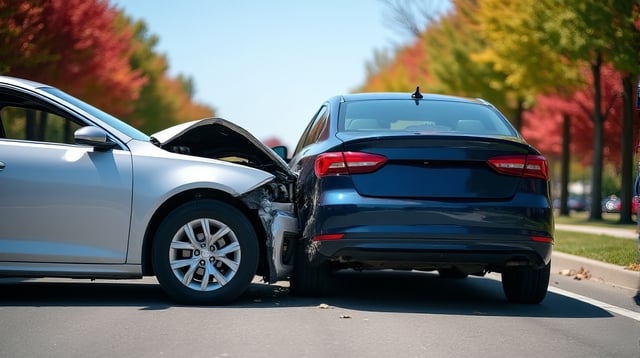
Tampa’s coastal charm, from the historic brick streets of Ybor City to the heavy commuter flow of the Howard Frankland Bridge, makes it a vibrant place to live, yet its traffic reality is increasingly complex. As of 2026, Hillsborough County continues to face high accident rates driven by rapid urban growth and constant tourism, often leading to multi-vehicle collisions where responsibility isn’t always clear-cut. Florida recently transitioned to a modified comparative fault system, meaning that if you are found more than 50% responsible for a crash, you are entirely barred from recovering damages. This shift has raised the stakes for evidence collection, as even a minor percentage of attributed fault can significantly diminish your final settlement.
Navigating these stringent thresholds requires precision, which is why the auto accident legal team at Brooks Law Group focuses on meticulously deconstructing every detail of a collision. Their advocacy ensures that your role in the accident is fairly assessed, protecting your right to the compensation you need to recover.
Defining Comparative Fault
Comparative fault involves finding fault among the parties involved in a crash. Rather than imposing full liability on a single party, the law apportions liability. This system acknowledges that multiple factors can lead to a crash and considers each individual’s actions when determining compensation.
Types of Comparative Fault Systems
One of the first things you must do after a car accident is seeking legal advice to get clarity about comparative faults. There are two main types of systems:

- Pure comparative fault: Pure comparative fault still allows anyone involved (even if they were at fault) to collect some damages. The amount gets diminished based on their share of fault.
- Modified comparative fault: Modified comparative fault prevents recovery when the claimant’s responsibility exceeds a threshold, generally 50-51%.
How Comparative Fault Affects Compensation
This rule is directly related to the settlement or award when it comes to an accident. If they are found to be partly at fault, their compensation is reduced accordingly. If the person is 20 percent at fault, they can only recover 80 percent of the total damages, for example. This system thus promotes more equitable results, matching the culpability of the parties with their involvement in the incident.
Determining Fault in an Accident
Proving liability is complicated. A final verdict is rendered after taking into account everything from police reports to witness statements to physical evidence collected at the scene. These materials are examined by insurance investigators and lawyers who allocate blame appropriately. No single piece of evidence is determinative by itself.
Role of Insurance Companies
Comparative fault rules apply when insurance providers adjust claims. They consider all available information when deciding how much fault to assign to each driver. This analysis is then factored into providers’ final compensation offers, essentially removing the claimant’s portion of fault when determining possible reimbursement. This procedure is intended to prevent excessive payments and promote accountable driving on the roadways.
Common Scenarios Involving Shared Fault
In most traffic crashes, there is a degree of fault. For example, both vehicles are travelling through the intersection at the same time, or speeding, where one vehicle does not indicate, or vice versa. In these cases, both partners contribute to the occurrence of the event. The comparative fault structure benefits each party, as it ensures neither party is awarded too much or too little.
What the Comparative Fault System Has to Offer
Since accident claims are meant to be just, comparative fault helps render justice. This avoids unjust results by taking into account the conduct of all the parties involved. It also encourages all drivers to act responsibly, as their driving behaviour will pay off in future bonuses—a balanced system that addresses liability and incentivizes safer behavior.
Limitations and Potential Drawbacks
Although this method is fair, it has some problems. If there is a fight over how much negligence each party bears, settlements will be postponed. If the victim is partially at fault, then they may get less compensation, even if they have serious injuries. This can also create confusion for those who are not well-versed in its nuances, and makes it important to seek professional guidance when dealing with more complicated cases.
Conclusion
Auto accidents involve an important concept called comparative fault, which affects where you will fall on compensation after an accident. This system aims for fairness by sharing accountability and splitting responsibility. Awareness of its effects helps people make informed decisions and protect their interests in times of crisis. Knowing and taking counsel creates an opportunity for rightful compensation after a crash.
Disclaimer
Artificial Intelligence Disclosure & Legal Disclaimer
AI Content Policy.
To provide our readers with timely and comprehensive coverage, South Florida Reporter uses artificial intelligence (AI) to assist in producing certain articles and visual content.
Articles: AI may be used to assist in research, structural drafting, or data analysis. All AI-assisted text is reviewed and edited by our team to ensure accuracy and adherence to our editorial standards.
Images: Any imagery generated or significantly altered by AI is clearly marked with a disclaimer or watermark to distinguish it from traditional photography or editorial illustrations.
General Disclaimer
The information contained in South Florida Reporter is for general information purposes only.
South Florida Reporter assumes no responsibility for errors or omissions in the contents of the Service. In no event shall South Florida Reporter be liable for any special, direct, indirect, consequential, or incidental damages or any damages whatsoever, whether in an action of contract, negligence or other tort, arising out of or in connection with the use of the Service or the contents of the Service.
The Company reserves the right to make additions, deletions, or modifications to the contents of the Service at any time without prior notice. The Company does not warrant that the Service is free of viruses or other harmful components.