The End of the “Tehran Thaw”
In a dramatic late-night address from the Oval Office, President Donald Trump declared the 2025 “Grand Truce” with the Islamic Republic of Iran officially dead. Citing “unforgivable violations” and a “clandestine return to enrichment,” the President announced that the United States would initiate a total naval blockade of the Strait of Hormuz, the world’s most critical maritime chokepoint for global energy supplies.
The collapse of the truce marks a definitive end to the brief period of relative stability that followed Trump’s return to the presidency. The Riyadh-brokered agreement, which many had hoped would permanently de-escalate regional tensions, crumbled under the weight of mutual suspicion and a series of shadowy maritime incidents in the Persian Gulf over the last forty-eight hours.
“We gave them a chance. We gave them the best deal they could ever hope for,” President Trump stated, flanked by the Joint Chiefs of Staff. “But Iran has chosen the path of escalation. Therefore, I have directed the Department of Defense and our allies to ensure that not one drop of Iranian-affiliated oil leaves the Gulf until they return to the table on our terms—real terms.”

The Strategic Pivot: The Hormuz Blockade
The decision to implement a blockade at the Strait of Hormuz is a move without modern precedent. While “Maximum Pressure” in the past relied heavily on financial sanctions and secondary boycotts, a physical naval blockade represents a direct military intervention in global commerce.
The Strait of Hormuz, a narrow waterway between Oman and Iran, serves as the artery for approximately 21 million barrels of oil per day—roughly 21% of global petroleum liquid consumption. By positioning the U.S. Fifth Fleet at the mouth of the Strait, the administration is effectively putting a stranglehold on the Iranian economy, but also risking a catastrophic spike in global energy prices.
Defense officials suggest the blockade will focus specifically on vessels carrying Iranian crude, though the “stop and frisk” nature of naval interdiction means that every tanker passing through the 21-mile-wide channel will face scrutiny.
Iran, Russia Reaffirm Strategic Ties
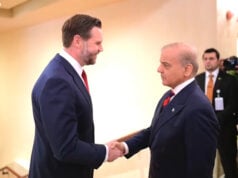
Iranian President Masoud Pezeshkian and his Russian counterpart Vladimir Putin reaffirmed their countries’ strategic partnership during a phone call, with Pezeshkian praising Moscow’s support for Iran’s stance in negotiations with the US. pic.twitter.com/7Y9XfhCPe8
— Tasnim News Agency (@Tasnimnews_EN) April 12, 2026
The Catalyst: Why the Truce Failed
The failure of the truce did not happen in a vacuum. Intelligence reports suggest that the breaking point was a “coordinated cyber-kinetic event” targeting U.S. interests in the region.
- The Cyber Attribution: On April 10, 2026, a massive cyberattack disabled critical infrastructure at the Port of Jebel Ali in the UAE. While Iran denied involvement, the White House claimed “irrefutable proof” that the IRGC’s cyber-corps was behind the breach.
- The Enrichment Breach: International Atomic Energy Agency (IAEA) inspectors reportedly found traces of uranium enriched to 84% purity at an undeclared site near Qom. This breached the “Red Line” established in the 2025 truce protocols.
- Proxy Escalation: Over the last three weeks, rocket attacks on U.S. bases in eastern Syria, attributed to Iran-backed militias, resulted in the first American combat fatalities since the new administration took office.
Global Economic Shockwaves
The market reaction was instantaneous. Within minutes of the President’s address, Brent Crude surged by 15%, crossing the $120 per barrel mark. Analysts at Goldman Sachs and Morgan Stanley warned that a prolonged blockade could push oil into the $180 range, threatening to reignite the inflationary pressures that the global economy has spent the last year trying to cool.
“This is the ‘Black Swan’ event the markets feared,” said Sarah Jenkins, a senior energy analyst. “If Hormuz is closed, even partially, there is no redundant infrastructure in the world that can replace that volume. We are looking at a potential global recession if this isn’t resolved within weeks.”
International Reactions: A Divided World
The international community is rapidly fracturing along traditional lines:
- Israel: Prime Minister Netanyahu praised the move as “courageous and necessary,” stating that “the era of appeasement is over.”
- China: A spokesperson for the Chinese Foreign Ministry condemned the blockade as an “illegal act of aggression” that violates international maritime law and threatens China’s energy security. Beijing has hinted at “reciprocal measures” if their tankers are delayed.
- The European Union: High Representative for Foreign Affairs called for an emergency summit in Brussels, urging “maximum restraint” and warning that a military blockade could lead to an all-out regional war.
The Military Reality on the Water
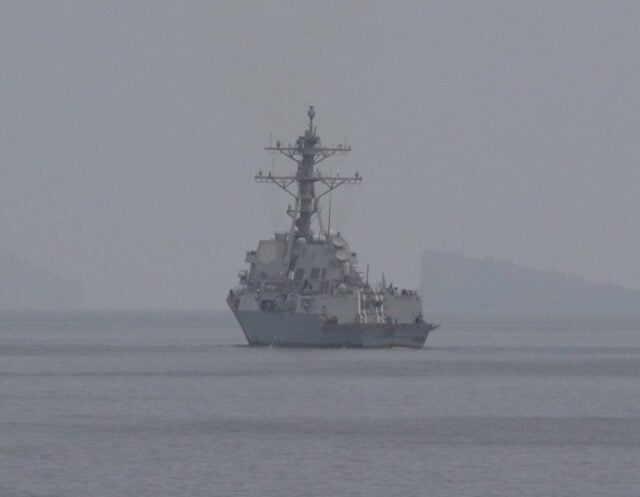
The U.S. Navy’s Fifth Fleet, headquartered in Bahrain, has already moved the USS Abraham Lincoln Carrier Strike Group into the Gulf of Oman. They are joined by a coalition of regional partners, though some traditional allies, such as Qatar, have expressed extreme hesitation about participating in a direct blockade.
Military analysts warn that Iran possesses an arsenal of “asymmetric” capabilities. The IRGC Navy (IRGCN) specializes in swarm tactics, utilizing fast-attack craft, midget submarines, and land-based anti-ship cruise missiles (ASCMs) hidden in the rugged cliffs along the Iranian coastline.
“This isn’t a game of chess; it’s a game of chicken in a very small room,” said retired Admiral James Stavridis. “The risk of a miscalculation—a single missile fired by a rogue commander or a collision between a destroyer and a fishing boat—could ignite a conflict that stretches from Lebanon to Kabul.”
Conclusion: The Stakes of Maximum Pressure 2.0
As the sun rises over the Persian Gulf on April 12, 2026, the world waits to see if Iran will attempt to challenge the blockade or if the economic pressure will force a diplomatic retreat. President Trump has staked his foreign policy legacy on the idea that “Strength brings Peace.” However, as the first U.S. warships take their stations at the mouth of the Strait of Hormuz, the line between strength and a global conflagration has never been thinner.
For now, the “Grand Truce” is a relic of history, and the shadow of the blockade looms over the global economy like a sword of Damocles.
Sources Used and Links:
- Reuters: Global energy market reactions and Brent Crude pricing data. https://www.reuters.com/business/energy/
- The Associated Press (AP): Coverage of White House briefings and Presidential addresses. https://apnews.com/hub/politics
- Al Jazeera English: Regional perspectives on the Strait of Hormuz and IRGC activities. https://www.aljazeera.com/where/iran/
- U.S. Energy Information Administration (EIA): Data regarding oil transit volumes through the Strait of Hormuz. https://www.eia.gov/international/analysis/special-topics/World_Oil_Transit_Chokepoints
- The Financial Times: Analysis of the Riyadh Agreement and economic impact of sanctions. https://www.ft.com/world/mideast
- The Wall Street Journal: Geopolitical risk assessments and maritime security updates. https://www.wsj.com/news/world/middle-east
Disclaimer
Artificial Intelligence Disclosure & Legal Disclaimer
AI Content Policy.
To provide our readers with timely and comprehensive coverage, South Florida Reporter uses artificial intelligence (AI) to assist in producing certain articles and visual content.
Articles: AI may be used to assist in research, structural drafting, or data analysis. All AI-assisted text is reviewed and edited by our team to ensure accuracy and adherence to our editorial standards.
Images: Any imagery generated or significantly altered by AI is clearly marked with a disclaimer or watermark to distinguish it from traditional photography or editorial illustrations.
General Disclaimer
The information contained in South Florida Reporter is for general information purposes only.
South Florida Reporter assumes no responsibility for errors or omissions in the contents of the Service. In no event shall South Florida Reporter be liable for any special, direct, indirect, consequential, or incidental damages or any damages whatsoever, whether in an action of contract, negligence or other tort, arising out of or in connection with the use of the Service or the contents of the Service.
The Company reserves the right to make additions, deletions, or modifications to the contents of the Service at any time without prior notice. The Company does not warrant that the Service is free of viruses or other harmful components.