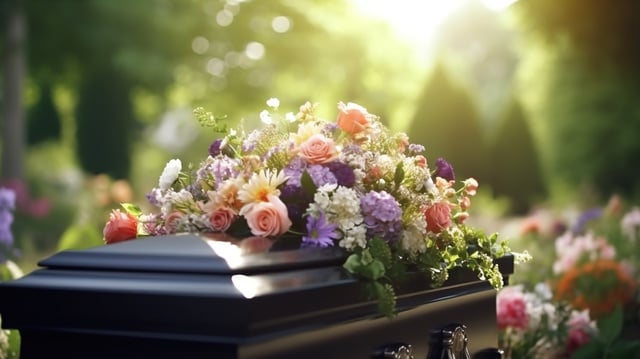
For over a century, the American way of death was standardized: a polished mahogany casket, a room heavy with the scent of lilies, an embalmed body, and a solemn procession to a manicured cemetery plot. But in 2026, that script is being rewritten. The “traditional” funeral—once a cornerstone of community life—is facing a quiet but definitive demise.
Industry data from the National Funeral Directors Association (NFDA) paints a stark picture of this transition. As of early 2026, cremation rates in the United States have surged to approximately 63.4%, while traditional burials have plummeted to just 31.6%. By 2045, the industry expects cremation to eclipse 80%. This shift isn’t just a change in preference; it is a total disruption of the funeral economy.
The Financial Burden of “Resting in Peace”
The primary driver behind this exodus from tradition is economic. The median cost of a traditional funeral with a viewing and burial now hovers around $8,300, often ballooning to over $10,000 when cemetery fees and headstones are added. In contrast, a direct cremation can cost as little as $1,000 to $2,500.
For many middle-class families, the choice is no longer about “disrespecting” the dead, but about financial survival for the living. The “death-care” industry, once buoyed by high-profit margins on caskets—often marked up 300% to 500%—is seeing those margins evaporate. Consequently, over 27% of funeral homes have closed their doors since 2004, unable to compete with low-cost, direct-to-consumer cremation startups.

From “Grief” to “Celebration”
Beyond the wallet, there is a seismic shift in how we view the end of life. The “Death Positive” movement, popularized by advocates like Caitlin Doughty, has stripped away the Victorian-era taboos surrounding mortality. Millennials and Gen X, who are now the primary decision-makers for end-of-life care, are rejecting the somber, religious-heavy ceremonies of their grandparents.
“Celebrations of Life” are replacing traditional wakes. Instead of a funeral home’s basement, services are moving to breweries, parks, and even art galleries. The focus has shifted from the body of the deceased to the story of their life.
Comparison of End-of-Life Options (2026 Estimates)
| Method | Estimated Cost | Key Feature | Environmental Impact |
| Traditional Burial | $8,300 – $12,000+ | Formal viewing, casket | High (land use, chemicals) |
| Traditional Cremation | $6,300 | Service + ashes | Moderate (CO2 emissions) |
| Green Burial | $4,000 | Biodegradable shroud | Low (carbon sequestration) |
| Human Composting | $5,000 – $7,000 | Body becomes soil | Very Low (regenerative) |
| Direct Cremation | $1,000 – $2,500 | No service, immediate | Moderate |
The Green Grave
Environmental impact is the newest nail in the traditional coffin. Every year, U.S. burials put an estimated 4.3 million gallons of embalming fluid and 1.6 million tons of concrete (for vaults) into the earth. For a generation raised on sustainability, these statistics are unacceptable.
This has led to the rise of Natural Organic Reduction (NOR)—commonly known as human composting. Now legal in 14 states as of early 2026 (including New York, California, and Washington), NOR turns a human body into a cubic yard of nutrient-rich soil in about 30 to 45 days.
“We’re seeing people who want their final act on Earth to be a gift to the planet, not a burden,” says a representative from Wildflower Funeral Concepts. “They want to become a tree, not a toxic site.”
The Digital Afterlife
Technology has also bridge the gap where physical attendance has failed. The COVID-19 pandemic made “hybrid” funerals—combining in-person services with high-quality livestreams—a permanent fixture. Online memorials are no longer just digital obituaries; they are interactive hubs where families share videos, playlists, and stories for years after the service concludes.
By 2026, the “funeral director” is evolving into something closer to an “event planner and digital archivist.” Those who refuse to adapt to the demand for transparency, personalization, and ecological integrity are finding themselves part of the tradition that is being buried.
The traditional funeral may be dying, but in its place, a more diverse, affordable, and sustainable landscape of remembrance is taking root.
Sources
- National Funeral Directors Association (NFDA): 2025-2026 Statistics & Trends
- Dignity Memorial: 2026 Top Trends in Funerals and Cremations
- Choice Mutual: How Much Does a Funeral Cost? (2026 Breakdown)
- Wake Forest Law: New Survey on Shifting Attitudes Toward End-of-Life (2026)
- Earth Funeral: Human Composting Statistics and Legal Status
- 24/7 Wall St.: Cremation Nation: Why Traditional Burials Are Dying Out
Disclaimer
Artificial Intelligence Disclosure & Legal Disclaimer
AI Content Policy.
To provide our readers with timely and comprehensive coverage, South Florida Reporter uses artificial intelligence (AI) to assist in producing certain articles and visual content.
Articles: AI may be used to assist in research, structural drafting, or data analysis. All AI-assisted text is reviewed and edited by our team to ensure accuracy and adherence to our editorial standards.
Images: Any imagery generated or significantly altered by AI is clearly marked with a disclaimer or watermark to distinguish it from traditional photography or editorial illustrations.
General Disclaimer
The information contained in South Florida Reporter is for general information purposes only.
South Florida Reporter assumes no responsibility for errors or omissions in the contents of the Service. In no event shall South Florida Reporter be liable for any special, direct, indirect, consequential, or incidental damages or any damages whatsoever, whether in an action of contract, negligence or other tort, arising out of or in connection with the use of the Service or the contents of the Service.
The Company reserves the right to make additions, deletions, or modifications to the contents of the Service at any time without prior notice. The Company does not warrant that the Service is free of viruses or other harmful components.