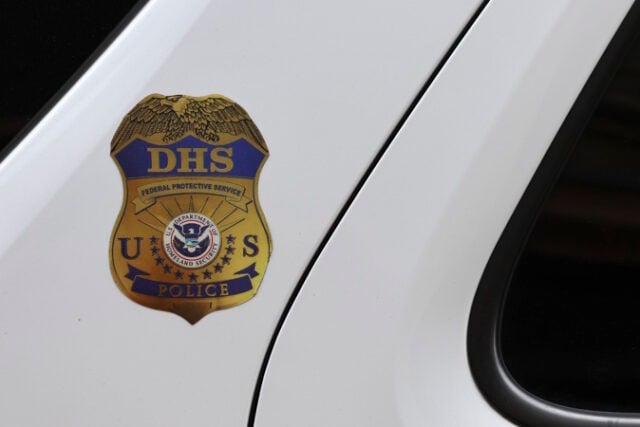
In the quiet suburbs of Philadelphia, a 67-year-old retired American citizen named Jon—a man who spent decades believing in the sanctity of the democratic process—found himself at the center of a federal investigation. His “crime” was neither a plot against the state nor a violation of national security. Instead, he had committed the simple act of sending an email. After reading a report in The Washington Post detailing the Department of Homeland Security’s (DHS) efforts to deport an Afghan asylum seeker back to the waiting hands of the Taliban, Jon felt compelled to act. He found the publicly available email address of the lead DHS prosecutor, Joseph Dernbach, and sent a short, civil message urging the government to “apply principles of common sense and decency.”
Four hours later, the machinery of the state turned its massive, secretive gears toward him.
As detailed in a harrowing investigation by The Washington Post, the DHS responded to Jon’s email not with a reply, but with an administrative subpoena. This tool, as The Post notes, is a “powerful legal tool that, unlike the ones people are most familiar with, federal agencies can issue without an order from a judge or grand jury.” Within hours of his exercise of free speech, DHS had issued a demand to Google for Jon’s private subscriber records, account details, and home address. Two weeks later, armed agents and a local police officer were at his front door, interrogating a retiree about a single email regarding a matter of public concern.
The case of “Jon Doe” is not an isolated incident of bureaucratic overreach; it is a chilling harbinger of a new era of state-sponsored intimidation. According to The Washington Post, while the exact number of administrative subpoenas issued annually remains a secret—shielded from the very public they are used against—tech experts and former agency staff estimate the figure is “well into the thousands, if not tens of thousands.” Under the current administration, these subpoenas have been transformed from a tool of immigration enforcement into a weapon of political retaliation.

The fundamental danger of the administrative subpoena lies in its lack of oversight. In a standard criminal investigation, the Fourth Amendment requires the government to present evidence to a neutral magistrate to obtain a warrant or a subpoena. This “check” ensures that the state cannot go on “fishing expeditions” into the private lives of its citizens without probable cause. However, the DHS relies on 8 U.S.C. § 1225(d), a statute governing immigration inspections, to circumvent this constitutional safeguard. Because these subpoenas are not self-enforcing and do not require a judge’s signature, they can be drafted in minutes by an angry bureaucrat or a vindictive prosecutor.
“If you can’t criticize a government official without the worry of having your private records gathered and agents knocking on your door, then your First Amendment rights start to feel less guaranteed,” Stephen A. Loney, a senior supervising attorney for the ACLU, told The Post. The sentiment is an understatement. The current use of these subpoenas represents a direct assault on the right to petition the government for a redress of grievances. When the state uses its investigative powers to unmask and intimidate those who speak out against its policies, it creates a “chilling effect” that can silence an entire population.
The Washington Post investigation highlights a disturbing pattern. DHS has previously used these subpoenas to try to unmask anonymous social media users who posted about ICE raids and to pressure universities for information on students involved in pro-Palestinian protests. In each case, the goal was the same: to identify, track, and intimidate those who opposed the administration’s agenda. By targeting Jon—a private citizen with no prior history of activism—the DHS is sending a clear message to every American: no one is too small to be watched, and no criticism is too minor to be punished.
Furthermore, this practice creates an unholy alliance between the government and big tech. Companies like Google and Meta hold the keys to our most private information—our locations, our associations, and our thoughts. When the DHS issues a subpoena, it essentially “bullies companies into handing over our data,” as Loney described it. While some companies may challenge these requests, many do not, fearing the regulatory or legal repercussions of defying a federal agency. The result is a surveillance state where the boundary between public service and private life is completely eroded.
The defense offered by DHS—that these tools are necessary for “enforcement” and “national security”—rings hollow when the target is a retiree in Philadelphia. There is no legitimate law enforcement purpose in tracking down a citizen who sends a polite email to a public official. As The Washington Post report makes clear, the issuance of the subpoena just four hours after the email was sent suggests a level of monitoring and rapid retaliation that is more characteristic of an authoritarian regime than a constitutional republic.
The ACLU’s legal challenge to quash the subpoena against Jon is a vital first step, but it is not enough. Congress must act to reform the statutes that allow for such unchecked power. The administrative subpoena was never intended to be a workaround for the Bill of Rights. If the government can bypass the judiciary whenever it finds a critic’s words “unpleasant” or “inconvenient,” then the Fourth Amendment is effectively a dead letter.
“In a democracy, contacting your government about things you feel strongly about is a fundamental right,” Jon told The Post. “For that, I am being investigated, intimidated, and targeted.”
His words should serve as a wake-up call. The Washington Post investigation reveals a department that has lost its way, trading its mission of “Homeland Security” for a mission of “Administration Security.” When the power of the state is used to silence the voice of the people, the “homeland” is no longer secure—it is under siege from within. We cannot allow the administrative subpoena to become the silent silencer of American dissent. The light of transparency must be shone into the dark corners of the DHS, and the constitutional guardrails must be rebuilt before the right to speak becomes a liability rather than a liberty.
Source: The Washington Post
Disclaimer
Artificial Intelligence Disclosure & Legal Disclaimer
AI Content Policy.
To provide our readers with timely and comprehensive coverage, South Florida Reporter uses artificial intelligence (AI) to assist in producing certain articles and visual content.
Articles: AI may be used to assist in research, structural drafting, or data analysis. All AI-assisted text is reviewed and edited by our team to ensure accuracy and adherence to our editorial standards.
Images: Any imagery generated or significantly altered by AI is clearly marked with a disclaimer or watermark to distinguish it from traditional photography or editorial illustrations.
General Disclaimer
The information contained in South Florida Reporter is for general information purposes only.
South Florida Reporter assumes no responsibility for errors or omissions in the contents of the Service. In no event shall South Florida Reporter be liable for any special, direct, indirect, consequential, or incidental damages or any damages whatsoever, whether in an action of contract, negligence or other tort, arising out of or in connection with the use of the Service or the contents of the Service.
The Company reserves the right to make additions, deletions, or modifications to the contents of the Service at any time without prior notice. The Company does not warrant that the Service is free of viruses or other harmful components.