Florida offers consistent access to outdoor activity due to its climate and geography. Staying active requires choosing the right sports that match environmental conditions such as heat, humidity, and terrain. Different activities place different demands on the body, and selecting the right mix improves both fitness and long-term sustainability.
Each sport offers distinct physical benefits and requires specific preparation.
Beach Volleyball for Full-Body Conditioning
Beach volleyball is widely played across Florida’s coastal areas. The sand surface increases resistance, forcing the body to work harder than on indoor courts.
Movement on sand improves:

- Lower body strength due to unstable footing
- Cardiovascular endurance from constant motion
- Coordination and reaction time
The soft surface also reduces joint impact. However, energy expenditure is higher, so hydration and pacing are critical.
This sport combines strength, agility, and endurance in a single activity.
Trail Running and Hiking for Endurance
Florida’s parks and nature trails provide controlled environments for running and hiking. These activities build cardiovascular fitness and muscular endurance.
Uneven terrain requires stable footwear. Options such as tactical boots are useful for hiking, offering ankle support and traction on mixed surfaces.
Trail activity improves:
- Balance and coordination
- Aerobic capacity
- Lower body strength
Running on natural terrain also reduces repetitive impact compared to pavement.
Kayaking and Paddle Sports for Upper Body Strength
Water-based activities are common in Florida due to its rivers and coastal access. Kayaking and paddleboarding focus on upper body strength and core stability.
These activities require controlled, repetitive motion. Paddling builds endurance while engaging the back, shoulders, and arms.
Water conditions vary, so stability and technique are important. Calm waters are ideal for beginners, while experienced participants may handle stronger currents.
Paddle sports provide low-impact exercise with high muscular engagement.
Cycling for Cardiovascular Fitness
Cycling is widely accessible across Florida’s flat terrain. It allows sustained cardiovascular training with controlled intensity.
Road cycling focuses on endurance, while trail cycling introduces technical elements such as terrain navigation.
Cycling improves:
- Heart and lung capacity
- Leg strength
- Energy efficiency over long distances
Proper hydration and sun protection are necessary due to extended exposure.
Cycling is effective for both short sessions and long-distance training.
Recreational Softball for Structured Activity
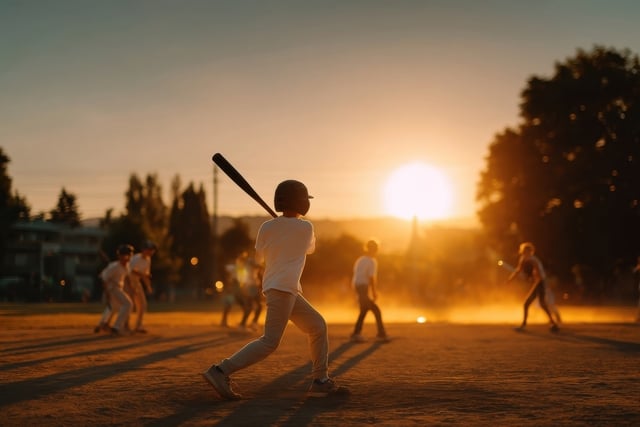
Softball leagues are common in Florida and provide structured, social activity. The sport combines short bursts of movement with coordination and teamwork.
Performance depends on agility, timing, and controlled power. Teams often use gear such as best custom softball uniforms designed for breathability and movement, which helps manage heat during play.
Softball supports:
- Hand-eye coordination
- Sprint-based movement
- Team-based engagement
Regular games create consistent activity schedules.
Swimming for Low-Impact Conditioning
Swimming is one of the most efficient full-body exercises. Florida’s pools and beaches provide year-round access.
Water resistance engages multiple muscle groups while reducing joint stress. This makes swimming suitable for both recovery and high-intensity training.
Swimming improves:
- Cardiovascular endurance
- Muscle tone across the entire body
- Breathing control
It is especially useful for maintaining fitness without impact-related strain.
Outdoor Fitness Training and Boot Camps
Group fitness sessions are common in parks and open spaces. These sessions combine strength training, cardio, and functional movement.
Exercises typically include bodyweight drills, resistance training, and interval workouts. Outdoor settings add environmental variability, which increases intensity.
Boot camps improve:
- Overall strength and endurance
- Functional movement patterns
- Consistency through scheduled sessions
Group environments also improve motivation and accountability.
Fishing and Light Activity for Recovery
Not all outdoor activity needs to be high intensity. Fishing provides a low-impact option that supports mental recovery while keeping individuals active.
Standing, casting, and light movement engage muscles without significant strain. It also encourages time outdoors, which supports overall well-being.
Low-intensity activities balance more demanding workouts.
Tennis and Court Sports for Agility
Tennis and similar court sports require quick directional changes and controlled movement. These sports improve agility, coordination, and reaction time.
Outdoor courts are widely available. Matches involve repeated short bursts of movement, which build both anaerobic and aerobic capacity.
Court sports enhance:
- Speed and footwork
- Coordination under pressure
- Cardiovascular fitness
They also provide structured competition, which supports engagement.
Walking for Consistent Daily Activity
Walking remains one of the most sustainable outdoor activities. It requires minimal equipment and can be performed consistently.
Regular walking improves circulation, supports joint health, and maintains baseline fitness levels. It is also adaptable to different environments, including parks, beaches, and urban areas.
Consistency is the main advantage. Daily walking supports long-term health without high physical strain.
Staying active in Florida depends on selecting the right mix of outdoor sports and activities. Beach volleyball, cycling, and swimming provide high-intensity conditioning, while hiking and kayaking build endurance and strength. Team sports such as softball add structure, and low-impact activities like walking support consistency. By combining different activities and adapting to environmental conditions, individuals can maintain long-term fitness and overall health.
Disclaimer
Artificial Intelligence Disclosure & Legal Disclaimer
AI Content Policy.
To provide our readers with timely and comprehensive coverage, South Florida Reporter uses artificial intelligence (AI) to assist in producing certain articles and visual content.
Articles: AI may be used to assist in research, structural drafting, or data analysis. All AI-assisted text is reviewed and edited by our team to ensure accuracy and adherence to our editorial standards.
Images: Any imagery generated or significantly altered by AI is clearly marked with a disclaimer or watermark to distinguish it from traditional photography or editorial illustrations.
General Disclaimer
The information contained in South Florida Reporter is for general information purposes only.
South Florida Reporter assumes no responsibility for errors or omissions in the contents of the Service. In no event shall South Florida Reporter be liable for any special, direct, indirect, consequential, or incidental damages or any damages whatsoever, whether in an action of contract, negligence or other tort, arising out of or in connection with the use of the Service or the contents of the Service.
The Company reserves the right to make additions, deletions, or modifications to the contents of the Service at any time without prior notice. The Company does not warrant that the Service is free of viruses or other harmful components.