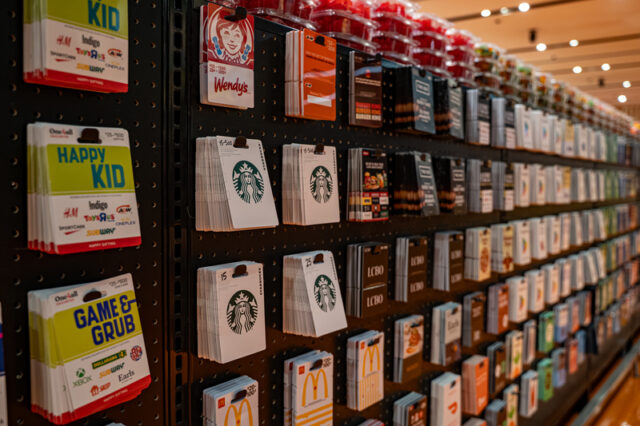
It is not every day that a global coffee chain finds itself compared to America’s extensive banking system, yet a recent financial disclosure from Starbucks reveals a profound shift in consumer trust and modern loyalty economics. At the close of fiscal 2024, the company reported a massive stored-value card liability of $1.78 billion—a figure representing money customers have prepaid for future purchases, essentially making the coffee giant one of the world’s largest consumer-trusted prepaid systems.
To contextualize this astonishing sum, the United States is home to approximately 4,500 FDIC-insured banks. An estimated 3,500 of these institutions are smaller community banks, many of which maintain total assets under the $1 billion mark. This means the unspent balances held by Starbucks in customer gift cards and app accounts are, in aggregate, on par with or even larger than the combined total balance sheets of thousands of local banks.
While this is not a direct “apples-to-apples” comparison—a bank’s assets consist of loans and deposits, while Starbucks’ “liability” is prepaid coffee—it offers an eye-opening view of consumer behavior. Customers are demonstrably comfortable entrusting a significant collective fortune to a retail brand, treating their stored-value account as a highly liquid, interest-free deposit.
This financial anomaly is no accident; it is the calculated outcome of a meticulously built loyalty ecosystem. The Starbucks card and corresponding mobile app transcend simple payment methods. They serve as a gateway to rewards, order-ahead convenience, and a sense of daily ritual. By weaving convenience with habit, Starbucks has created a proprietary currency that encourages repeat engagement and high customer retention.

For Starbucks, this massive pool of prepaid funds acts as a valuable financial cushion. Every dollar sitting unspent functions as an interest-free loan from its customer base. Furthermore, the company benefits from “breakage”—funds that are paid for but ultimately never redeemed, such as a forgotten $5 gift card. This unspent revenue stream provides a small but meaningful boost to the company’s bottom line, further solidifying the financial advantages of its loyalty program.
In an age rapidly moving toward sophisticated fintech solutions and digital wallets, Starbucks succeeded by keeping its model brilliantly simple: making coffee its own currency. The next time a customer reloads their card or app, they are not just buying a latte; they are participating in a billion-dollar retail micro-bank, a testament to the power of routine and consumer confidence in a global brand.
Source: Retail Tech Media Nexus
Disclaimer
Artificial Intelligence Disclosure & Legal Disclaimer
AI Content Policy.
To provide our readers with timely and comprehensive coverage, South Florida Reporter uses artificial intelligence (AI) to assist in producing certain articles and visual content.
Articles: AI may be used to assist in research, structural drafting, or data analysis. All AI-assisted text is reviewed and edited by our team to ensure accuracy and adherence to our editorial standards.
Images: Any imagery generated or significantly altered by AI is clearly marked with a disclaimer or watermark to distinguish it from traditional photography or editorial illustrations.
General Disclaimer
The information contained in South Florida Reporter is for general information purposes only.
South Florida Reporter assumes no responsibility for errors or omissions in the contents of the Service. In no event shall South Florida Reporter be liable for any special, direct, indirect, consequential, or incidental damages or any damages whatsoever, whether in an action of contract, negligence or other tort, arising out of or in connection with the use of the Service or the contents of the Service.
The Company reserves the right to make additions, deletions, or modifications to the contents of the Service at any time without prior notice. The Company does not warrant that the Service is free of viruses or other harmful components.