Written by Victoria Stokes — Fact checked by Jill Seladi-Schulman, Ph.D.
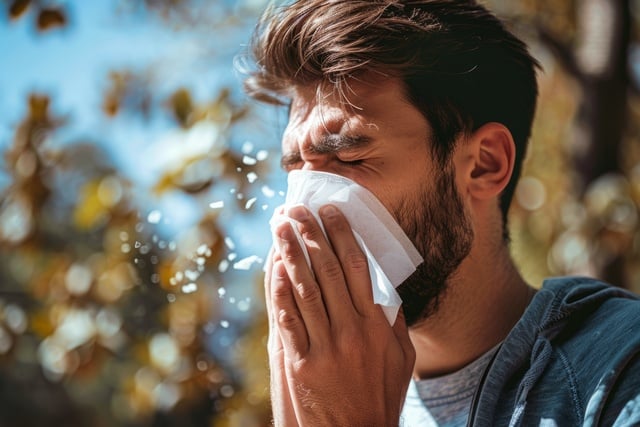
Sneezing, itchy eyes, a stuffy nose – you might recognize these as the symptoms of spring allergies, and if you live with them, you may notice you’re experiencing symptoms earlier and earlier every year.
Due to a number of factors, including record-high pollen counts, seasonal allergies appear to be starting earlier each year and presenting more severely, particularly in North– and South–East parts of the United States.

For the 2026 allergy season, AccuWeather has reported that in the South and West, pollen levels have already begun to increase. Its forecast for this year indicates that certain areas may have stronger, earlier tree pollen seasons, while grass pollen may spike later in the season.
One study from 2021 reports that pollen season starts 20 days earlier and produces 21% more pollen than in 1990.
Spring allergies (also known as hay fever) affect around 60 million people in the United States each year, according to the Centers for Disease Control and Prevention (CDC)Trusted Source.
For most people, the symptoms are mild and may be irritating and inconvenient. However, in some cases, they can be serious and even life threatening.
Here’s why your spring allergies may be more intense earlier this year
Experts agree that your allergies may start earlier and be more intense due to climate change.
“Pollen seasons are getting earlier and earlier due to climate change, causing unseasonably high temperatures starting earlier than typical springtime,” explains Purvi Parikh, MD, an allergist with Allergy & Asthma Network. “On top of that, climate change causes higher CO2 levels, which contribute to super-pollinator plants that produce more pollen and higher counts. So, not only are the seasons longer, but also stronger.”
In layman’s terms, a seasonal allergy is a reaction to an allergen in the air – usually pollen – that appears during specific times of the year.
“An allergic reaction occurs when the immune system develops IgE antibodies against a particular allergen like pollen,” Parikh surmises. “When you come into contact with these allergens, your immune system develops a hypersensitive response, releasing a chemical called histamines into your bloodstream that has a cascading effect, causing allergy symptoms.”
The more of a specific allergen there is, the more severe your reaction to it is likely to be.
With higher pollen counts, you may notice that certain symptoms may be worse than usual, like:
In some cases, you may experience asthma attacks, wheezing, and shortness of breath, along with rashes and swelling of the skin.
Your allergies may also seem comparatively worse this year, as most people are no longer wearing a protective face mask.
During the COVID-19 pandemic, when mask-wearing became commonplace, you may have noticed your allergies were less common and severe. This is because masks provide some protection against airborne allergens.
However, while masks played a large role in reducing symptoms during the pandemic, Parikh says climate change is the biggest factor driving longer, stronger allergy seasons.
Ways you can reduce your exposure to pollen
While you can’t control the climate, there are ways to reduce your exposure to pollen.
“If the weather is going to be warm, avoid mowing the lawn or any similar yard work that could trigger your allergies,” advises Fred Pescatore, MD, and author of The Allergy & Asthma Cure.
It’s a good idea to keep your home free from pollen, too.
“Try to keep your doors and windows closed on days where the pollen count may be high to help avoid pollen entering your home and getting on surfaces,” Pescatore says.
When the pollen count is high, you may also want to change your clothes and shower at night.
“Changing your clothes at night is crucial after spending the day outside, as this will stop you from tracking pollen inside your home and bed,” Pescatore explains.
“Taking a shower before bed will also help remove pollen from your hair and skin. If you don’t do this, pollen can continue to cause irritation throughout the night,” he adds.
Tips for managing spring allergy symptoms
Even with all these precautions, pollen can be tricky to avoid.
Parikh recommends 24-hour antihistamines like Claritin, Zyrtec, and Allegra to combat symptoms, but says you should steer clear of anti-allergy medications containing decongestants, as she claims these can make allergies worse.
If you’re looking for a natural remedy, Pescatore recommends Pycnogenol French Maritime Pine Bark Extract.
“This helps to curb the inflammatory response your body has against allergens, and Pycnogenol acts as an anti-inflammatory to reduce symptoms,” he explains.
Outside of medication, Pescatore says it’s a good idea to be mindful of your diet.
“Certain foods, like sugar, gluten, and dairy, can trigger inflammatory responses that make your seasonal allergies feel worse,” he notes.
“Swap these foods for local seasonal produce to decrease inflammation.”
Staying hydrated is another anti-allergy tip.
“Your body produces more histamines when it’s dehydrated, so drinking water can help prevent your symptoms from getting worse,” Pescatore explains.
When should you see a doctor for severe allergy symptoms?
Parikh says you should consult a physician if you experience any breathing symptoms – like cough, wheezing, and shortness of breath – and also if you have chest pain, chest pressure, or chest tightness.
“These can be signs that you are developing asthma, which can be deadly,” she warns.
You should also consult a doctor if your eye, nose, throat, or skin symptoms are not improving or worsening with over-the-counter medications.
Disclaimer
Artificial Intelligence Disclosure & Legal Disclaimer
AI Content Policy.
To provide our readers with timely and comprehensive coverage, South Florida Reporter uses artificial intelligence (AI) to assist in producing certain articles and visual content.
Articles: AI may be used to assist in research, structural drafting, or data analysis. All AI-assisted text is reviewed and edited by our team to ensure accuracy and adherence to our editorial standards.
Images: Any imagery generated or significantly altered by AI is clearly marked with a disclaimer or watermark to distinguish it from traditional photography or editorial illustrations.
General Disclaimer
The information contained in South Florida Reporter is for general information purposes only.
South Florida Reporter assumes no responsibility for errors or omissions in the contents of the Service. In no event shall South Florida Reporter be liable for any special, direct, indirect, consequential, or incidental damages or any damages whatsoever, whether in an action of contract, negligence or other tort, arising out of or in connection with the use of the Service or the contents of the Service.
The Company reserves the right to make additions, deletions, or modifications to the contents of the Service at any time without prior notice. The Company does not warrant that the Service is free of viruses or other harmful components.