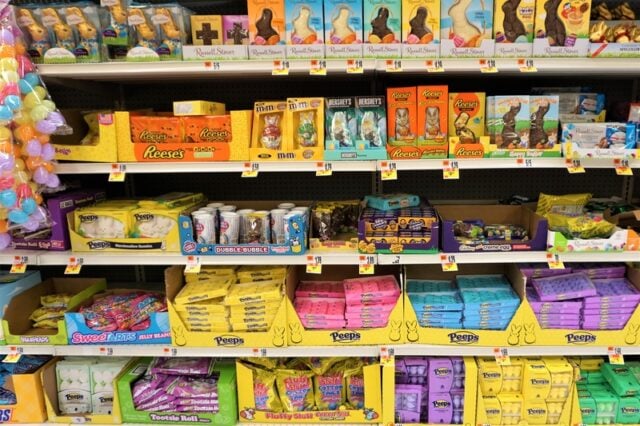
For generations, the American Easter tradition has been defined by the vibrant hues of plastic grass, the discovery of hidden eggs, and, most importantly, the reliable presence of chocolate bunnies and peanut butter eggs. However, a silent shift has occurred beneath the festive surface. What used to be an affordable seasonal indulgence has transformed into a stark lesson in modern economics. According to a comprehensive new analysis by InvestorsObserver, the purchasing power of the average American household’s Easter budget has eroded at a staggering rate over the last six years, leaving families with baskets that are significantly lighter than they were at the start of the decade.
The findings from InvestorsObserver reveal a grim reality: the same Easter budget now buys 40% less candy than it did in 2020. While the physical appearance of the holiday may remain unchanged, the underlying cost of maintaining those traditions has skyrocketed, driven by a combination of ingredient shortages, labor shifts, and a pricing strategy that many experts describe as the “boiling frog” effect.
The Erosion of the Easter Basket
To understand the magnitude of this shift, one must look at the divergence between consumer spending and actual market prices. According to data from the National Retail Federation (NRF), American shoppers have attempted to keep pace with rising costs by increasing their Easter candy budgets by approximately 15% since 2020. In the eyes of many consumers, this double-digit increase felt like a proactive adjustment to a changing economy.
However, the InvestorsObserver research demonstrates that this 15% increase was woefully inadequate. During the same period that budgets rose by 15%, the actual prices of popular Easter candies jumped by 67%. This massive gap between budget growth and price inflation is what has led to the 40% loss in total product volume.

“The same Easter budget now buys 40% less candy than in 2020,” the report notes. For a family of four spending a typical holiday budget of approximately $93, the result is no longer a bounty of sweets but a carefully rationed selection. To obtain the same volume of chocolate and candy that $93 purchased in 2020, a household would now need to shell out roughly $155—an additional $62 just to maintain the status quo.
The Boiling Frog Effect
One of the most insidious aspects of this price surge is how it was implemented. Inflation is rarely a single, explosive event that triggers immediate consumer backlash. Instead, it often manifests as a series of small, incremental changes that bypass the typical “price alarm” in a shopper’s brain.
Sam Bourgi, a senior analyst at InvestorsObserver, describes this phenomenon as the “boiling frog scenario.” In this metaphor, a frog placed in boiling water will immediately jump out, but a frog placed in cool water that is gradually heated will stay until it is too late. “Each individual increase feels tolerable—annoying, maybe, but not catastrophic,” Bourgi explains in the report. “So you adjust. By the time you realize how hot the water has gotten, you’ve already lost significant purchasing power.”
The data backs this up. Between 2020 and 2026, the average price per ounce for the five most popular Easter candies rose from $0.37 to $0.62. These increases didn’t happen in a vacuum; they were often interspersed with years of stagnant pricing or minor dips, which served to reset consumer expectations and mask the long-term trend.
Case Study: The Hershey’s Anomaly
Perhaps no product illustrates the volatility of the current market better than the classic Hershey’s Milk Chocolate bar 6-pack. The InvestorsObserver study highlighted this item as the most extreme case of price escalation. In 2020, this staple of the Easter basket was priced at approximately $3.99. By 2025 and into the 2026 season, that same package—the exact same 1.55-ounce bars—was found retailing for $8.29.
This represents a price-per-ounce increase of 107.8% over six years. What makes the Hershey’s case particularly notable is the “cruel twist” in its pricing trajectory. In 2022, the price had climbed to $6.39. In 2024, it actually dropped to $5.49, offering a brief moment of psychological relief for shoppers who believed the inflationary peak had passed. However, that relief was short-lived, as the price then spiked to its current high of $8.29.
Bourgi notes that this type of price movement is particularly jarring for consumers. “When a price drops and then spikes even higher, it feels more unfair than a steady increase,” he states. The drop resets the mental anchor of the consumer, making the subsequent spike feel like a manipulation rather than a reflection of market forces.
The Rise of Shrinkflation
While some brands chose to double their prices, others took a more subtle approach: “shrinkflation.” This occurs when a company reduces the size or weight of a product while keeping the price stable or increasing it only slightly.
The InvestorsObserver research cited Cadbury Mini Eggs as a prime example of this tactic. In 2022, the standard bag size for this product shrank from 10 ounces to 9 ounces. Because the physical bag size often remains similar and the price point appears “normal” to the casual shopper, the 10% reduction in actual product often goes unnoticed at the point of sale. Over time, however, these missing ounces contribute significantly to the overall loss of purchasing power identified in the study.
Why Is This Happening? The Macroeconomic Drivers
The sharp rise in candy prices is not merely a result of corporate greed; it is the product of a “perfect storm” of global economic factors that have hit the confectionery industry particularly hard.
- The Cocoa Crisis: The primary ingredient in Easter’s most beloved treats has faced unprecedented supply constraints. Major cocoa-producing regions in West Africa, specifically Côte d’Ivoire and Ghana, have been battered by extreme weather patterns and crop diseases. This has sent global cocoa prices to historic highs, forcing manufacturers to pass those costs onto consumers.
- Sugar Volatility: Beyond cocoa, the price of sugar has also seen significant upward pressure due to erratic weather in major exporting countries like India and Thailand, as well as rising energy costs associated with processing and transportation.
- Supply Chain and Labor: The post-2020 landscape has been defined by increased costs for logistics and manufacturing labor. While the initial supply chain shocks of the early 2020s have largely subsided, the baseline cost of moving goods from factory to shelf remains elevated compared to 2020 levels.
The Loss of the “Mental Anchor”
For years, American shoppers operated with a reliable mental framework for what Easter candy should cost. The InvestorsObserver report notes that in 2020, prices for most popular brands were tightly clustered between $3.49 and $3.99. This $4 anchor made shopping simple; anything below it was a deal, and anything significantly above it was an outlier.
Today, that anchor has been severed. The price range for the same category of goods has exploded to a spread of $4.79 to $8.29. This seven-fold increase in the price variance makes it nearly impossible for consumers to rely on instinct. “When shoppers lose a reliable sense of what something should normally cost, everything gets harder,” Bourgi explains. Shoppers are now forced to become amateur economists, performing per-ounce math in the aisle just to ensure they aren’t being overcharged.
How Consumers Are Adapting
As the reality of the 40% loss in purchasing power sets in, American families are being forced to change their holiday habits. For some, this means moving away from premium name brands toward generic or store-brand alternatives. For others, it means reducing the quantity of candy in the basket, perhaps supplementing it with non-edible toys or activities that offer better long-term value.
There is also a growing trend toward “strategic shopping”—tracking sales cycles and utilizing digital coupons more aggressively than in previous years. However, even with these efforts, the data suggests that most families are simply settling for less. The 101 fewer ounces of candy received by the average household budget is a physical manifestation of the broader inflationary pressures that have reshaped the American grocery experience since 2020.
The Long-Term Outlook
Will prices ever return to their 2020 levels? Economic history suggests this is unlikely. While the rate of inflation may slow, and certain commodities like cocoa may eventually see price corrections as harvests improve, “price stickiness” often keeps retail costs high even after production costs fall. Once consumers become accustomed to paying $7 or $8 for a bag of candy, manufacturers have little incentive to return to the $4 price point.
The InvestorsObserver study serves as a warning that Easter candy is merely a microcosm of a larger trend affecting nearly every category of consumer goods. The patterns identified—gradual price hikes, shrinking packages, and widening price ranges—are now standard features of the retail landscape.
Conclusion
The 2026 Easter season stands as a testament to the resilience of tradition, but also to the harsh reality of modern inflation. While the joy of the holiday remains, the cost of participation has fundamentally shifted. As the InvestorsObserver report concludes, six years of incremental changes have reshaped what an American tradition costs—not in one dramatic moment that might have prompted outrage, but in a slow, invisible way that leaves families spending more and getting less, year after year.
For the modern shopper, the message is clear: the days of the $4 Easter basket are gone. Navigating the “new normal” requires more than just a list; it requires a keen eye for “shrinkflation,” an understanding of commodity trends, and the realization that your holiday budget is working nearly twice as hard as it used to just to provide the same sweet results.
Sources and Links:
- InvestorObserver Research: The same Easter budget now buys 40% less candy than in 2020
- National Retail Federation (NRF): Easter Spending Data and Consumer Surveys
- Target.com: Current Market Pricing for Confectionery Goods
Disclaimer
Artificial Intelligence Disclosure & Legal Disclaimer
AI Content Policy.
To provide our readers with timely and comprehensive coverage, South Florida Reporter uses artificial intelligence (AI) to assist in producing certain articles and visual content.
Articles: AI may be used to assist in research, structural drafting, or data analysis. All AI-assisted text is reviewed and edited by our team to ensure accuracy and adherence to our editorial standards.
Images: Any imagery generated or significantly altered by AI is clearly marked with a disclaimer or watermark to distinguish it from traditional photography or editorial illustrations.
General Disclaimer
The information contained in South Florida Reporter is for general information purposes only.
South Florida Reporter assumes no responsibility for errors or omissions in the contents of the Service. In no event shall South Florida Reporter be liable for any special, direct, indirect, consequential, or incidental damages or any damages whatsoever, whether in an action of contract, negligence or other tort, arising out of or in connection with the use of the Service or the contents of the Service.
The Company reserves the right to make additions, deletions, or modifications to the contents of the Service at any time without prior notice. The Company does not warrant that the Service is free of viruses or other harmful components.