The transition from the mild, fluctuating temperatures of early spring to the sweltering intensity of summer is set to arrive with a vengeance for tens of millions of Americans. After a period of see-sawing conditions, a massive ridge of high pressure is expected to build across the Eastern United States, ushering in the first true heat wave of 2026. This surge of early-season warmth will not only push thermometers to their limits but also threaten decades-old records from the Mid-Atlantic to the Southeast.
The Meteorological Setup
According to reports, the atmospheric shift will begin in earnest as we move out of the weekend. While the Northeast may experience a brief dip in temperatures on Saturday and Sunday due to spotty showers, a much more formidable air mass is lurking in the wings. This “surge of very warm air,” as described by weather experts, will originate in the Midwest and Ohio Valley before expanding its footprint toward the Atlantic coast by Monday.
The phenomenon is driven by a strengthening area of high pressure that acts like a dome, trapping warm air and allowing sunlight to bake the ground without significant cloud cover. “A surge of early-season heat will build across the Southeast and mid-Atlantic next week,” notes AccuWeather, highlighting that this pattern is particularly potent for this time of year when the ground is often still transitioning from its winter dormant state.
Regional Breakdown: A Taste of Summer
The geographical reach of this heat wave is extensive, impacting everything from the coastal plains of the Carolinas to the urban corridors of the Northeast.

The Mid-Atlantic: Ground Zero for Records
 The Mid-Atlantic region, particularly the Washington, D.C. and Virginia areas, appears to be the epicenter of the most intense heat. In the nation’s capital, residents who have enjoyed a relatively mild spring will face a jarring reality check. Highs are forecast to trend upward into the 80s on Monday, but the real intensity arrives on Tuesday and Wednesday. During this window, temperatures in D.C. are expected to soar into the 90s. This is a significant milestone, as the last time the city hit the 90-degree mark was nearly seven months ago, on September 19.
Further south in Virginia and the Carolinas, the heat will be even more persistent. Many areas are bracing for a multi-day stretch of temperatures hovering between 90 and 95 degrees. For early April, these figures are well above the climatological norm, pushing the limits of what infrastructure and residents are typically prepared for this early in the calendar.
The Northeast Corridor: From Philly to Boston
The warmth will aggressively push northward into Pennsylvania, New York, and New England. Philadelphia is staring down a potential record-breaking Wednesday. Forecasters indicate that temperatures could approach 90 degrees in the City of Brotherly Love, which would threaten a record standing since the 1940s. Much like D.C., Philadelphia hasn’t seen 90-degree heat since September 6 of last year.
In New York City, the concrete jungle will likely amplify the sun’s effects. Highs in the 80s are projected for both Tuesday and Wednesday. Even Boston, often shielded by the cooling influence of the Atlantic Ocean, will see highs climb into the 70s early in the week. While these temperatures might seem pleasant compared to the 90s further south, they represent a significant departure from the typical cool, damp April weather that characterizes the region.
The Southeast and the Masters Tournament
One of the most high-profile events impacted by this weather shift is the Masters tournament in Augusta, Georgia. Patrons and players alike can expect a drastic shift toward summer-like conditions. AccuWeather advises that those attending the tournament should “be sure to bring plenty of sunscreen as the weather is expected to be warm, dry, and sunny throughout the entire tournament.” The lack of rainfall and the presence of high-altitude sunshine will make the conditions on the course feel even hotter than the ambient air temperature might suggest.
Heightened Wildfire and Drought Concerns
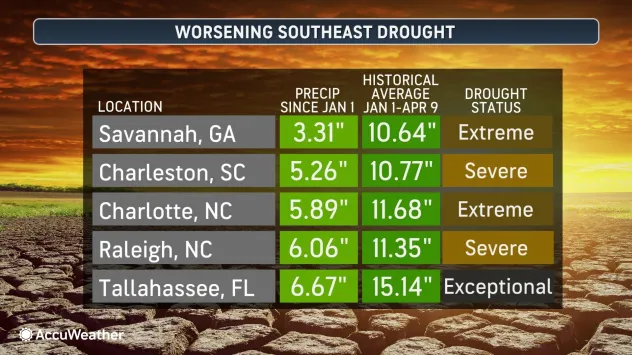
While many may welcome the sunshine for outdoor activities, the heat wave also brings a darker side: an increased risk of wildfires. Much of the Eastern U.S. is currently grappling with lingering drought conditions that have persisted through the winter and into the early spring.
The combination of surging temperatures, low humidity, and gusty breezes creates a “tinderbox” effect. Dry brush and fallen leaves from the previous autumn remain widespread across the landscape. Under the intense April sun, these materials dry out further, becoming prime fuel for ignition. AccuWeather warns that “the combination of sunshine, gusty breezes and dry air will create near-ideal conditions for ignition and rapid fire spread.”
In the Southeast, the drought has been particularly stubborn. While recent rains provided some temporary relief to the Florida Peninsula, the mainland Southeast remains vulnerable. The upcoming heat wave is expected to worsen these drought conditions, as high evaporation rates quickly strip moisture from the soil and vegetation. Authorities are urging the public to exercise extreme caution with power equipment, open flames, and any activities that could produce sparks or embers.
Public Health and Safety: The “Silent Killer”
Extreme heat is often referred to by meteorologists and health officials as a “silent killer” because its effects are cumulative and sometimes less visible than those of a tornado or hurricane. This early-season heat wave is particularly dangerous because the human body has not yet had time to acclimatize to high temperatures.
One of the most critical warnings issued involves vehicle safety. As temperatures climb into the 80s and 90s, the interior of a car can reach lethal levels within minutes. AccuWeather issued a stern reminder to the public: “Parents are strongly reminded never to leave children unattended in vehicles, where conditions can turn life-threatening within minutes.” The “Look Before You Lock” campaign is especially vital during these first heat spikes of the year, as routines may not yet include the heightened awareness required for extreme heat.
Furthermore, those working outdoors or participating in sports—including those at the Masters—must be vigilant for signs of heat exhaustion and heatstroke. Symptoms like dizziness, heavy sweating, and nausea should be taken seriously. Staying hydrated and seeking shade during the peak heating hours of 10:00 AM to 4:00 PM are essential strategies for staying safe.
The Broader Climate Context: Super El Niño?
The timing of this heat wave is also sparking discussions about broader climate trends. The U.S. recently experienced its hottest March on record, and the early arrival of 90-degree days in April suggests that 2026 could continue this trend of record-breaking warmth.
Part of this may be attributed to the ongoing influence of El Niño. Some climate models are pointing toward the development of a “Super El Niño,” which could significantly alter global weather patterns. While El Niño is traditionally associated with warmer winters in the northern U.S., its influence on spring and summer transitions can be complex, often leading to more frequent and intense heat ridges like the one forecast for next week.
Looking Ahead
As the heat wave peaks between Tuesday and Thursday, residents are encouraged to monitor local forecasts closely. While the core of the heat is focused on the Mid-Atlantic and Southeast, the high-pressure system’s reach is broad enough to affect daily life for a significant portion of the country’s population.
The relief from the heat may come in the form of thunderstorms toward the end of the week, but even these bring their own risks. Drenching showers and locally severe storms are possible in parts of the Midwest and northern Northeast. However, for those in the path of the heat dome, the primary concern remains the record-challenging temperatures and the associated environmental risks.
In summary, the Eastern United States is about to experience a profound shift in its weather narrative. What began as a typical spring will quickly morph into a mid-summer reality. Whether you are walking the greens at Augusta, commuting through the streets of D.C., or tending to a garden in suburban Philadelphia, the message from the experts is clear: prepare for the heat, protect yourself and your family, and stay informed as this early-season surge takes hold.
Sources:
- AccuWeather: Heat wave brewing for part of eastern US next week
Disclaimer
Artificial Intelligence Disclosure & Legal Disclaimer
AI Content Policy.
To provide our readers with timely and comprehensive coverage, South Florida Reporter uses artificial intelligence (AI) to assist in producing certain articles and visual content.
Articles: AI may be used to assist in research, structural drafting, or data analysis. All AI-assisted text is reviewed and edited by our team to ensure accuracy and adherence to our editorial standards.
Images: Any imagery generated or significantly altered by AI is clearly marked with a disclaimer or watermark to distinguish it from traditional photography or editorial illustrations.
General Disclaimer
The information contained in South Florida Reporter is for general information purposes only.
South Florida Reporter assumes no responsibility for errors or omissions in the contents of the Service. In no event shall South Florida Reporter be liable for any special, direct, indirect, consequential, or incidental damages or any damages whatsoever, whether in an action of contract, negligence or other tort, arising out of or in connection with the use of the Service or the contents of the Service.
The Company reserves the right to make additions, deletions, or modifications to the contents of the Service at any time without prior notice. The Company does not warrant that the Service is free of viruses or other harmful components.