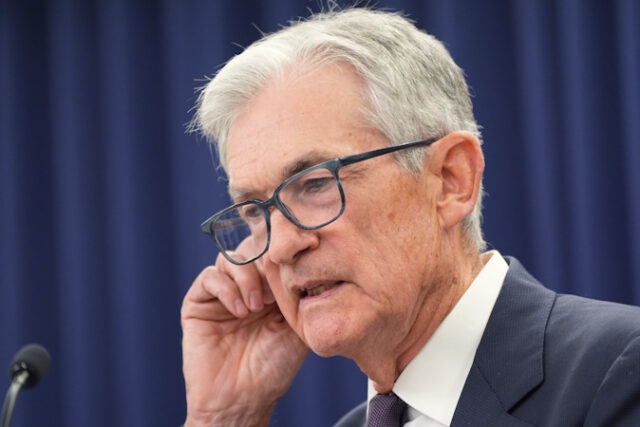
WASHINGTON — In a stunning revelation that has sent shockwaves through both the financial world and the halls of the Department of Justice, newly unsealed court transcripts show that federal prosecutors privately admitted they possessed no evidence of criminal activity by Federal Reserve Chair Jerome H. Powell, even as they moved forward with aggressive subpoenas earlier this year.
The disclosure, first reported by The Washington Post on Tuesday, provides a rare look into a high-stakes, closed-door hearing on March 3 that effectively signaled the collapse of a criminal investigation into the nation’s top central banker. The investigation, centered on multi-billion-dollar renovations at the Federal Reserve’s headquarters, has been widely criticized by legal experts and lawmakers as a politically motivated attempt by the Trump administration to undermine the Fed’s independence.
According to the unsealed transcript of the proceedings before Chief U.S. District Judge James E. Boasberg, Assistant U.S. Attorney Andrew Massucco-LaTaif was forced to concede under pointed questioning that the government’s case lacked a factual foundation.
“What evidence is there of fraud or criminal misconduct in relation to the renovations?” Judge Boasberg asked during the hearing.

“We do not know at this time,” Massucco-LaTaif responded, according to the transcript. “However, there are 1.2 billion reasons for us to look into it.”
The “1.2 billion reasons” referred to the estimated cost overruns of the Federal Reserve’s massive renovation of the Eccles Building and other facilities, a project with a total price tag now nearing $2.5 billion. While the Justice Department has characterized these costs as a sign of potential “fraud and false statements,” the unsealed records suggest that prosecutors had little more than the project’s budget to justify their legal demands.
A Scathing Judicial Rebuke
The revelation follows a March 11 ruling in which Judge Boasberg quashed the Justice Department’s subpoenas, a move that dealt a severe blow to the probe led by U.S. Attorney Jeanine Pirro. In that ruling, which was partially redacted at the time, Boasberg wrote that the government had produced “essentially zero evidence to suspect Chair Powell of a crime.”
With the full transcript now public, the depth of the judge’s skepticism has become clear. Throughout the hearing, Boasberg repeatedly pressed the government to identify a single false statement or fraudulent act. The prosecution was unable to do so, leading Boasberg to conclude that the investigation was “pretextual.”
“A mountain of evidence suggests that the Government served these subpoenas on the Board to pressure its Chair into voting for lower interest rates or resigning,” Boasberg wrote.
As The Washington Post noted in its coverage of the unsealed documents, the timing of the subpoenas coincided with a period of intense public pressure from President Trump, who has frequently railed against Powell for not lowering interest rates more aggressively. The President has publicly accused Powell of “criminality” over the renovations, often citing them as grounds for removing the Fed Chair from his post.
The $2.5 Billion Renovation Controversy
At the heart of the investigation is a decade-long project to modernize the Federal Reserve’s aging campus in Washington. The project, which includes the historic Eccles Building and the nearby Frick Building, has seen its budget swell from an initial estimate of $1.9 billion in 2022 to the current $2.5 billion.
The Justice Department’s inquiry focused on testimony Powell gave last June before the Senate Banking Committee. During that appearance, Powell was questioned about whether the renovations included “rooftop gardens” and “VIP elevators.” Powell denied that such luxury amenities were part of the plans. Prosecutors later alleged that earlier design drafts did include these features, suggesting that Powell may have misled Congress—a claim the Fed has vehemently denied, stating that construction plans evolve and that the final approved designs do not contain the features in question.
In court, Robert Hur, an attorney representing the Federal Reserve Board of Governors, argued that the investigation was an unprecedented overreach. Hur told the judge that the President’s political motives were transparent.
“He clearly has very strong political motives to try to get lower interest rates,” Hur said, according to the transcript. “But because of the safeguards that have been erected by Congress around the Federal Reserve’s independence when it comes to setting monetary policy, he can’t get it through the front door, so he is trying the back door through the Justice Department.”
Political Fallout and Senate Standoff
The collapse of the evidentiary basis for the Powell probe has significant implications for the Federal Reserve’s leadership. Powell’s current term as chair is set to expire on May 15, and the White House has already nominated former Fed Governor Kevin Warsh to succeed him.
However, the nomination has been stalled in the Senate Banking Committee. Senator Thom Tillis (R-N.C.), a crucial swing vote, has vowed to block all Federal Reserve nominees until the criminal investigation into Powell is fully resolved. Tillis recently stated that the unsealed transcripts confirm “just how weak and frivolous” the investigation is, suggesting that the pressure campaign has backfired.
Under the law, Powell can remain as Fed Chair past his May 15 expiration date if a successor has not yet been confirmed by the Senate. Furthermore, Powell has indicated that he intends to remain on the Federal Reserve’s Board of Governors even after his term as chair ends—a move that would prevent President Trump from filling his seat on the board for several more years.
The unsealed records also included a tantalizing detail regarding Powell’s future. In a summary of a meeting between Fed lawyers and the U.S. Attorney’s office, a filing noted: “The Chair feels like he would not leave the board when his term as Chair expires, if he was still under investigation.”
The document went on to suggest that if the investigation were dropped, Powell might feel “free to make a decision that would focus on his family,” hinting at a possible resignation if the legal cloud is lifted.
The Independence of the Central Bank
The dispute has reignited a national debate over the independence of the Federal Reserve, an institution designed to be insulated from short-term political cycles to ensure stable monetary policy. Legal scholars have expressed concern that using the Justice Department to investigate a Fed Chair over building costs—without concrete evidence of a crime—sets a dangerous precedent.
“If the executive branch can use the threat of criminal prosecution to influence interest rate decisions, the independence of the Fed is effectively over,” said Sarah Binder, a fellow at the Brookings Institution and an expert on Fed-Congress relations. “The transcripts released today suggest that this wasn’t an investigation in search of a crime, but an investigation in search of leverage.”
U.S. Attorney Jeanine Pirro has remained defiant in the face of the transcript’s release. In a statement following the unsealing, Pirro blasted the court’s decision and defended her office’s work.
“An activist judge has quashed these subpoenas and neutered the grand jury’s ability to investigate what appears to be an atrocious cost overrun of $1 billion,” Pirro said. “To suggest that we cannot investigate the potential theft or misuse of taxpayer funds simply because the subject holds a high office is a rejection of the rule of law. We will appeal this ruling.”
Despite Pirro’s rhetoric, the admission by her own deputy that the office “does not know” of any specific evidence of fraud remains a significant hurdle. Legal analysts suggest that the appellate court is unlikely to overrule Judge Boasberg given the lack of a factual “proffer”—a summary of evidence that typically justifies the issuance of grand jury subpoenas.
Looking Ahead
As the May 15 deadline approaches, the standoff between the White House, the Federal Reserve, and the Senate appears likely to intensify. The Federal Reserve is scheduled to meet next week to discuss interest rates, a meeting that will be watched closely by investors for any sign that the political pressure is impacting policy decisions.
For now, Powell remains at the helm, buoyed by a judicial ruling that has essentially cleared his name of the “criminality” alleged by the administration. The unsealed transcripts serve as a stark reminder of the ongoing friction between the traditional norms of institutional independence and the aggressive tactics of the current administration.
As the legal battle moves to the D.C. Circuit Court of Appeals, the central question remains whether the Justice Department can provide anything more than “1.2 billion reasons” to justify its pursuit of the man who controls the nation’s money supply.
For the time being, Jerome Powell continues to serve, his position fortified by a court that found the government’s case to be as thin as the paper the subpoenas were printed on. The unsealing of these documents marks a pivotal moment in what has become the most significant challenge to Federal Reserve independence in the modern era.
Source: The Washington Post
Disclaimer
Artificial Intelligence Disclosure & Legal Disclaimer
AI Content Policy.
To provide our readers with timely and comprehensive coverage, South Florida Reporter uses artificial intelligence (AI) to assist in producing certain articles and visual content.
Articles: AI may be used to assist in research, structural drafting, or data analysis. All AI-assisted text is reviewed and edited by our team to ensure accuracy and adherence to our editorial standards.
Images: Any imagery generated or significantly altered by AI is clearly marked with a disclaimer or watermark to distinguish it from traditional photography or editorial illustrations.
General Disclaimer
The information contained in South Florida Reporter is for general information purposes only.
South Florida Reporter assumes no responsibility for errors or omissions in the contents of the Service. In no event shall South Florida Reporter be liable for any special, direct, indirect, consequential, or incidental damages or any damages whatsoever, whether in an action of contract, negligence or other tort, arising out of or in connection with the use of the Service or the contents of the Service.
The Company reserves the right to make additions, deletions, or modifications to the contents of the Service at any time without prior notice. The Company does not warrant that the Service is free of viruses or other harmful components.