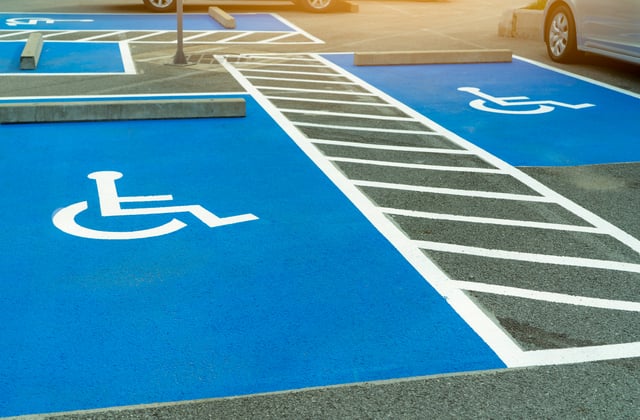
Across the United States, property owners are moving quickly to re-stripe parking lots ahead of an upcoming ADA compliance deadline, prompting a flurry of last-minute upgrades. From commercial plazas and healthcare facilities to schools, office parks and multi-family residences, ensuring that parking areas meet the latest accessibility standards has become a top priority for businesses determined to avoid penalties and protect public safety.
The surge in demand is no surprise. Updated guidance from federal regulators has raised the bar on access, clarity and safety in publicly used parking areas, and the approaching deadline has placed renewed pressure on facility managers to get their properties in order. For many, this means tackling long-delayed maintenance and seeking out experienced contractors who understand the finer details of ADA layout, signage requirements and traffic flow optimisation.
Why ADA Updates Are Triggering A National Push
Accessibility upgrades are often postponed because they seem less urgent than interior renovations or structural repairs. But the revised rules—focusing on clearer markings, better visibility, modernised spacing and improved access routes—have brought accessibility back into focus. The updates are part of a broader nationwide effort to reduce barriers in public spaces, strengthen inclusive infrastructure and ensure compliance with modern mobility needs.
A recent CNN report highlighted the rising number of ADA-related lawsuits in commercial real estate, reflecting a growing legal and financial risk for non-compliant property owners. These cases often stem from outdated or poorly marked parking lots, an issue the new deadline aims to reduce by requiring clearer, more consistent standards nationwide.

For property managers, the increased enforcement means that even minor oversights—faded stripes, inaccurate stall widths or missing access aisles—can become costly liabilities.
The Critical Role Of Proper Striping In Accessible Design
Parking lot striping affects nearly every aspect of vehicle and pedestrian flow. When lines are not clearly marked, confusion rises, safety decreases and accessibility becomes compromised. For individuals with mobility challenges, a poorly marked parking area can become a physical and psychological obstacle, particularly when access aisles are not properly measured or when ramps are blocked by unclear traffic patterns.
Modern striping relies on reflective, durable paints designed to withstand weather, UV exposure and high traffic volumes. Fresh striping not only improves compliance—it enhances the overall perception of a property, signalling attention to detail and a commitment to public safety.
Commercial Properties Prioritising Re-Striping As The Deadline Nears
Shopping centres, retail parks and office complexes have led much of the early push toward compliance. These types of properties often experience heavy turnover in both staff and visitors, making clear accessible routes essential for daily operations. In addition, commercial facilities tend to have larger parking areas, which are more susceptible to fading over time.
Many property owners are combining ADA updates with broader maintenance projects: seal-coating, pothole repair, curb repainting and signage replacements. These combined efforts reduce repeat downtime and improve long-term durability.
Healthcare providers are also moving quickly. Hospitals, clinics and specialist treatment centres must maintain high accessibility standards, and the updated requirements have prompted many to overhaul ageing parking layouts entirely.
Why Professional Contractors Are In High Demand
Correct ADA striping is far more than simply repainting lines. It requires precise measurements, the correct slope for accessible routes, compliant access aisles, accurate placement of signage and awareness of how traffic patterns affect accessibility.
This is why property managers across the region have been turning to experienced specialists such as Compass Refresh Texas for expert re-striping and compliance-focused pavement services. Companies with ADA experience help reduce compliance risk and ensure that every detail—from line thickness to stencil accuracy—meets regulatory standards the first time.
The Financial Incentives For Compliance
While compliance prevents fines and legal exposure, there are also substantial financial incentives that motivate property owners to act quickly. Well-maintained parking lots contribute to higher tenant satisfaction, reduced insurance claims and improved customer perception. Studies show that visitors often judge a property’s professionalism before they even walk through the door—and the parking lot is the first impression.
Furthermore, updated striping can improve vehicle flow, reducing accidents and lowering the likelihood of collisions in tight or poorly marked spaces. Property owners understand that the cost of re-striping is comparatively small compared to potential liabilities.
How ADA Standards Continue To Evolve
The upcoming deadline is not the final word in accessibility regulation. ADA guidance has evolved steadily for more than three decades, adapting to new research, mobility technology and population needs. For example, as adaptive vehicles and mobility equipment become more common, accessible parking spaces must account for wider doors, ramps and secure transfer areas.
A recent feature from BBC News examined how demographic shifts and advances in mobility technology are prompting governments to rethink accessibility across all public spaces—not just parking lots. This trend suggests that upgrades made today will likely lay the foundation for future improvements as standards continue to evolve.
Technology’s Emerging Role In Parking Lot Compliance
In 2025, many contractors are leaning on digital tools to enhance accuracy. Laser-guided striping equipment, aerial assessments and 3D layout planning software help ensure that every marking is placed with precision. These tools reduce human error and make it easier to efficiently assess large commercial lots.
Property owners benefit from receiving digital layout plans, making future maintenance simpler and more transparent. This technology-driven approach is becoming increasingly common among contractors who specialise in meeting ADA requirements.
Challenges Property Owners Face Ahead Of The Deadline
Despite the growing urgency, many property owners face practical challenges:
- Scheduling Bottlenecks: High demand for experienced striping contractors is leading to longer wait times.
- Budgeting Constraints: Some property owners must find cost-effective ways to comply while managing other facility upgrades.
- Weather Delays: Seasonal rain or extreme temperatures can postpone striping projects dependent on dry, stable conditions.
- Misinterpretation Of Standards: ADA regulations can be complex, and mismeasurement—even by a few inches—can render a property non-compliant.
These challenges reinforce the importance of early planning and working with contractors who specialise in compliance-ready layouts, rather than relying solely on general pavement maintenance.
How To Prepare Your Property For The Deadline
To meet the upcoming ADA deadline smoothly, property owners should take proactive steps:
- Conduct a full parking lot assessment. Identify fading, misaligned or damaged markings.
- Measure current accessible spaces. Ensure correct widths, aisle sizes and slopes.
- Evaluate signage. Many violations stem from missing or improperly mounted signs.
- Review traffic flow. Ensure access routes are logical, unobstructed and clearly marked.
- Contact a specialist early. Avoid the scheduling rush by booking contractors as soon as possible.
- Combine upgrades where possible. Seal-coating or minor pavement repairs can be completed ahead of striping to ensure longevity.
By taking these steps early, property owners position themselves for a smooth transition into full compliance.
Long-Term Benefits Of ADA-Compliant Parking
Beyond immediate obligations, ADA-compliant parking lots deliver enduring advantages:
- Enhanced safety for drivers and pedestrians.
- Reduced liability, thanks to clearer markings and safer access routes.
- Improved property value through consistent upkeep.
- Stronger community reputation, especially for businesses that prioritise accessibility.
- Greater customer loyalty, as accessible environments encourage return visits.
Compliance is more than a legal requirement—it’s an investment in the people who use the property daily.
The rush to re-stripe parking lots ahead of the new ADA compliance deadline reflects a broader shift toward more inclusive, safer and better-managed commercial spaces. As property owners navigate the final stretch, partnering with experienced professionals and understanding the intricacies of the updated standards are essential steps in maintaining both compliance and public trust.
The effort made today will not only meet regulatory expectations but also create a more welcoming, accessible environment for everyone who visits, works or lives on the property.
Disclaimer
Artificial Intelligence Disclosure & Legal Disclaimer
AI Content Policy.
To provide our readers with timely and comprehensive coverage, South Florida Reporter uses artificial intelligence (AI) to assist in producing certain articles and visual content.
Articles: AI may be used to assist in research, structural drafting, or data analysis. All AI-assisted text is reviewed and edited by our team to ensure accuracy and adherence to our editorial standards.
Images: Any imagery generated or significantly altered by AI is clearly marked with a disclaimer or watermark to distinguish it from traditional photography or editorial illustrations.
General Disclaimer
The information contained in South Florida Reporter is for general information purposes only.
South Florida Reporter assumes no responsibility for errors or omissions in the contents of the Service. In no event shall South Florida Reporter be liable for any special, direct, indirect, consequential, or incidental damages or any damages whatsoever, whether in an action of contract, negligence or other tort, arising out of or in connection with the use of the Service or the contents of the Service.
The Company reserves the right to make additions, deletions, or modifications to the contents of the Service at any time without prior notice. The Company does not warrant that the Service is free of viruses or other harmful components.